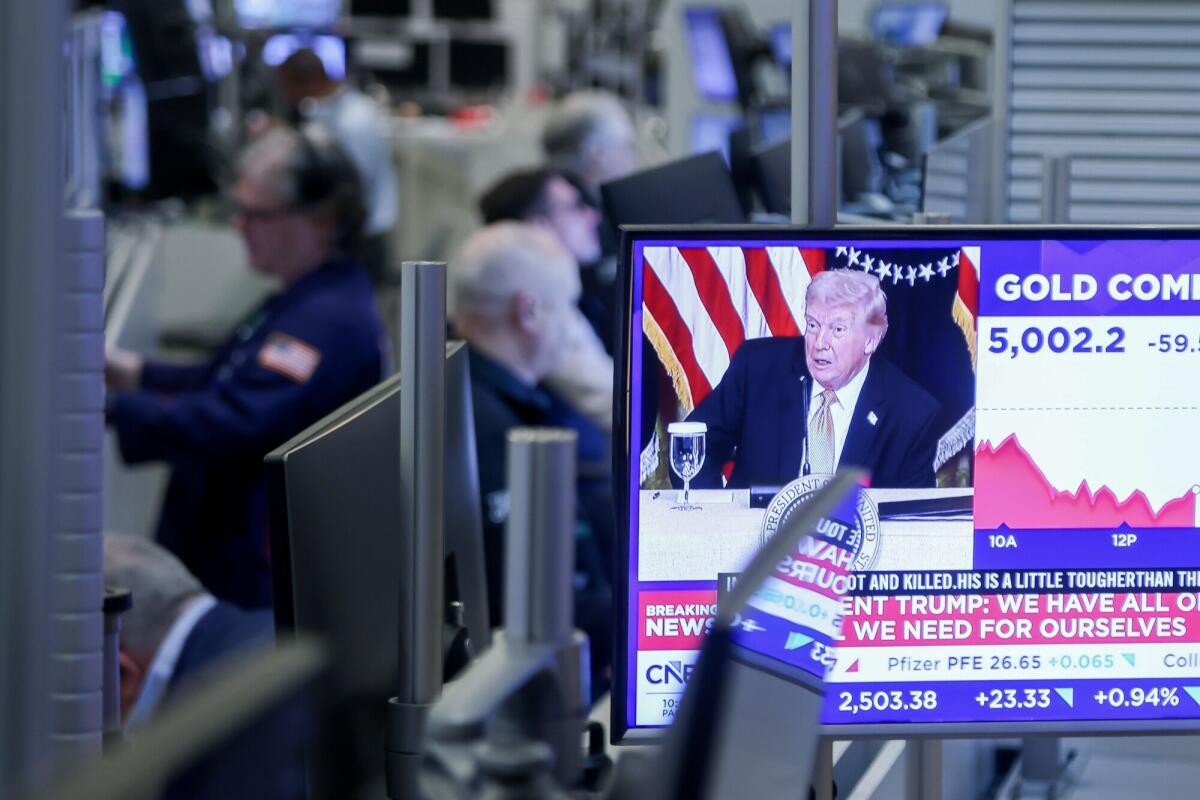
Oil prices surged sharply Wednesday after President Donald Trump cast serious doubt on the temporary truce between the United States and Iran.
Trump made the remarks on the sidelines of the two-day NATO summit in Ankara, Turkey, following fresh U.S. military strikes on Iran.
The strikes came in direct response to attacks on three ships in the Strait of Hormuz, a critical chokepoint for global oil supply.
“For me, I think it’s over,” Trump said when asked about the status of the ceasefire, adding, “It’s just a waste of time dealing with them.”
U.S. benchmark crude surged 5.8% to $74.55 a barrel during the session, hitting an intraday high of $76 per barrel following Trump’s comments.
The move marked crude oil’s largest single-day gain since early June, with the two-day rally pushing prices up more than 7% in total.
U.S. crude ultimately closed the day up 4.4% at $73.52 per barrel, while international benchmark Brent crude settled at $78.02, a gain of 5.2%.
Brent touched an intraday high of $80 per barrel before retreating, reflecting intense volatility tied directly to the rapidly shifting geopolitical situation.
Stock markets fell broadly on the news, with the S&P 500 closing down 0.3% and the Dow Jones Industrial Average dropping 577 points by the end of trading.
The Russell 2000 index, which tracks small- and mid-cap companies, tumbled 0.9%, reflecting broad risk-off sentiment across equity markets.
Nasdaq futures had fallen 1.1% before the opening bell, signaling widespread investor anxiety ahead of what became a turbulent trading session.
Trump did soften his remarks slightly, saying he would allow negotiations to continue despite declaring the ceasefire agreement effectively finished.
Iran and the United States had agreed under their interim deal to allow ships to pass through the Strait of Hormuz without charges for 60 days.
Tehran, however, insisted it must control vessel routes through the strait and vowed to impose fees on passage at a later date, upending decades of established practice.
The central fear gripping markets is that renewed conflict will block the Strait of Hormuz, trapping oil tankers in the Persian Gulf and cutting off global crude deliveries.
Such a disruption could worsen inflation at a time when economists had expected easing energy prices to bring broader price pressures under control.
A sustained oil price shock could also force the Federal Reserve and other central banks to keep interest rates higher for longer, slowing economic growth and weighing on investment prices.
Crude had been trending lower in recent weeks, pulling back from spikes well above $100 a barrel to levels closer to where prices stood before the war with Iran began in late February.
Following a U.S.-Iran memorandum of understanding signed in mid-June, oil prices had stabilized in the $69 to $70 per barrel range for nearly three weeks before Wednesday’s dramatic reversal.
“For markets and the global economy, the prospect of a swift return to pre-conflict energy and goods flows through the waterway is fading,” said Geoff Yu, senior market strategist at BNY.