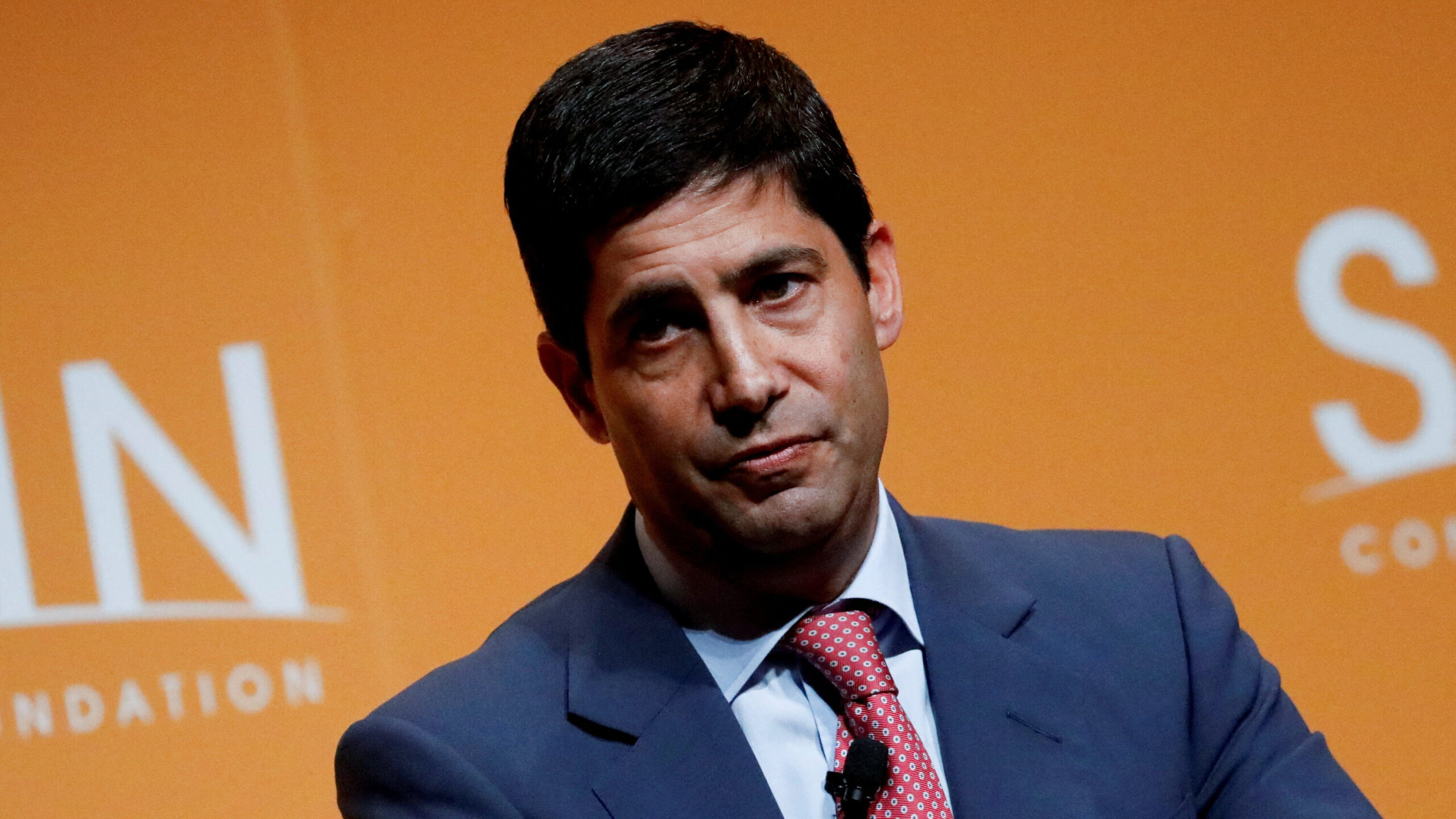
Kevin Warsh, the new Federal Reserve chairman, has established a pattern of returning to three distinct phrases across his early public appearances.
Across five appearances since his April nomination hearing, Warsh has used the phrase “family fight” 13 times, “first principles” 11 times, and “inflation is a choice” six times.
Those appearances include his first press conference, a roundtable in Portugal, and two congressional testimonies, offering Fed watchers ample material to analyze.
Warsh has chosen to say less than his predecessors, placing a premium on understanding the specific words he does select when he speaks publicly.
CNBC asked five close Fed watchers to interpret what each of the three recurring phrases signals about Warsh’s approach to monetary policy.
On the “family fight” phrase, Dan Greenhaus of Solus Alternative Asset Management said it could improve policymaking over time: “The benefit is less about changing the outcome of any individual meeting and more about improving the quality of the decision-making process over time.”
Mark Spindel, Fed author and Potomac River Capital chief investment officer, suggested the phrase also functions as a shield: “It’s also a way of deflecting his responsibility from external pressure (POTUS, CONGRESS, MARKETS).”
JPMorgan chief U.S. economist Michael Feroli offered a simpler read, saying: “I guess the family fight is him trying to be folksy, but it doesn’t depart from the tradition under [Ben] Bernanke of (publicly) welcoming dissenting opinions.”
On “first principles,” Claudia Sahm, chief economist at New Century Advisors, described it plainly: “‘First principles’ is code for ‘question everything.'”
Sahm added that she is skeptical Warsh can deliver on that ambition, arguing that identifying a flawed assumption requires offering a better replacement, something she expects Warsh to fall short of achieving.
Spindel connected the phrase to Warsh’s broader skepticism of modern monetary frameworks, noting that the Phillips Curve and economic forecasting “appear to be unhelpful in Warsh’s first principled approach.”
Feroli linked “first principles” to Warsh’s pointed comments about elite PhD economists, saying both remarks suggest “the institution has let the academically driven types distract the Fed from focusing on a few basic economic principles.”
On “inflation is a choice,” former Cleveland Fed President Loretta Mester traced it directly to Milton Friedman’s argument that “inflation is always and everywhere a monetary phenomenon, in the sense that it is and can be produced only by a more rapid increase in the quantity of money than in output.”
Sahm agreed on the Friedman connection but warned that Warsh’s phrasing omits a critical timeframe, saying: “In the short run, supply shocks like energy disruptions or tariffs can move inflation regardless of what the Fed does.”
Greenhaus concluded that the phrase signals a Fed less willing to blame external forces for persistent price increases, with Warsh’s core message being that “the buck stops with us.”