Federal Reserve Chairman Kevin Warsh delivered a closely watched speech Friday at the Fed’s annual Jackson Hole symposium, expressing fresh concern about elevated inflation.
Warsh stopped short of committing to either forward guidance or a reaction function for monetary policy, instead outlining his broader philosophy on governance.
He acknowledged that recent price data offered limited reassurance, saying, “while this summer’s [inflation] readings were better than expected, they do not tell me that underlying trends have meaningfully improved.”
The Fed chair made clear he sees more work ahead, stating, “We must be confident that underlying inflation is moving to our objective, clearly and at sufficient speed. Otherwise, we have work to do. That’s our job . . . our mandate . . . and our charge to keep.”
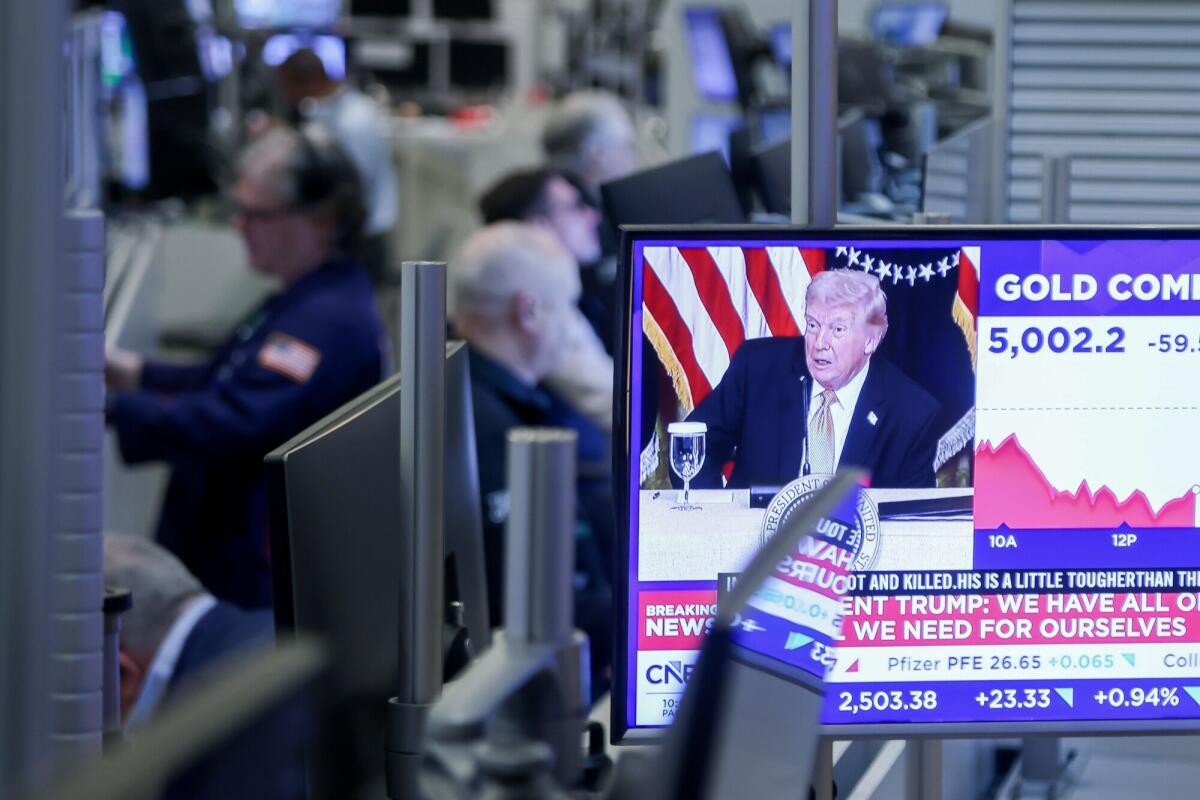
Treasury yields moved substantially higher following the 10 a.m. ET release of his remarks, while stock market indexes were little changed in early trading.
Warsh expressed general confidence in the broader economy, which he said “appears to have strengthened,” while citing artificial intelligence and solid business and consumer spending as supporting factors.
The chairman used the platform to redefine the Fed’s relationship with markets, calling for a “quieter Fed, more purposeful in its communications,” a notable departure from the style of recent predecessors.
“We should not indulge a regime in which market participants are looking primarily to the Fed for their next trade,” Warsh said, signaling his intent to reduce the central bank’s outsized influence on daily market decisions.
Warsh also pushed back firmly against the practice of forward guidance, quipping, “You can call it an outline . . . you can call it a trail map . . . just don’t call it forward guidance,” adding that the practice “has overstayed its welcome.”
He framed his Jackson Hole address not as a policy signal but as a statement of discipline, telling the audience, “I stand here today committed to a discipline, not to a decision.”
Since taking office in May, marking what Warsh noted was his 100th day as chairman, he has launched five internal task forces to examine various Fed functions and operations.
Warsh acknowledged criticism over his reluctance to specify a reaction function, directly referencing the challenge: “So, if forward guidance is ill-suited to normal times, then how about the new Fed chief commits — at the very least — to an explicit reaction function?”
He nonetheless resisted committing to a fixed rule, arguing that “our knowledge just doesn’t extend that far — at least not yet — and the factors most relevant to the proper conduct of monetary policy change over time.”
Warsh pledged that he and his colleagues would work toward better modeling tools, saying, “With so much changing so fast in geopolitics, global supply chains, and technology, it’s wise to be modest about what we can and cannot know.”
His address stood in sharp contrast to last year’s Jackson Hole speech by then-Chair Jerome Powell, who hinted at forthcoming rate cuts and sparked an aggressive rally on Wall Street.