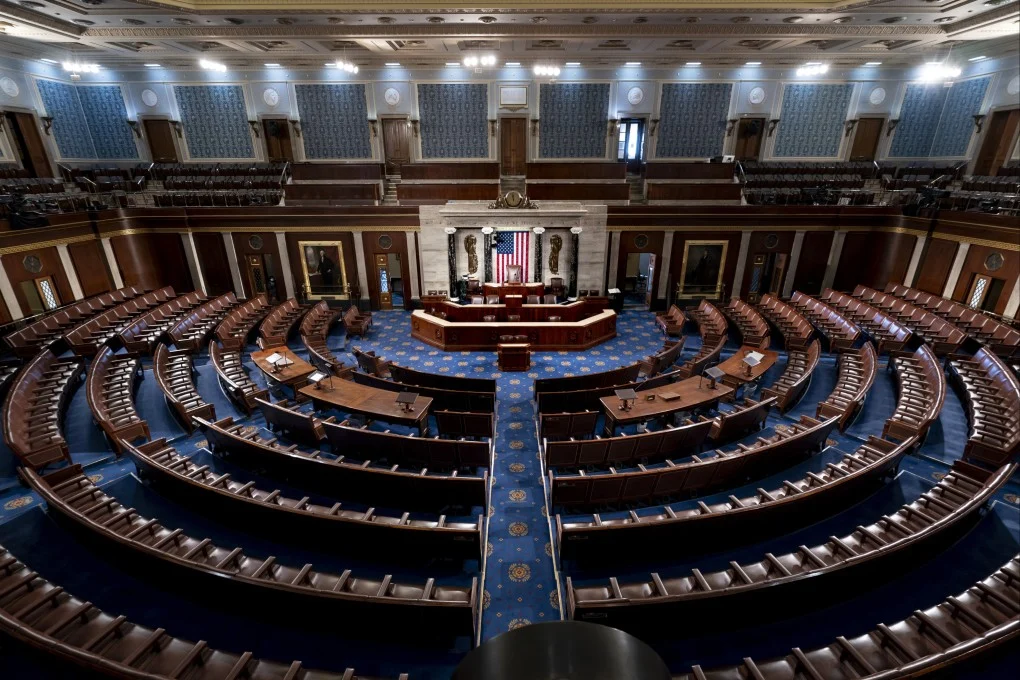
The 2026 midterm elections are shaping up to be a defining test for Republican control of the Senate, with party insiders weighing both opportunities and vulnerabilities across the national map.
Republicans are encountering early headaches in several Senate races viewed as pivotal to maintaining the party’s majority heading into November’s midterm elections.
Recruitment failures, open primaries, and internal party infighting have complicated the GOP’s ability to consolidate its position in key battleground states this cycle.
A president who has remained largely on the sidelines has added another layer of uncertainty to Republican Senate strategy, leaving party operatives to navigate the map with limited top-down support.
National Republican Senatorial Committee chair Sen. Tim Scott has been eyeing opportunities to expand the GOP’s 2026 Senate map as the party plots its broader midterm approach.
Scott’s ambitions reflect a party that, despite its internal tensions, sees potential pickup opportunities in states where the political landscape has shifted in Republicans’ favor in recent cycles.
Democrats, meanwhile, face a structurally challenging path to reclaiming the Senate majority, needing to net four seats to flip control of the chamber.
The obstacle for Democrats is compounded by the fact that the majority of 2026 Senate contests are taking place in states that former President Trump won comfortably in the last election.
That geographic reality means Democrats must defend difficult terrain while simultaneously pursuing offensive opportunities in states where the political environment has not historically favored their candidates.
Party strategists on both sides acknowledge that the outcome of the Senate map will hinge heavily on candidate quality, late-breaking national dynamics, and voter turnout operations built over the coming months.
Republicans privately acknowledge that a failure to lock in strong candidates early could allow Democrats to remain competitive in races the GOP expected to put away well before Election Day.
The battle for Senate control is expected to draw enormous financial resources from outside groups on both sides, as the stakes of a four-seat flip become increasingly clear to national donors.