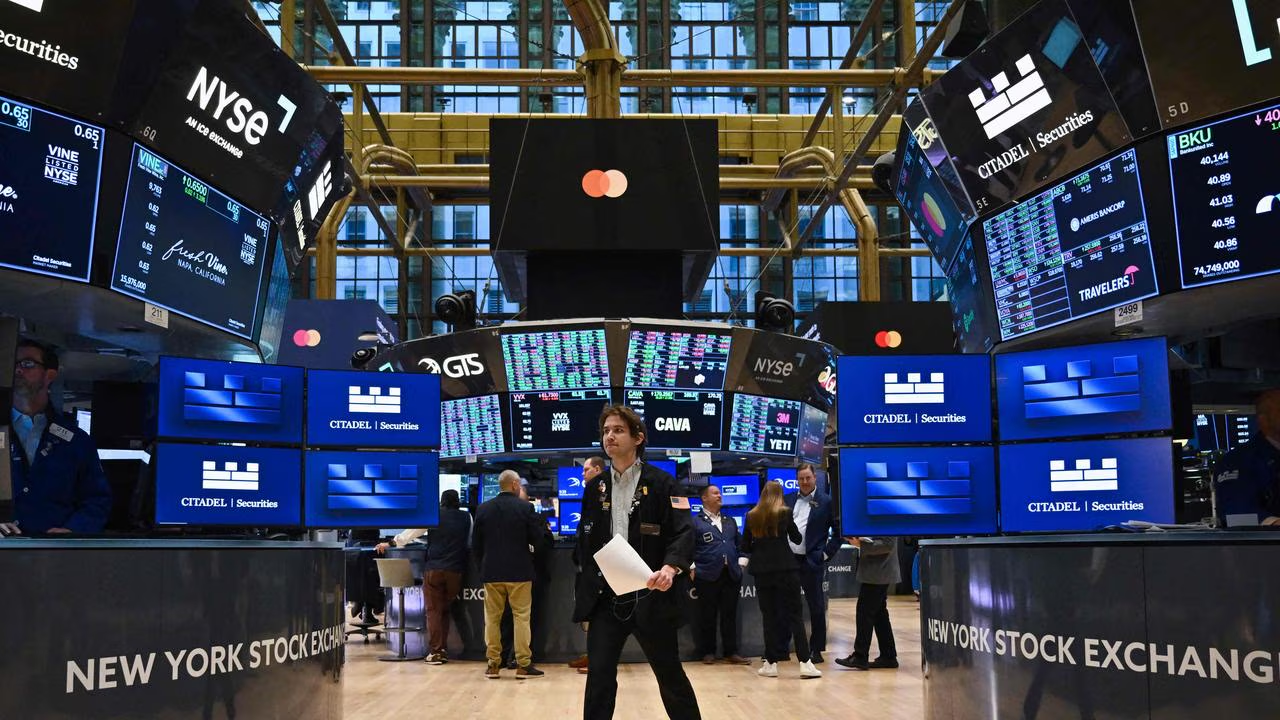
The technology sector offered investors no shelter Friday as AI fears and interest-rate concerns triggered a sweeping selloff across software and semiconductor stocks.
The Nasdaq Composite shed as much as 2.5% at its worst point during the session, erasing roughly $800 billion in market value before recovering partially to close down 1.5%.
Software and semiconductor stocks, which had largely moved independently for much of the year, converged in a painful joint decline that rattled Wall Street.
Traders aggressively dumped software shares amid growing concerns that artificial intelligence could cannibalize the business of traditional software providers and professional services firms.
Chip stocks also came under heavy pressure after a key supplier to OpenAI warned of slowing demand, amplifying an already jittery market mood.
Salesforce (CRM) closed down 2% on Friday, joining a broad wave of declines across some of the world’s largest technology companies.
Palantir (PLTR) dropped more than 11%, AppLovin (APP) slumped 16%, while Oracle (ORCL) and CrowdStrike (CRWD) also extended their recent losses.
AMD (AMD) was among the hardest hit, crashing 17% after the chipmaker forecast a slowdown in revenues, while Micron Technology (MU) dropped 10% and Broadcom (AVGO) and ASML (ASML) also racked up significant declines.
The rout deepened further as earnings results from Arm (ARM) and Qualcomm (QCOM) disappointed investors, sending both stocks sharply lower in after-hours trading.
Arm fell by as much as 13%, while Qualcomm initially slumped 10% after releasing forecasts that failed to meet investor expectations heading into the session.
The breadth of Friday’s decline underscored how exposed the technology sector remains to any shift in sentiment around artificial intelligence spending and the broader interest-rate environment.
With double-digit percentage losses spreading across both chip designers and software platforms, investors found that diversifying within the technology sector provided little protection against the day’s carnage.