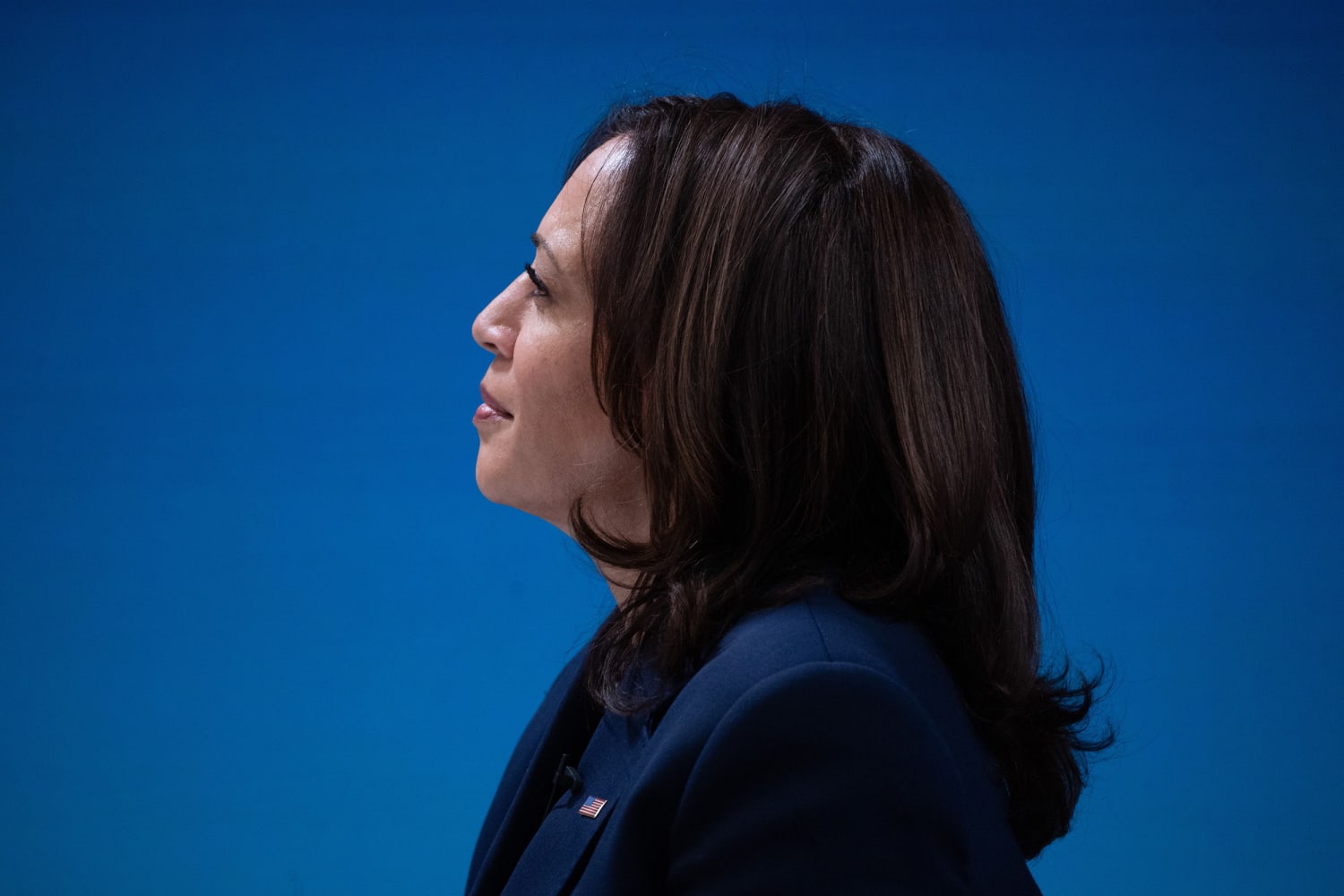
President Donald Trump has repeatedly made claims about Kamala Harris’ IQ.
In recent years, public discussion around Kamala Harris’s intelligence has spiraled — largely driven by unverified claims and repeated attacks from political opponents, particularly president Donald Trump. As the 2024–2025 election season intensifies, the debate over Harris’s IQ has become a symbolic flashpoint — but available evidence shows that claims about her intelligence are unsubstantiated, and the spotlight may reflect more politics than fact.
What We Actually Know — And Don’t — About Harris’s IQ
There has been circulating online content claiming that Kamala Harris once received a low IQ score — specifically “78” — during her time at university. This claim has been widely debunked. There is no credible public record showing any IQ test score for Harris, much less one as low as 78. The claim appears to stem from a Reddit post that has since vanished, and investigations into its origin found no supporting evidence.
Beyond that, no reputable academic or journalistic source has produced data indicating Harris ever took a publicly disclosed IQ test — let alone one that produced a concrete, verified number. That means all references to her IQ number are speculative or part of unfounded rumor.
In short: there is no verifiable proof that Harris has ever taken a public IQ test — so any specific number attributed to her must be treated as unsubstantiated.
Trump’s Comments on Harris’s Intelligence
Despite the absence of any verified IQ data, Donald Trump has repeatedly attacked Harris’s mental acuity. Over recent rallies and public statements, he has labeled her “stupid,” “mentally unfit,” and “a very low IQ person.” On multiple occasions, he described her as “a low‑IQ individual,” suggesting that her candidacy posed a risk to the nation due to perceived incompetence.
In one interview, Trump argued he was not insulting her but stating an alleged “fact,” citing what he called her “record” and comments she has made. In another instance, he claimed he “aced” cognitive tests himself and used them to argue that all candidates should undergo such testing — implicitly inviting comparisons with Harris.
This surge of public attacks on Harris’s intelligence has become a recurring feature of their political rivalry, with Trump integrating it into a broader criticism of her policies, background and suitability to lead.
Harris’s Response and the Cognitive‑Test Challenge
Rather than yield to the insults, Kamala Harris has offered pushback. She publicly challenged Trump to take a cognitive test if he truly believed in testing mental fitness — underscoring that she would do so herself. She framed Trump’s insults as a diversion from policy and electoral accountability.
Harris has described Trump’s rhetoric not as debate, but as personal name‑calling. She has argued the real issue for voters should be her policy proposals, experience, and record — not unsubstantiated IQ claims. Her stance is that attacking a candidate’s intellect without evidence amounts to character assassination rather than legitimate political critique.
Why Kamala Harris IQ Claims Are Misleading — And Dangerous
The fixation on IQ is problematic for several reasons. First: IQ tests — even when administered — capture only one narrow aspect of cognitive ability, and highly dependent on testing conditions, timing, and test design. They do not reliably reflect broader capabilities like leadership skill, emotional intelligence, public service competence, or political judgment.
Second: attributing low IQ to a public figure without evidence propagates misinformation and undermines rational public discourse. In Harris’s case, it reinforces harmful stereotypes — especially when intersecting with issues of gender and race. Critics argue that repeated use of “low‑IQ” slurs against Harris — a Black and Indian American woman — taps into a long history of bias and discrimination.
Third: eliding politics and policy in favor of ad hominem attacks distracts voters from substantive evaluation of a candidate’s record or plans. The insistence on IQ as a measure of worth — particularly when unverified — reduces complex public service to untenable simplicity.
What Voters Should Focus On Instead
Rather than getting bogged down by unverified rumors or slurs about cognitive ability, a more constructive approach would assess candidates on tangible factors such as:
- Their educational and professional background (law degree, prior public service, experience).
- Their policy positions and track record — what they have done, proposed or delivered.
- Their voting records, leadership style and public accountability.
- Their ability to address current national challenges, from economic issues to social justice and international affairs.
Judging on these metrics offers a far more meaningful gauge of suitability for office than ambiguous or false IQ claims.
The Broader Implication: Misinformation, Bias and Political Weaponization
The case of Kamala Harris’s alleged IQ score illustrates a broader phenomenon: the weaponization of misinformation in modern political campaigns. Unverified claims, amplified by partisan media or social platforms, can shape public opinion — even when they have no factual basis.
When such claims intersect with identity — gender, race, or background — the risk becomes greater: what begins as a political attack can easily morph into prejudice, reinforcing systemic bias under the guise of criticism.
By demanding public proof or testing, critics like Trump attempt to put the burden of proof on the target — yet rarely subject themselves to the same scrutiny. This asymmetry raises questions about fairness, transparency, and the ethical standards of political discourse.
What the Evidence — Or Lack Thereof — Actually Shows
At this point, the facts are clear: there is no credible evidence that Kamala Harris has ever had her IQ publicly tested or recorded. The widely circulated number, often cited by detractors, originates from a now-deleted internet post and remains unconfirmed.
Donald Trump’s repeated attacks on her intelligence reflect a deliberate campaign tactic rather than evidence-based critique. Harris’s willingness to take a cognitive test — and to challenge Trump to do the same — underscores that the real battleground should be policy and leadership, not insults or rumors.
For voters and observers alike, anchoring judgments in documented facts — educational background, experience, policy proposals — offers a far more substantive, fair, and democratic basis for evaluating any candidate. In the end, what matters most is what a leader can do — not what a rumor says about their IQ.