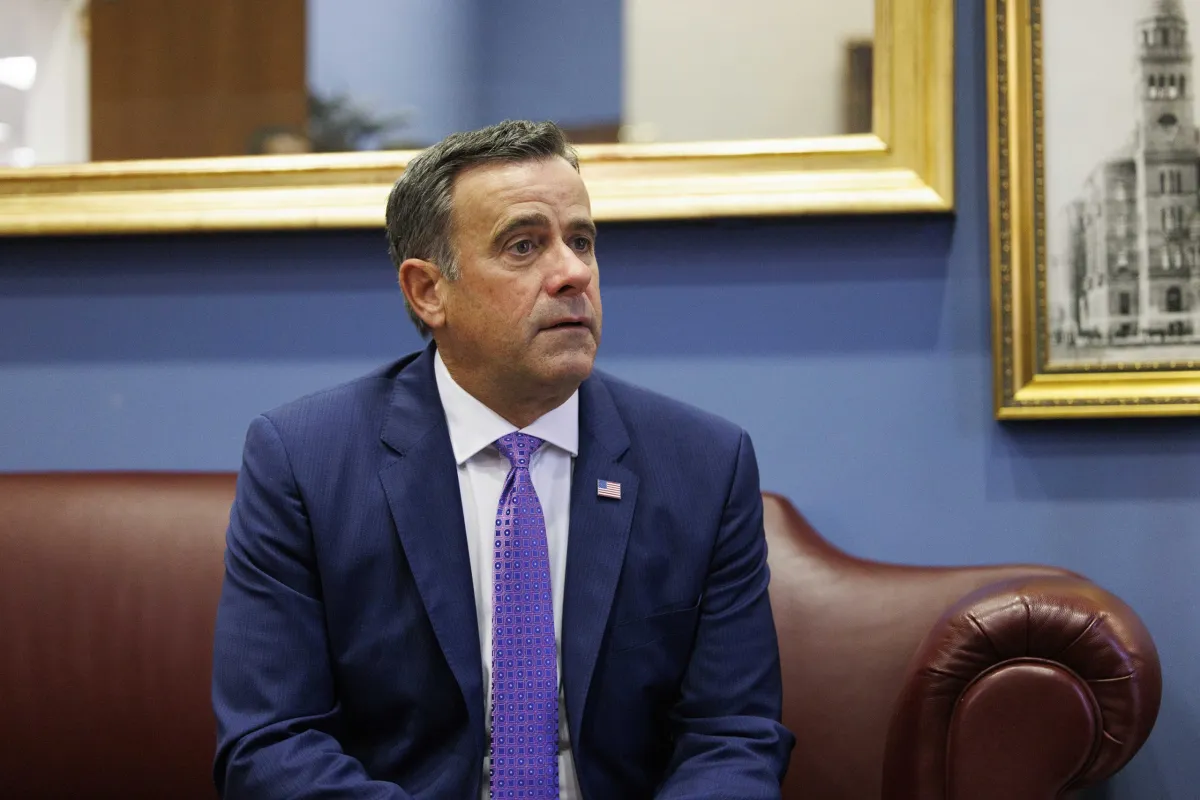
John Ratcliffe has built a substantial net worth as a result of his career in various sectors.
John Ratcliffe has built a long career across law, politics, and intelligence leadership, becoming one of the most recognisable Republican figures of the past decade. His time in Congress, his period as Director of National Intelligence, and his later move into a senior intelligence position under a Republican administration have all contributed to his influence.
As debates over national security, partisanship, and political loyalty continue to shape Washington, Ratcliffe’s financial profile and ideological stance remain a subject of public interest.
Early Life and Legal Foundations
John Lee Ratcliffe was born on October 20, 1965, in Illinois, and he spent much of his early life in the Midwest before pursuing higher education in government and law. He later relocated to Texas, where he established his legal career. Ratcliffe earned a reputation as a capable attorney and worked in both private practice and public roles, including serving as a federal prosecutor.
His most notable early legal appointment came when he served as the U.S. Attorney for the Eastern District of Texas in an acting capacity. This role exposed him to national-level legal and security issues that would later shape his political trajectory.
Rise in Local and National Politics
Ratcliffe’s first elected office was not in Washington but in Heath, Texas, where he served as mayor for several years. His time in local government helped him build political connections and a reputation as a conservative municipal leader. It also provided the platform he needed to move into national politics.
In 2014, Ratcliffe successfully ran for Congress in Texas’s 4th congressional district. During his years in the House of Representatives, he quickly became known for his loyalty to conservative priorities and his alignment with the Republican Party’s right flank.
He served on committees that dealt with national security, cyber issues, and government oversight. His questioning style in hearings drew praise from conservative commentators and criticism from Democrats who argued he often approached issues with a partisan lens.
National Intelligence Leadership
In 2020, Ratcliffe was appointed Director of National Intelligence, making him the head of the U.S. intelligence community. His appointment was controversial at the time, partly because of criticisms that he lacked extensive intelligence experience and partly due to concerns over how closely aligned he was with Republican political leadership.
As DNI, Ratcliffe emphasised issues such as election security, foreign espionage, and cyber intrusions. He also took positions that mirrored broader Republican narratives on China, Iran, and domestic extremism. His tenure was marked by a strong focus on external threats and a belief that the intelligence community had been mishandled or misrepresented in prior years.
After leaving the DNI role at the end of the term in early 2021, Ratcliffe remained an influential voice in conservative politics, often appearing in media and advising Republican lawmakers on national security issues. In 2025, he returned to government service in a senior intelligence position, strengthening his place as a major figure within the party’s national-security wing.
John Ratcliffe Net Worth in 2025
As of 2025, John Ratcliffe’s estimated net worth is generally assessed to fall between $4 million and $6 million. This valuation is based on publicly available financial disclosures from his time in Congress and subsequent government filings.
Ratcliffe’s income over the years has come from several key sources. Before entering Congress, he earned substantial income from private legal practice, including working as a partner at law firms in Texas. Legal work remained the foundation of his financial success, allowing him to build personal assets long before taking federal office.
During his time in Congress, Ratcliffe earned the standard congressional salary, which contributed to but did not significantly transform his net worth. His later work in national intelligence also provided him with a stable, well-compensated federal salary, though intelligence officials typically earn less than senior executives in the private sector.
Much of Ratcliffe’s reported wealth has been held in investments, retirement accounts, and jointly owned marital assets. Unlike some modern political figures, he has not accumulated large fortunes from book deals, major corporate board seats, or outside business ventures. His financial profile is relatively modest compared to many high-ranking federal officials.
Political Leanings and Ideological Identity
Ratcliffe is widely regarded as a strong conservative, consistently aligning with the Republican Party’s right wing. During his time in Congress, he received high marks from major conservative rating groups and was frequently identified as one of the most ideologically conservative members of the Texas delegation.
His political positions have emphasised limited government, strong border enforcement, scepticism toward international agreements, and an assertive national-security posture. He has been an outspoken critic of what he views as government overreach and has supported aggressive intelligence and counterterrorism policies.
Ratcliffe’s political alignment has also been shaped by his close relationship with Republican leadership. He has defended Republican presidents against accusations of misconduct, challenged Democratic narratives on investigations, and maintained a political identity centred around loyalty to conservative principles and institutions.
Public Image and Role in 2025
In 2025, Ratcliffe remains a major figure within Republican national-security circles. His experience in Congress, combined with his intelligence leadership background, makes him a prominent adviser and policymaker. Supporters view him as a principled defender of American security interests, while critics argue he is overly partisan in areas that require impartial judgement.
Regardless of perspective, Ratcliffe’s influence in shaping U.S. intelligence discussions is undeniable. His financial status is stable but not extravagant, and his political leanings remain firmly anchored in conservative ideology.