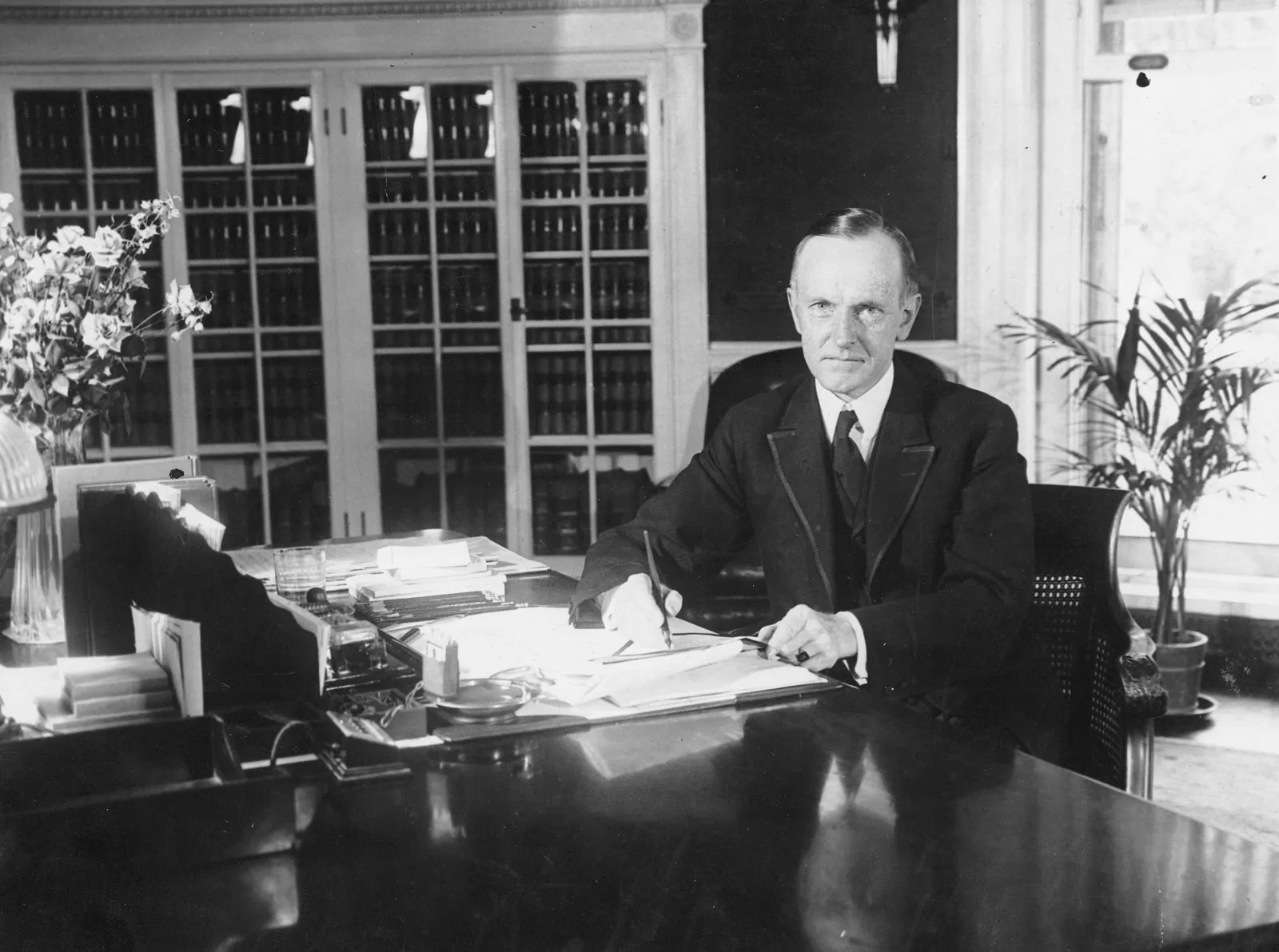
The Calvin Coolidge Project has emerged as a prominent effort to reassess the legacy and performance of America’s 30th president, placing renewed attention on an administration often overshadowed in modern historical rankings. Named after Calvin Coolidge, who served as president from 1923 to 1929, the project focuses on evaluating executive leadership through the lenses of constitutional restraint, fiscal discipline, and limited government. Its work has sparked debate among historians, economists, and political analysts about how presidential success should be measured.
| Category | Details |
|---|---|
| Name | Calvin Coolidge Project |
| Focus | Reassessing the legacy and presidency of Calvin Coolidge |
| Primary Goals | – Evaluate executive leadership through fiscal discipline and constitutional restraint |
| – Reframe presidential rankings with alternative metrics | |
| – Promote historical understanding of limited government principles | |
| Key Themes | – Fiscal conservatism and budget surpluses |
| – Limited government intervention in the economy | |
| – Veto use and constitutional adherence | |
| – Peaceful and stable administration | |
| Economic Highlights | – Reduced federal debt |
| – Lowered taxes under Andrew Mellon | |
| – Federal budget surpluses every year | |
| Constitutional Philosophy | – Emphasis on separation of powers |
| – Resistance to expansion of federal authority | |
| – Vetoed legislation exceeding federal powers | |
| Historical Reassessment | – Challenges traditional rankings that undervalue Coolidge |
| – Focus on “what presidents choose not to do” as much as what they do | |
| Modern Relevance | – Serves as a reference for fiscal conservatives and limited government advocates |
| – Inspires discussions on government size, executive restraint, and long-term economic policy | |
| Public Engagement | – Lectures, essays, and educational programs |
| – Encourages debate about presidential evaluation criteria |
Unlike traditional rankings that emphasize crisis leadership or legislative volume, the Calvin Coolidge Project promotes a framework that values stability, adherence to constitutional boundaries, and economic outcomes during peacetime. Supporters argue that Coolidge’s presidency represents an underappreciated model of governance, while critics question whether such an approach adequately accounts for long-term social and economic consequences.
Origins and Purpose of the Calvin Coolidge Project
The Calvin Coolidge Project was established by scholars and policy analysts interested in challenging prevailing academic assumptions about presidential greatness. For decades, Coolidge ranked near the middle or lower tiers of presidential surveys, often criticized for perceived passivity during the lead-up to the Great Depression. The project argues that this narrative oversimplifies both Coolidge’s philosophy and the conditions of the 1920s.
At its core, the project seeks to reframe evaluation criteria by emphasizing what presidents choose not to do, as well as what they actively pursue. Coolidge believed deeply in limited executive power and famously stated that “the chief business of the American people is business,” reflecting his view that economic growth was best driven by private enterprise rather than federal intervention.
Key aims of the project include:
- Reassessing Coolidge’s economic and fiscal record
- Examining constitutional restraint as a leadership strength
- Promoting alternative metrics for presidential rankings
Economic Policy and Fiscal Management
One of the central pillars of the Calvin Coolidge Project is its focus on fiscal discipline. During Coolidge’s presidency, the federal government ran budget surpluses every year, reduced national debt, and lowered tax rates across multiple income brackets. Treasury Secretary Andrew Mellon played a key role in shaping tax policy, but Coolidge consistently backed reductions in federal spending.
The project highlights that federal outlays declined significantly during the 1920s, while economic growth and rising wages characterized much of the decade. Advocates argue that Coolidge demonstrated how limited government could coexist with prosperity, countering the assumption that active federal management is always necessary for economic success.
Economic points emphasized by the project include:
- Consistent federal budget surpluses
- Substantial reductions in national debt
- Broad tax cuts paired with spending restraint
Constitutional Philosophy and Executive Restraint
Another defining element of the Calvin Coolidge Project is its emphasis on constitutional governance. Coolidge vetoed numerous bills he believed exceeded federal authority, including measures that would have expanded agricultural subsidies. His veto of the McNary-Haugen Farm Relief Bill is frequently cited as an example of his resistance to market intervention.
The project argues that Coolidge viewed the presidency as a steward of constitutional order rather than a vehicle for sweeping reform. This philosophy contrasts sharply with later presidents who expanded executive power through legislation, executive orders, and emergency authorities.
Supporters claim this restraint preserved institutional balance and reduced long-term risks associated with federal overreach.
Key constitutional themes include:
- Strong use of the veto to limit federal expansion
- Emphasis on separation of powers
- Resistance to populist economic intervention
Historical Rankings and Academic Debate
The Calvin Coolidge Project has gained attention for publishing alternative presidential rankings that place Coolidge significantly higher than conventional surveys. These rankings often prioritize peace, economic stability, and adherence to constitutional limits over activism or crisis response.
This approach has generated criticism from some historians who argue that Coolidge’s presidency should be judged in the context of the 1929 market crash, which occurred shortly after he left office. Critics contend that the project underplays structural weaknesses in the 1920s economy and the social challenges of the era, including labor unrest and agricultural hardship.
The project responds by noting that Coolidge declined to seek another term and that policy shifts under subsequent administrations played a role in economic collapse. The debate underscores broader disagreements about historical causation and responsibility.
Ranking criteria highlighted by the project include:
- Peaceful administration without major wars
- Fiscal sustainability
- Respect for constitutional limits
Cultural Legacy and Modern Influence
Beyond academia, the Calvin Coolidge Project has influenced political discourse, particularly among advocates of limited government and fiscal conservatism. Coolidge’s speeches, personal frugality, and understated leadership style are frequently cited as contrasts to modern executive politics.
The project has also contributed to renewed public interest in Coolidge’s personal life, including his reputation for integrity, modesty, and moral seriousness. His response to the 1919 Boston Police Strike, while governor of Massachusetts, is often highlighted as an example of principled leadership grounded in rule of law.
In contemporary debates over government spending, executive authority, and regulatory power, the project positions Coolidge as a reference point rather than a relic.
Areas of modern relevance include:
- Debates over government size and scope
- Fiscal responsibility in peacetime
- Presidential restraint versus activism
Ongoing Research and Public Engagement
The Calvin Coolidge Project continues to expand its research, hosting lectures, publishing essays, and engaging with educators and policymakers. Its proponents argue that reassessing Coolidge is not about nostalgia, but about questioning entrenched assumptions in historical evaluation.
By challenging dominant narratives, the project encourages broader discussion about what Americans should expect from presidential leadership. Whether or not critics accept its conclusions, the initiative has succeeded in reopening debate about a presidency long considered quiet, but increasingly viewed as consequential.
The project’s growing visibility reflects a wider reassessment of leadership, governance, and the tradeoffs between action and restraint in American political history.