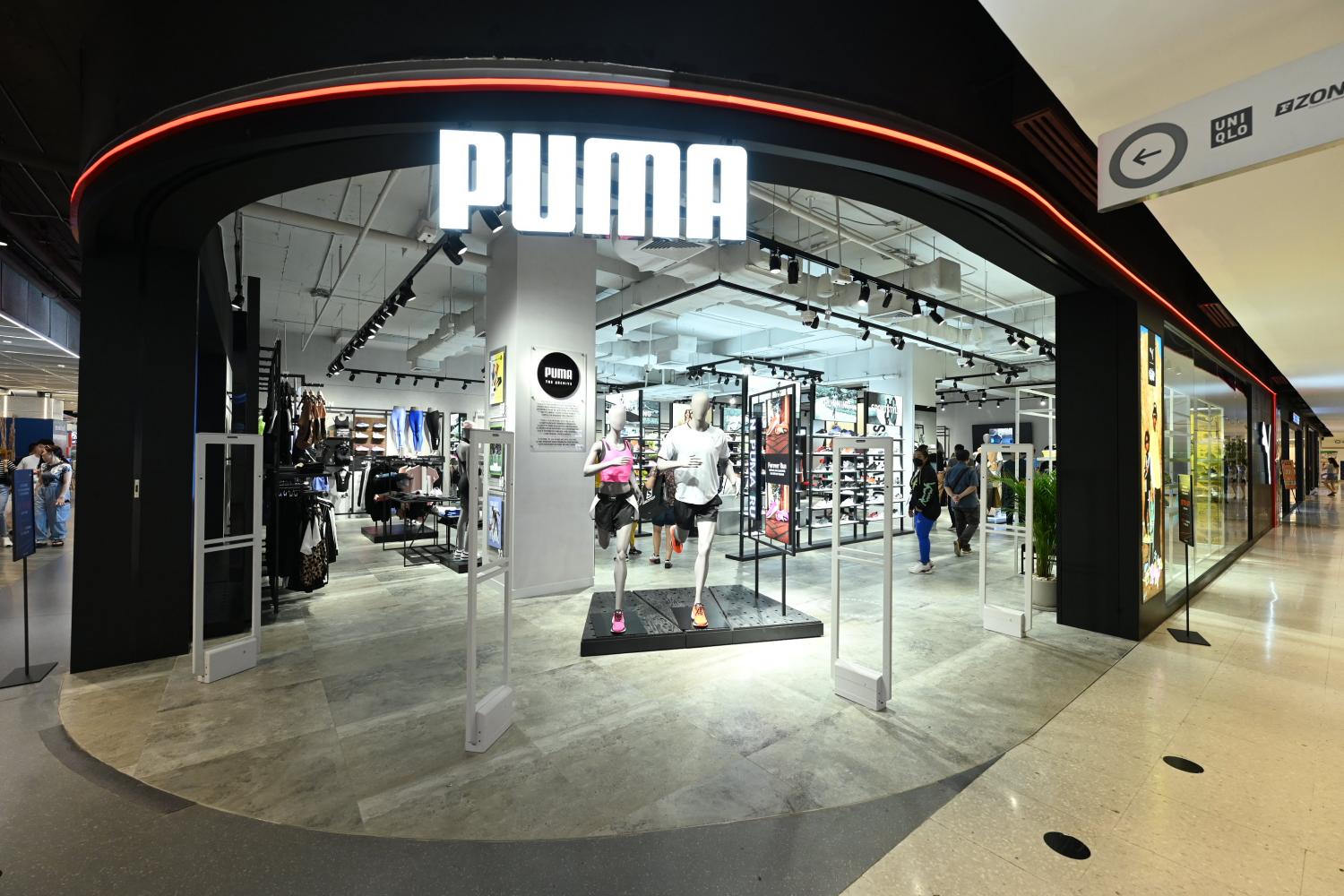
Shares in German sportswear company Puma jumped sharply after news broke that China’s Anta Sports Products would acquire a major stake in the brand, immediately shifting investor sentiment and signaling a major change in the company’s ownership structure.
The announcement pushed Puma’s stock up by around 15% in early Frankfurt trading, as markets reacted to both the size of the investment and the strong premium attached to the deal. Investors viewed the transaction as a powerful endorsement of Puma’s long-term brand value and global positioning, particularly at a time when competition in the sportswear sector is intensifying.
The transaction represents one of the most significant ownership changes in Puma’s history and highlights a new phase in cross-border investment within the consumer brand sector. Anta confirmed it would purchase a 29.06% stake in Puma from the Pinault family, a move that will make the Chinese sportswear giant the company’s largest shareholder once the deal is completed.
The acquisition is valued at approximately 1.5 billion euros, or about $1.8 billion, underlining Anta’s willingness to commit substantial capital to secure influence in a major European brand.
Anta has agreed to pay 35 euros per Puma share in cash, which represents a 62% premium compared with Puma’s closing price of 21.63 euros on Monday. Such a premium suggests Anta sees considerable strategic and financial value in the German company and believes Puma’s current market valuation does not fully reflect its long-term potential. The aggressive pricing also demonstrates how competitive global sportswear markets have become, with major players willing to pay a significant premium to strengthen their strategic positions.
The acquisition marks a rare instance of a leading Chinese sportswear company gaining such a substantial foothold in a European rival. It also highlights Anta’s growing international ambitions as it continues to expand its influence beyond Asia and deepen its exposure to Western consumer markets. Market participants interpreted the deal as a strong vote of confidence in Puma’s brand strength, its global recognition, and its ability to remain competitive in a rapidly evolving retail environment.
An Unusual Deal Structure Raises Questions
Despite the overwhelmingly positive market reaction, analysts were quick to point out that the structure of the transaction is highly unusual. Morningstar analysts described the deal as surprising, noting that Puma itself does not appear to have been directly involved in the agreement. “The deal is odd in that Puma was apparently not involved, even though a competitor will become its largest shareholder,” they said, highlighting a rare scenario in modern corporate governance.
Typically, large share transactions involving strategic competitors include direct negotiations or some level of coordination with the target company. In this case, the stake is being transferred directly from the Pinault family to Anta, meaning Puma is not formally a party to the agreement. Such arrangements can create uncertainty, particularly around future strategic direction and how potential conflicts of interest might be managed when a competitor becomes the dominant shareholder.
Anta and Puma operate in overlapping segments of the global sportswear market, competing in footwear, apparel, and athletic accessories. This overlap makes the ownership structure particularly complex, as Anta will hold significant influence in a company that operates in many of the same markets. Investors may naturally question how Anta’s presence could affect Puma’s independence and whether sensitive strategic information could become an issue.
At the same time, the structure allows Anta to gain influence without triggering a full takeover or assuming direct operational control. This may give Anta strategic flexibility while minimizing regulatory or organizational complications that often come with acquisitions. The arrangement places Anta in a powerful position while allowing Puma to continue operating independently in the near term.
Anta’s Expanding Global Footprint
Anta Sports has grown rapidly into one of the world’s largest sportswear companies, transforming from a domestic Chinese brand into a global powerhouse. It already owns several internationally recognized brands, including Amer Sports, which controls Salomon, Wilson, and Arc’teryx. These acquisitions have helped Anta establish a strong presence in premium performance and lifestyle segments, and the Puma stake further strengthens that global portfolio.
The investment gives Anta exposure to Puma’s strong footprint in Europe and the Americas, regions where Puma has built deep consumer loyalty and strong distribution networks. Puma is widely known for its blend of sports performance credibility and fashion-driven branding, supported by partnerships with elite athletes, football clubs, and high-profile designers. This mix makes Puma especially attractive to investors seeking both commercial stability and cultural relevance.
By acquiring a major stake, Anta gains direct financial participation in Puma’s future growth while also expanding its understanding of Western retail strategies and brand management. The move demonstrates Anta’s ambition to become a dominant force in global sportswear not only through its own brands but also through strategic equity investments. This mirrors approaches used in other industries, where companies diversify influence through ownership rather than direct competition alone.
What It Means for Puma’s Strategy
For Puma, the transaction introduces a powerful new shareholder with its own competitive interests and long-term ambitions. The Pinault family has historically been a key supporter of the brand, and its decision to sell such a large stake marks a major shift in Puma’s ownership structure. Anta’s entry changes the balance of influence and introduces new dynamics into board-level decision-making.
Even without full control, a 29.06% stake carries significant voting power and strategic influence. This level of ownership can shape conversations around expansion, capital allocation, partnerships, and long-term positioning. Some investors may view Anta’s presence as a stabilizing force, bringing financial strength and global perspective to Puma’s future planning.
Others, however, may worry about possible conflicts between Anta’s commercial priorities and Puma’s need to remain fully independent. The deal does not automatically mean Anta will pursue a full takeover, but it places the company in a strong position should it ever decide to increase its stake. For now, Puma must focus on managing this new relationship carefully while preserving its brand identity and competitive autonomy.
Investor Reaction Reflects Optimism and Caution
The sharp rise in Puma’s share price shows that investors see the transaction as value-enhancing, particularly given the size of the premium paid. The 62% premium sets a new benchmark for how the market perceives Puma’s worth and suggests that the company may have been undervalued before the announcement. Short-term traders were quick to capitalize on the price movement, while long-term investors are likely to focus on how the ownership change shapes Puma’s future strategy.
There is also growing interest in whether this deal could signal further consolidation across the sportswear sector. Large brands are increasingly seeking partnerships, investments, and acquisitions to strengthen their global reach and defend market share. The Puma-Anta transaction could encourage similar cross-border investments, especially as Chinese firms continue to expand their influence internationally.
A Turning Point for the Global Sportswear Industry
This transaction reflects broader changes in the balance of power within global consumer brands, as Chinese companies move beyond manufacturing and into ownership and strategic leadership roles. Anta’s move into Puma ownership underscores how capital and influence are becoming more globally distributed, reshaping traditional dynamics between Western and Asian companies.
For Puma, the deal opens a new chapter filled with both opportunity and uncertainty. The brand gains a powerful backer with deep resources and international ambition, but it must also carefully protect its competitive independence and strategic direction. How this balance is managed will play a crucial role in shaping Puma’s future in the years ahead.