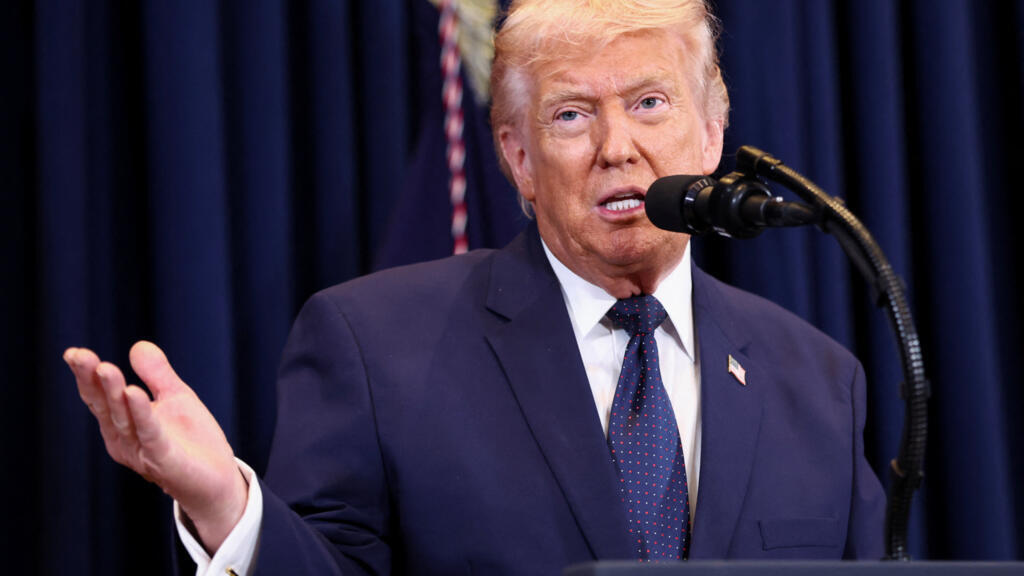
President Donald Trump is heading into the final six months before the 2026 midterm elections carrying his worst approval rating of either presidential term, facing an electorate that overwhelmingly blames him for surging fuel costs and growing questions about whether his decision to host a Saudi-backed golf tournament at his own Virginia club this weekend represents a conflict of interest that Congress has failed to scrutinise.
The latest NPR/PBS News/Marist poll placed Trump’s overall job approval at 37%, with 59% disapproving, including 51% who said they strongly disapprove. Those are the worst numbers recorded for Trump in the Marist poll across both of his terms in office. More than eight in ten respondents said gas prices are straining their household budgets, and 63% said they blame Trump directly for the increase. That figure included a third of Republican respondents, an erosion within his own coalition that political strategists have identified as a significant warning sign heading into November.
The declines extend well beyond the president’s broad approval score. White voters without college degrees, parents of children under 18, adults earning under $50,000 a year, voters in the South, rural voters, millennials, and even white evangelical Christians have all shifted meaningfully away from their February 2025 positions. Adults in the South, a region Trump carried by 13 points in 2024, now say they are five points more likely to vote for a Democratic congressional candidate than a Republican one.
Democrats currently hold a 14-point lead on the generic congressional ballot in the Marist poll, the largest Democratic advantage on that question since November 2017, the period that preceded a 40-seat Democratic House gain in the 2018 midterms. History suggests the structural environment could be similarly favourable this cycle, though analysts note that the redistricting map is significantly less competitive than it was eight years ago, with 84% of House candidates in 2024 winning by margins of 10 points or more, limiting the number of seats in genuine play.
Against this backdrop, Trump spent Saturday attending the Maaden LIV Golf tournament at Trump National Golf Club in Sterling, Virginia, the second consecutive weekend he has watched professional golf at a course he owns, having attended the PGA Tour stop at his Doral club in Florida the previous weekend. Ethics experts raised immediate concerns about the financial opacity of the arrangement, pointing out that Trump’s properties receive hosting fees from tournaments, with no public disclosure of how much revenue flows to the Trump family during his time in office.
“Where are the ethics of all the members of the Senate and the House? Why are they so afraid of political pressure they won’t speak up and tell the truth consistently and hold this president accountable?” said Don Heider, executive director of the Markkula Center for Applied Ethics at Santa Clara University.
The White House pushed back, with a spokeswoman stating that Trump’s assets are held in a trust managed by his children and that there are no conflicts of interest. Saudi Arabia’s Public Investment Fund, LIV’s chief backer, separately announced last month that it would stop funding the league after the 2026 season. Trump’s Bedminster, New Jersey club is scheduled to host another LIV event in August.