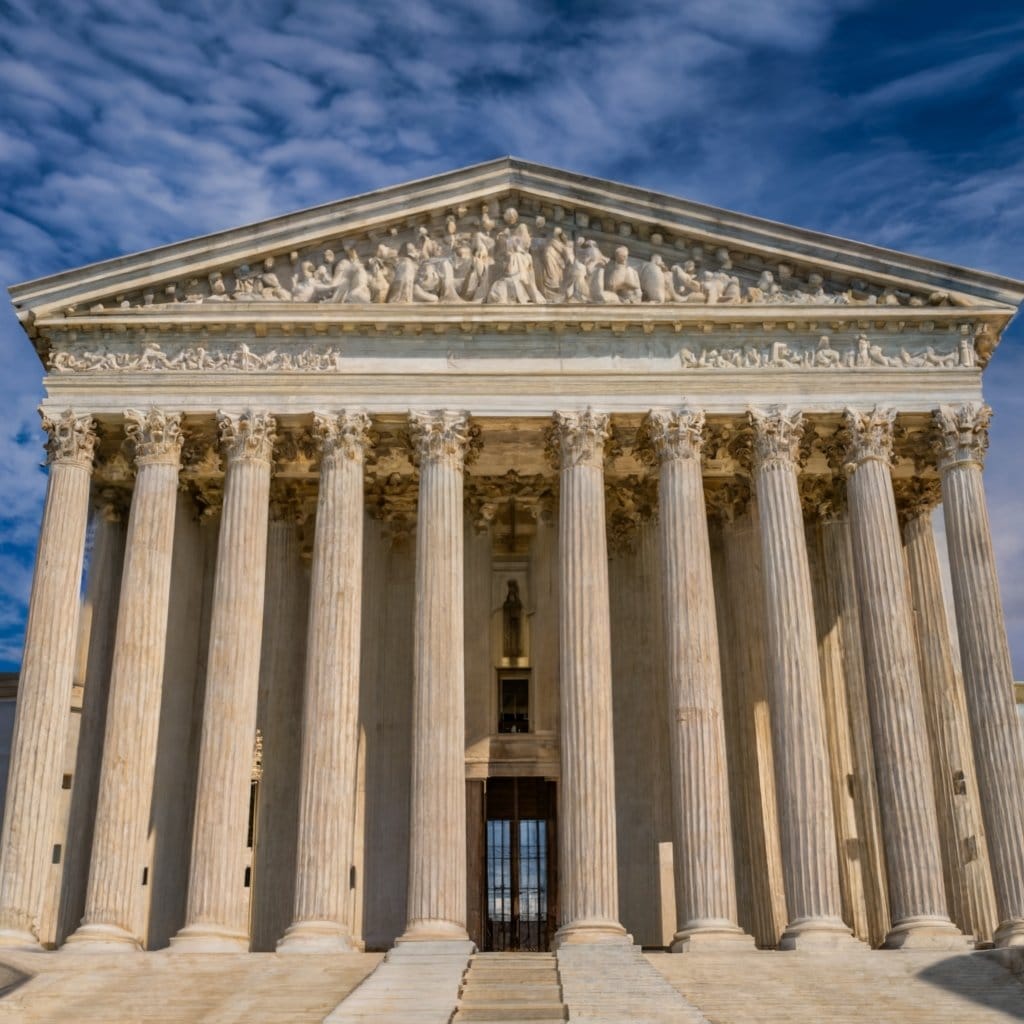
The Supreme Court ruled Monday that President Donald Trump cannot remove Federal Reserve Governor Lisa Cook while her lawsuit challenging the dismissal moves through the courts.
The 5-4 decision rejected Trump’s bid to stay a lower federal court ruling that had blocked Cook’s termination during the ongoing legal proceedings.
Chief Justice John Roberts authored the majority opinion, joined by fellow conservative Justice Brett Kavanaugh and liberal justices Elena Kagan, Sonia Sotomayor, and Ketanji Brown Jackson.
The four remaining conservative justices dissented, signaling a deep ideological divide over presidential authority to remove independent agency officials.
The court stopped short of issuing a final ruling on whether Trump ultimately holds the power to fire Cook or any other member of the Federal Reserve Board of Governors.
Trump became the first president in the Fed’s 112-year history to attempt to fire a board member when he dismissed Cook, citing allegations of mortgage fraud related to two properties in Michigan and Georgia.
Cook was nominated to the Fed by President Joe Biden in 2022, becoming the first Black woman to serve on the Federal Reserve’s Board of Governors, with her term set to run through 2036.
Cook denied any wrongdoing and has not been charged with a crime, filing suit shortly after her removal and arguing Trump violated the Federal Reserve Act.
Many observers, including Cook herself, believed Trump’s true motivation was her refusal to support the interest rate cuts he had publicly demanded from the Fed during the first nine months of his second term.
The Federal Reserve Act of 1913 permits the president to remove a Fed governor “for cause,” though the statute does not define that term, leaving the phrase open to competing legal interpretations.
The Trump administration urged the justices to adopt a broad reading, arguing “cause” gives the president wide discretion to remove board members over conduct, fitness, or competence concerns.
Cook’s legal team pushed a narrower interpretation, arguing her removal protections should mirror those of other independent agencies that specify valid causes such as inefficiency, neglect, or malfeasance.
Roberts wrote that Trump failed to give Cook sufficient process to contest the fraud allegations before she was removed from her position at the central bank.
“To be clear, the ultimate question of whether the President can remove Cook for cause will depend in part on the underlying facts,” Roberts wrote in the majority opinion.
Roberts added: “In this opinion, we have not addressed the facts, as they have yet to be found or analyzed under the relevant legal standards.”
The ruling delivered a significant setback to Trump just days after the Supreme Court expanded his authority to remove leaders at other independent agencies.
The court had previously signaled in a May 2025 decision that it views the Fed as a “uniquely structured, quasi-private entity that follows in the distinct historical tradition of the First and Second Banks.”
Cook will remain on the seven-member board alongside Fed Chair Kevin Warsh, a Trump nominee, and Jerome Powell, who served as chair until May of this year.
The case now returns to a lower court, where Cook will continue pressing her legal claims while remaining in her position at the Federal Reserve.