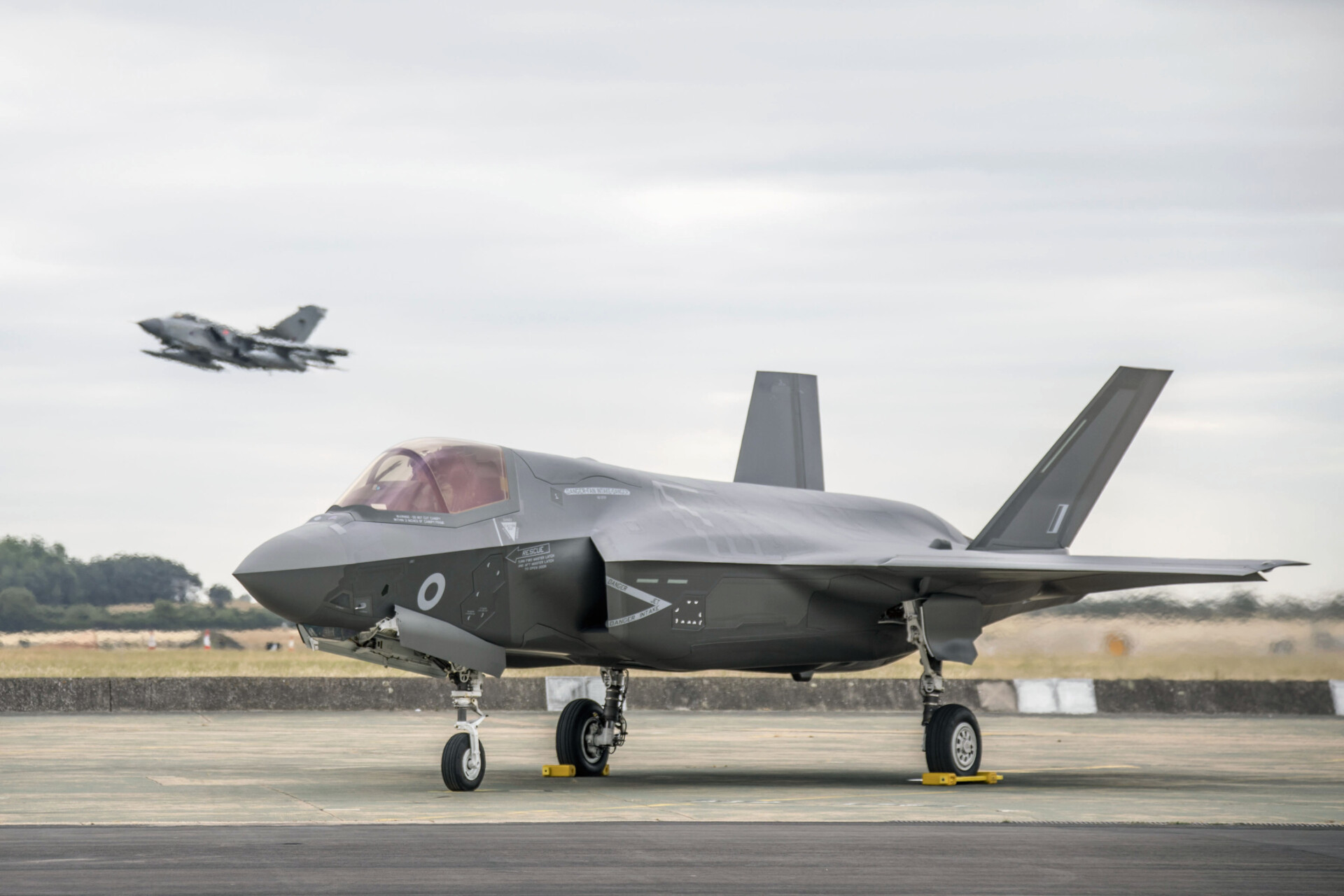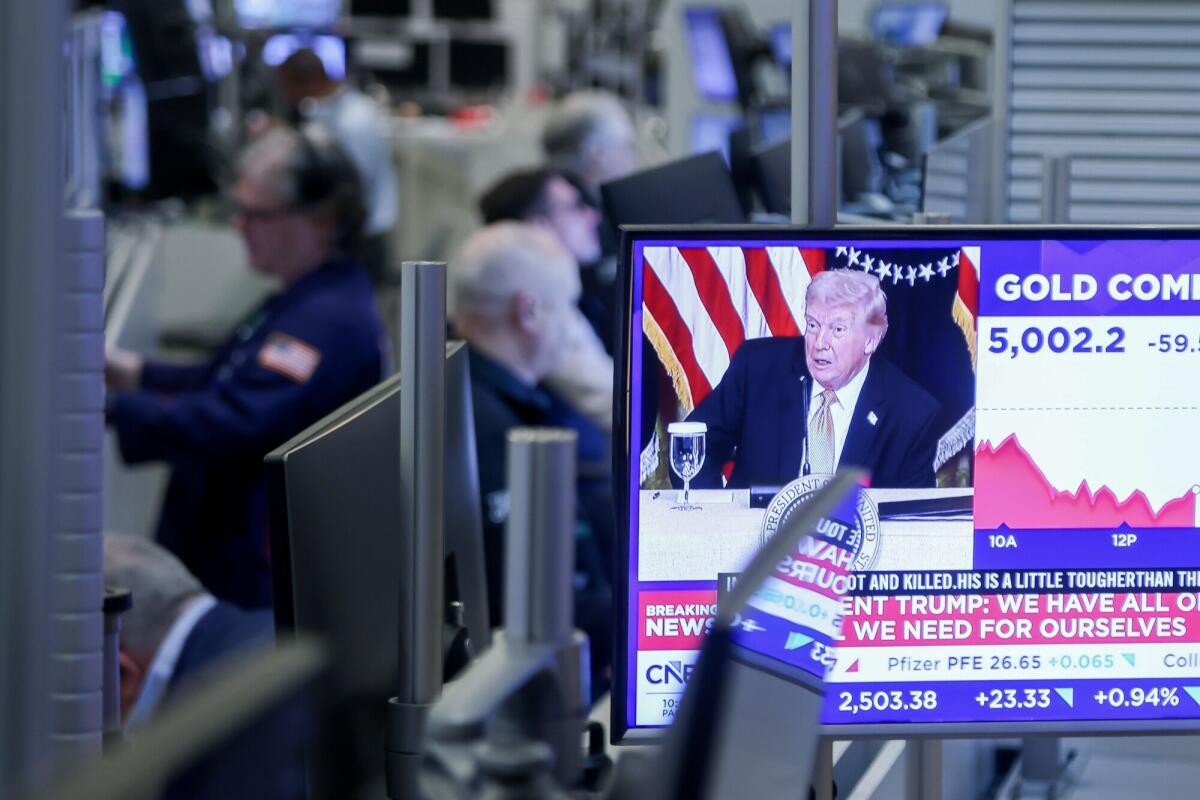
Investors are piling into defense stocks as rising military budgets, depleted weapons stockpiles, and AI battlefield technology create a powerful tailwind for the sector.
The momentum pushed the iShares U.S. Aerospace and Defense ETF (ITA) to its first intraday record high in four months on Monday, lifted by gains across GE Aerospace (GE), Boeing (BA), RTX (RTX), and Howmet Aerospace (HWM).
Franklin Templeton chief market strategist Stephen Dover and head of research Larry Hatheway described the shift in a client report, writing, “As geopolitical tensions rise and countries assume greater responsibility for their own security, governments are increasing investments in military capabilities.”
Dover and Hatheway also noted that “Rapid technological change is also rendering many traditional defense systems obsolete, creating demand for advanced weapons, cybersecurity, space-based defenses and modernized military infrastructure.”
In late June, President Trump summoned executives from Lockheed Martin (LMT), Boeing, and Honeywell (HON) to discuss ramping up production of key weapons systems and rebuilding depleted munitions stockpiles.
The Department of Defense subsequently awarded Lockheed Martin a $35.3 billion multiyear contract to manufacture Terminal High Altitude Area Defense missiles, which cost $15.5 million per unit according to the Center for Strategic and International Studies.
RTX secured a roughly $400 million contract for medium-range air-to-air missiles, following an earlier February award to dramatically expand production of long-range Tomahawk missiles, more than 1,000 of which were expended during the war in Iran.
Underpinning these contracts is the Pentagon’s fiscal year 2027 budget request of $1.5 trillion, which would represent a 44% increase over the FY 2026 enacted budget and the largest single-year military funding increase since World War II.
The spending wave is pulling in companies beyond traditional defense contractors, with General Motors (GM) signing a multibillion-dollar deal with Lockheed Martin and Ford (F) actively courting defense contracts from US and European governments.
Bank of America analysts Alexander Perry and Jack Joyce said in a recent note they “see the ability for automakers and suppliers to move into diversified industrials, robotics, aerospace, and defense,” signaling a structural broadening of the sector.
Investors are increasingly focused on the AI battlefield technology market, estimated to represent $2 trillion in spending across North America, Europe, and Asia, as the next major growth frontier for defense companies.
JPMorgan analysts led by Jahangir Aziz wrote that “Modern warfare is increasingly defined by the ability to ‘sense, make sense, and act,’ depending on processing vast amounts of data and translating it into timely decisions.”
Palantir (PLTR), led by Alex Karp, builds software designed to integrate intelligence across military capabilities, and recently had its Maven battlefield software designated a permanent program of record by the Defense Department.
Palantir shares gained more than 2% last week after D.A. Davidson analyst Gil Luria upgraded the stock to a Buy rating from Neutral and raised his price target to $175, compared to a price near $130 at the time.
Private defense tech firm Anduril Industries, recently valued at $61 billion, was awarded a 10-year, $642 million contract in March 2025 to supply the US Marine Corps with AI-powered autonomous surveillance equipment.
Anduril founder Palmer Luckey made the stakes clear during public remarks in April 2025, saying, “If the US doesn’t lead this space, authoritarian regimes will,” adding that AI “enhances decision making, increases precision, and reduces collateral damage.”