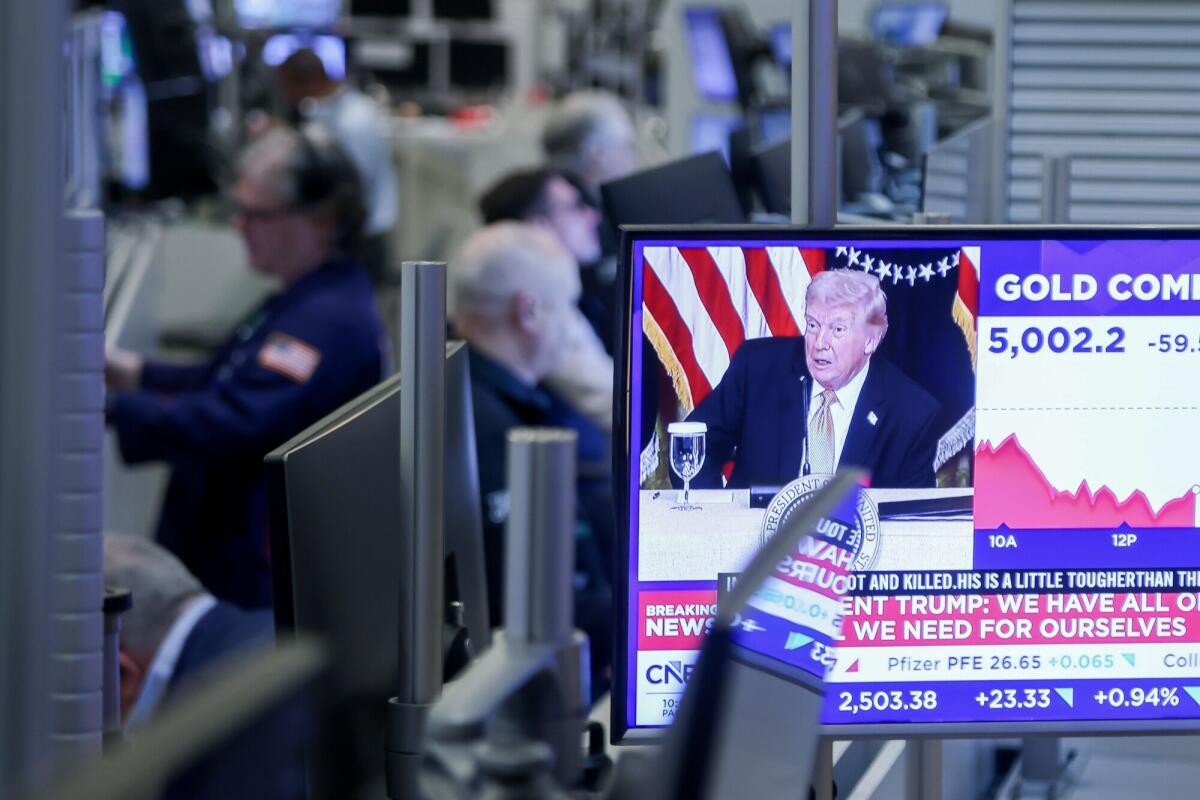
U.S. crude oil prices surged as high as $76 per barrel after President Donald Trump declared the Iran war ceasefire effectively over, rattling global markets.
Oil closed up 4.4% at $73.52 per barrel, pushing its two-day gain to more than 7% and raising alarms across financial markets about sustained energy price inflation.
The spike in crude prices is sending ripple effects well beyond the gas pump, touching everything from airline stocks to government bond markets.
Government bonds sold off sharply in the wake of Trump’s comments, driving the 10-year U.S. Treasury yield as high as nearly 4.6%, its highest level since May.
Rising yields signal that investors are bracing for renewed uncertainty and prolonged instability stemming from the escalating confrontation with Iran.
Global markets have remained volatile ever since the U.S. and Israel first attacked Iran in February, with no clear resolution in sight.
The ongoing tensions are also adding significant pressure on the Federal Reserve under its new chairman, Kevin Warsh, who faces a difficult balancing act between inflation and growth.
Higher fuel costs have already helped push U.S. inflation to three-year highs, with the latest federal reading showing prices rising at an annual rate of 4.1%.
May’s Personal Consumption Expenditure Index identified elevated fuel prices as the main contributor behind the highest inflation reading since April 2023.
Airline stocks ranked among the hardest-hit shares as investors recalibrated their exposure to companies with significant fuel cost vulnerabilities.
The Strait of Hormuz, a critical passageway for the global oil supply, remains at the center of the tension, amplifying fears of prolonged supply disruptions.
Any extended closure or military escalation near the strait could send crude prices dramatically higher, compounding inflationary pressures already straining American consumers.
With inflation stubbornly elevated and energy markets on edge, the economic consequences of the Iran standoff are proving far wider than gas prices alone.