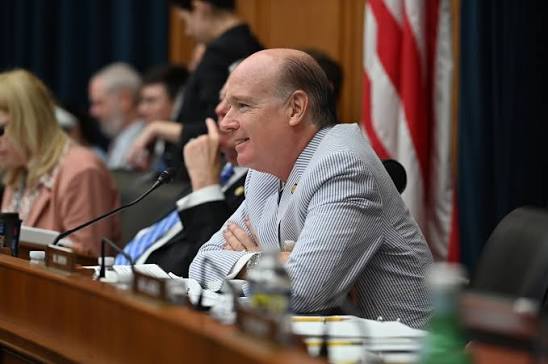
Robert Aderholt, the Republican congressman representing Alabama’s Fourth District, holds one of the more consequential committee portfolios in the House of Representatives. His assignments center on the House Committee on Appropriations, the panel responsible for determining how federal money is spent across nearly every agency of government.
Aderholt has served in Congress since 1997, making him one of the longer-tenured members of the Alabama delegation. He took the oath of office for his fifteenth term on January 3, 2025, continuing a run that has placed him firmly among the senior Republicans on Appropriations. Seniority on that committee matters enormously in the House, since it often determines which subcommittees a member is permitted to lead.
The centerpiece of Aderholt’s committee work is his chairmanship of the Appropriations Subcommittee on Labor, Health and Human Services, and Education. This subcommittee, often referred to informally as Labor-HHS, controls funding for federal education programs, public health agencies, labor department operations, and a wide range of social service initiatives. It is generally regarded as the largest of the twelve Appropriations subcommittees in terms of non-defense spending, giving its chairman substantial influence over how billions of federal dollars are allocated each fiscal year.
Beyond his chairmanship, Aderholt also sits on two additional Appropriations subcommittees. He is a member of the Subcommittee on Agriculture, Rural Development, Food and Drug Administration, and Related Agencies, which oversees funding tied to farm programs, rural infrastructure, and food safety regulation. He also serves on the Defense Subcommittee, which handles the appropriations bill funding the Pentagon and related military programs, one of the largest and most closely watched spending measures Congress produces each year.
This combination of assignments gives Aderholt a hand in three of the more significant funding bills that move through Congress annually. Agriculture policy and food safety funding matter considerably to his rural Alabama constituents, defense spending touches on the state’s substantial military and aerospace presence, and Labor-HHS funding decisions carry national implications that extend well beyond his home district.
Aderholt’s committee influence has also translated into visible outcomes for his constituents. He has been credited with securing funding for local infrastructure projects, including water and municipal improvements in cities within his district, through the annual appropriations process. Lawmakers who chair or sit on Appropriations subcommittees are frequently able to direct this kind of targeted funding toward projects in their home states.
Outside of Appropriations, Aderholt has also held a leadership role within the Republican Study Committee, chairing its Values Action Team, a group focused on social policy issues within the broader conservative caucus. This role is separate from his formal committee assignments but reflects an additional dimension of his standing among House Republicans.
Committee assignments in the House are reviewed and can shift at the start of each new Congress, so readers should treat any committee list as reflecting the current session rather than a permanent arrangement. As of the 119th Congress, however, Aderholt’s Appropriations work, and particularly his Labor-HHS chairmanship, remains the defining feature of his legislative portfolio and the primary lens through which his influence in Washington should be understood.