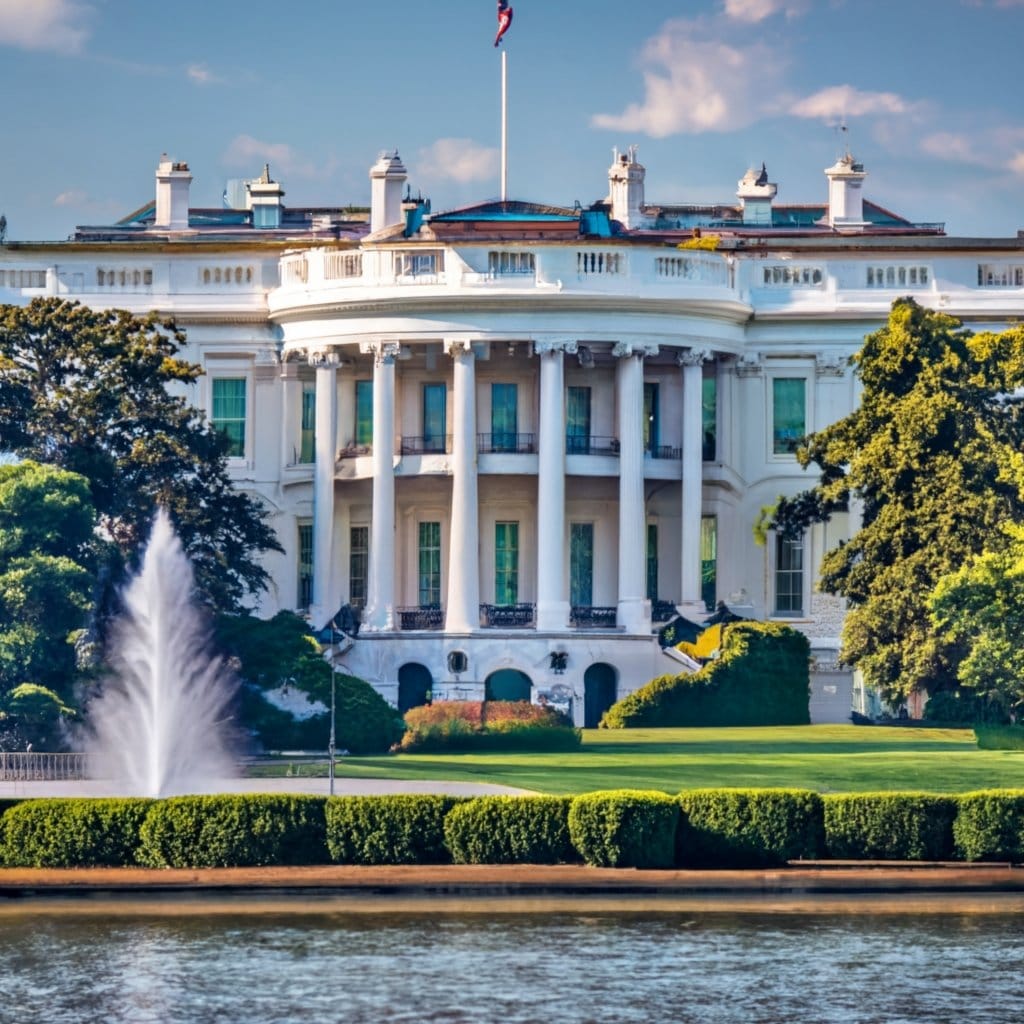
The three banned news outlets are asking a federal judge to maintain protections blocking the Trump administration from enforcing its White House press ban.
The conflict began when President Trump announced he would ban CNN, MSNBC, and Politico from the White House complex, describing the move as “effective immediately.”
Trump made clear his decision stemmed from longstanding grievances with the outlets’ coverage, labeling their reporting “Fake News” as justification for the sweeping action.
Reporters for all three organizations were denied access to the White House complex the following day, making legal action from their parent companies all but inevitable.
“This morning, we notified the government that we are filing a lawsuit today to protect our First Amendment rights and defend the principle that the government does not decide what the press reports or publishes,” the outlets said in a joint statement.
“Without notice or process, the White House revoked our journalists’ credentials because it objected to our reporting,” the joint statement continued, underscoring the abrupt nature of the ban.
The Department of Justice defended Trump’s decision, with DOJ attorney Michael Velchik arguing that access to the White House is a privilege rather than a constitutionally protected right.
“Access to the White House is a privilege, not a right,” Velchik said, with the DOJ additionally citing national security concerns as further justification for the administration’s position.
U.S. District Judge Timothy Kelly, a Trump appointee, signaled early skepticism toward the administration’s position, stating that due process “wasn’t followed here” near the start of a key afternoon hearing.
The outlets’ attorney urged Judge Kelly to immediately restore credentials for all three organizations, arguing that Trump’s ban amounted to “viewpoint discrimination” that violates the First Amendment.
The attorney also told the court the ban came “completely out of the blue,” reinforcing arguments that the White House provided no meaningful process before revoking the journalists’ access.
A coalition of major media companies filed an amicus brief supporting the three outlets, writing that the ban “injures the public interest, and that unassailable First Amendment law makes any viewpoint-based decision to bar reporters from a nonpublic forum constitutionally repugnant.”
The so-called “Five Families” — ABC News, CBS News, CNN, Fox News, and NBC News — which operate a rotating pool system for White House coverage, issued a unified statement declaring that “the public has a vital interest in receiving accurate, independent information about its government.”
Judge Kelly granted a temporary restraining order allowing the legal challenge to proceed, finding that the White House ban was likely unconstitutional under existing First Amendment precedent.
Most legal and media observers believe the news organizations are positioned to succeed in court, with many describing the episode as the most significant confrontation yet between Trump and the American press corps.