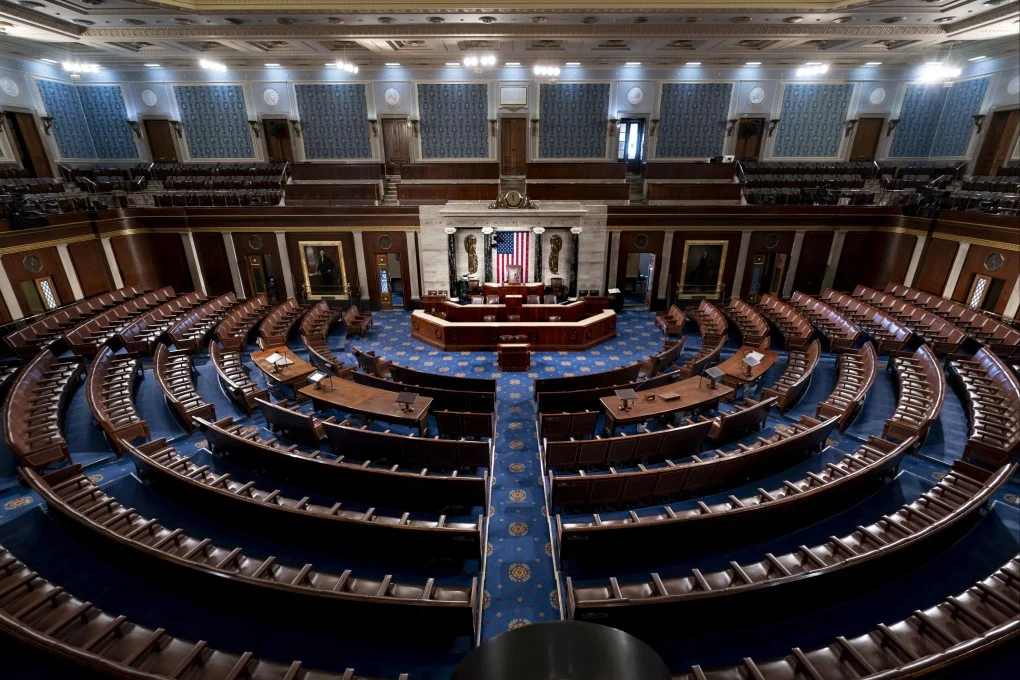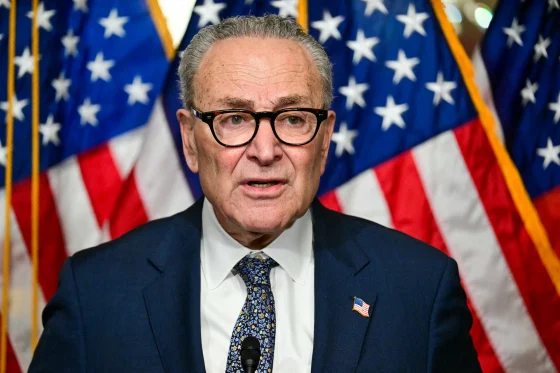
A Senate leadership contest is quietly rewriting the rules for how ambitious lawmakers pursue the party’s top positions on Capitol Hill.
Maryland Senator Chris Van Hollen is waging a campaign for Senate minority leader that blends traditional colleague outreach with an aggressive, highly visible public pressure strategy.
Rather than relying exclusively on private negotiations and vote-counting behind closed doors, Van Hollen has taken his challenge to sitting Minority Leader Chuck Schumer into the open.
Political observers say the approach could serve as a lasting template, fundamentally altering how leadership races are conducted in the upper chamber for years to come.
Van Hollen’s gambit appears calculated to activate the Democratic base, generating outside pressure that reinforces whatever inside support he may be assembling among his Senate colleagues.
He has also directly contested Schumer’s assertion that he already commands sufficient votes to retain his position as the caucus leader.
Adding a sharper edge to the contest, Van Hollen suggested that Senator John Fetterman may be “looking for an exit ramp” from the Democratic Party, a pointed remark that signals the race has grown increasingly contentious.
Even if Van Hollen falls short of winning, his campaign has already forced a conversation about transparency and accountability in a process that has historically unfolded almost entirely out of public view.
Separately on Capitol Hill, Democrats are navigating internal disagreements over whether to pursue impeachment proceedings against President Trump, with many members wary of a potential political backfire heading into the next cycle.
A separate battle is taking shape over control of the Senate Oversight Committee, where Fallon and Gill are competing for the chamber’s top oversight position.
Meanwhile, a college sports bill is encountering significant resistance in the House, adding another legislative complication to an already congested congressional calendar.
Van Hollen’s outside-pressure playbook represents a broader restlessness inside the Democratic caucus about leadership, strategy, and the party’s direction following recent electoral setbacks.
Whether the Maryland senator ultimately prevails, his campaign has already demonstrated that the old model of winning Senate leadership through quiet dealmaking alone may no longer be sufficient.