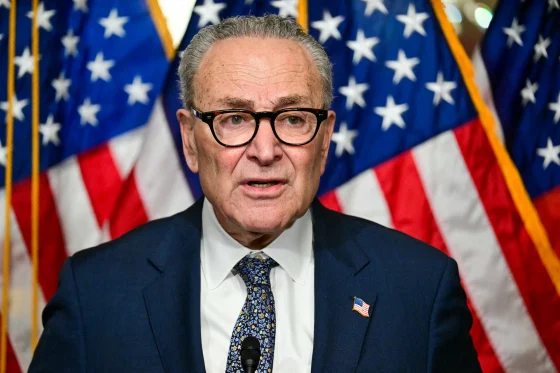
Senate Democrats are heading toward a rare contested leadership election, with Maryland’s Chris Van Hollen openly disputing whether Chuck Schumer actually commands the votes he claims.
The December 1 vote will be the first genuinely competitive Senate Democratic leadership race in decades, exposing a rift over whether the party needs a sharper, more combative direction at the top.
Schumer, a five-term senator from New York, declared confidently on social media that the outcome was not in doubt, posting: “I’m proud of what we’ve accomplished together—55 seats and counting is an amazing result—and I have the votes to continue serving as Democratic Leader.”
Van Hollen pushed back on that framing, positioning himself as a vehicle for members who believe the caucus needs more urgency and aggression in its leadership.
The Maryland senator made his challenge public on Thursday during an appearance on MS Now, acknowledging the difficulty of the task while insisting real support exists within the caucus.
Van Hollen described himself as the “underdog” in the contest but said he had already locked in backing from “more than 10” colleagues who would vote for him when the caucus convenes.
Progressives and a number of newly elected members are rallying behind the challenge, frustrated with what they see as an insufficiently bold posture from Schumer’s leadership team.
Schumer’s allies, meanwhile, argue that dismissing him would be both ungrateful and strategically reckless, pointing to his work recruiting candidates and raising money as central to the party’s midterm gains.
Several prominent Democrats moved quickly to defend Schumer publicly, with Arizona’s Ruben Gallego, New York’s Kirsten Gillibrand, and Maryland’s Angela Alsobrooks all declaring their support for the incumbent leader.
The endorsement by Alsobrooks is notable, given that she represents the same state as Van Hollen, undercutting any suggestion of unified Maryland solidarity behind the challenger.
Veteran members of the caucus have been among the most resistant to change, arguing that rewarding Schumer’s successful cycle with an ouster would set a damaging precedent for future leaders.
What the vote ultimately reveals will depend less on public declarations and more on how members weighing loyalty against frustration choose to act when the caucus meets in private.