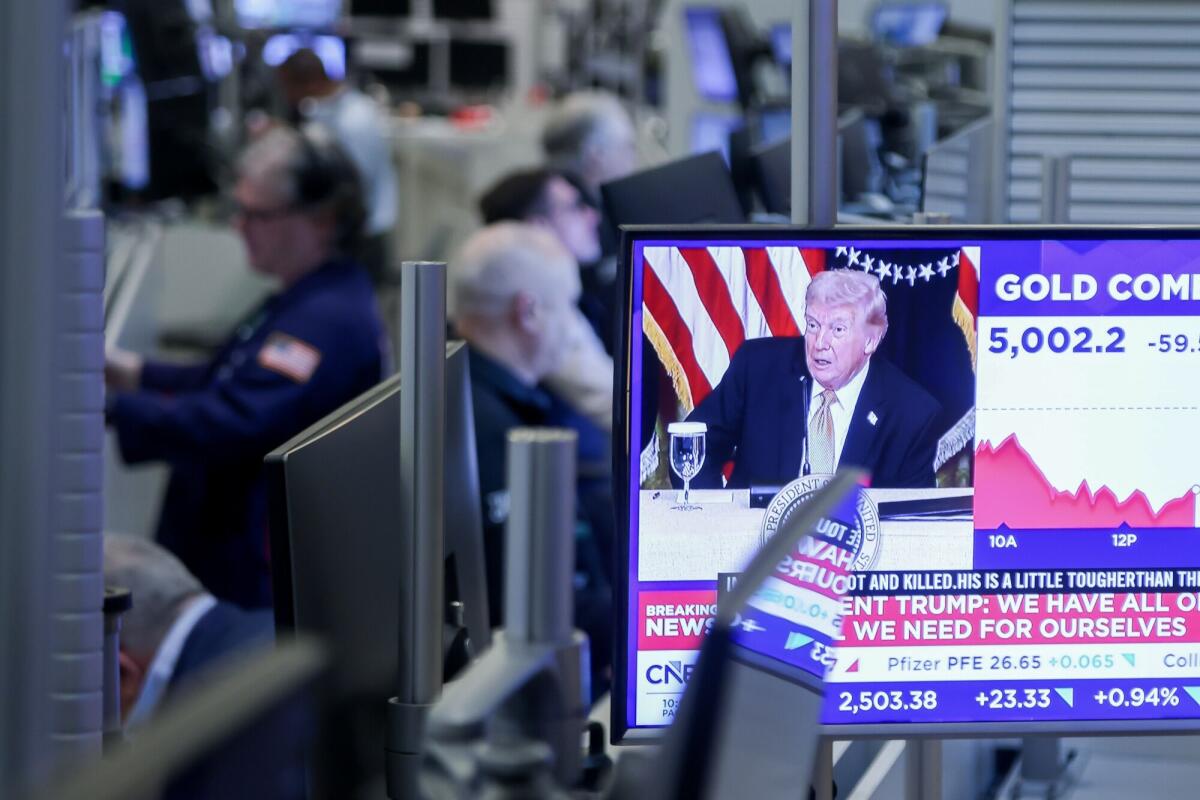
One of the most important relationships in global markets has started to unravel over the past couple of weeks.
Investors are scrambling to figure out what it might mean for the economy, and their portfolios.
When long-standing correlations between major asset classes break down, it typically signals a significant shift in the underlying forces driving markets.
Such breakdowns can force portfolio managers to reassess risk models that may have worked reliably for months or even years.
Market relationships that hold steady during periods of calm are often the first to crack when uncertainty around trade, monetary policy, or geopolitical tensions rises sharply.
The unwinding of key correlations can ripple across equity, bond, and currency markets simultaneously, making it difficult for investors to find safe ground.
Traders and analysts watching these dynamics closely are weighing whether the breakdown reflects a temporary disruption or a more durable structural change.
When foundational market relationships shift, the consequences tend to extend beyond professional investors and into broader economic conditions felt by ordinary Americans.
The Federal Reserve and other central banks monitor cross-asset correlations carefully, as sudden shifts can complicate the transmission of monetary policy decisions.
History suggests that when major financial market relationships fracture, volatility tends to follow, sometimes testing investor nerves for an extended period before a new equilibrium forms.
Strategists advise that diversification across asset classes remains the most reliable defense when familiar market dynamics no longer behave as expected.
The coming weeks are likely to be closely watched by Wall Street as participants try to determine whether stability can be restored or whether a new market regime is taking hold.