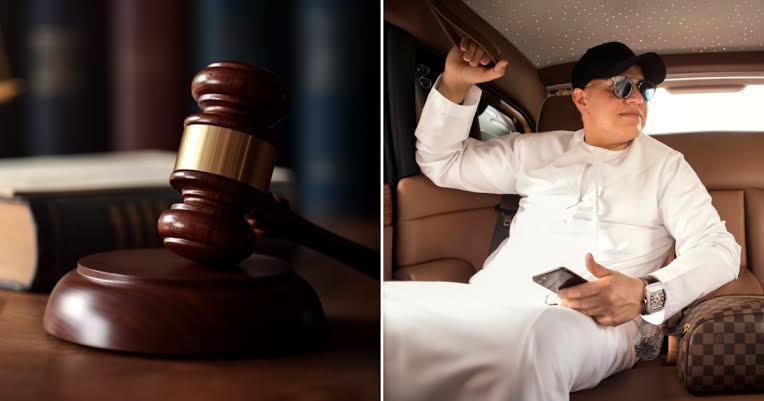
Various industry estimates placed Abu Sabah’s net worth between $1.7 billion and $2 billion, built primarily on real estate holdings and property development income.
The long-running money laundering saga surrounding Indian-origin Dubai businessman Balvinder Singh Sahni — widely known by his nickname “Abu Sabah” — has reached its conclusion, with the UAE’s top court delivering a final ruling that closes one of the largest financial crime cases the country has ever prosecuted.
The Dubai Court of Cassation confirmed Sahni’s five-year prison sentence, a Dh500,000 fine, and his deportation from the UAE once his term is served. In a notable adjustment to the earlier appellate ruling, the top court scrapped a Dh150 million joint fine that had been imposed on Sahni and his 32 co-defendants, replacing it with an order to confiscate funds directly traced to the criminal proceeds. The case, involving 33 defendants in total, some tried in absentia, has been described by local media as one of the most significant money laundering prosecutions ever heard in Dubai’s courts.
From Billionaire to Defendant
Sahni’s rise to prominence in Dubai came through RSG Group, the property management and real estate development firm he founded, which built a portfolio spanning residential towers and hotel properties across the emirate, including projects opposite Mall of the Emirates and along Sheikh Zayed Road. At the height of his success, various industry estimates placed his net worth between $1.7 billion and $2 billion, built primarily on real estate holdings and property development income.
That wealth translated into a highly visible lifestyle that made Sahni a fixture of Dubai’s social scene long before his legal troubles began. He was best known for paying Dh33 million at a public auction in 2016 to secure Dubai’s single-digit licence plate “5,” a status symbol among the emirate’s elite. He also cultivated a public image built around superstition and personal branding — a well-documented fondness for the colour blue, a belief in lucky numbers, and a habit of surrounding himself with objects he considered protective, including a black Bugatti he reportedly parked inside his Palm Jumeirah mansion in the belief the colour would ward off misfortune.
The Investigation and Conviction
The case against Sahni originated from a tip received by Dubai Police, which was referred to the Public Prosecution in December 2024. Investigators say they uncovered an organised network that used shell companies and cross-border transfers to disguise the origin of illicit funds. The first criminal court hearing was held in January 2025, and reporting at the time noted Sahni was said to owe more than AED 100 million to UAE banks by the point of his arrest in early 2024.
The Dubai Criminal Court’s original judgment sentenced Sahni to five years in prison, alongside a Dh500,000 fine and the forfeiture of Dh150 million in assets tied to the scheme. His son, also a defendant, received the same custodial term. Beyond the Sahni family, the court’s initial ruling divided punishment across the wider group: eleven defendants received five-year sentences and Dh500,000 fines apiece, ten others were sentenced to one year in prison with Dh200,000 fines, and three companies linked to the network were each fined Dh5 million. Phones and other assets connected to the case were also seized.
Appeals and Final Ruling
Sahni and several co-defendants challenged the verdict, arguing among other things that the underlying activity amounted to unregulated cryptocurrency trading rather than money laundering. The Dubai Court of Appeal largely rejected those arguments but did adjust the sentence, reducing Sahni’s prison term from five years to four while sharply increasing the financial penalty — making the Dh150 million fine a joint liability shared across all 33 defendants rather than resting solely on Sahni.
The Court of Cassation’s subsequent ruling represents the final word on the matter. While it left most of the appellate findings intact, it removed the Dh150 million collective fine in favour of a more targeted confiscation of proceeds directly linked to the crime, alongside upholding the prison term, individual fine and deportation order against Sahni himself.
With the case now closed at the highest judicial level, questions remain over what becomes of RSG Group and Sahni’s remaining assets, as the company’s ownership structure and future operations under the “Sabah” branding remain unclear following his conviction and the seizure of a significant portion of his fortune.