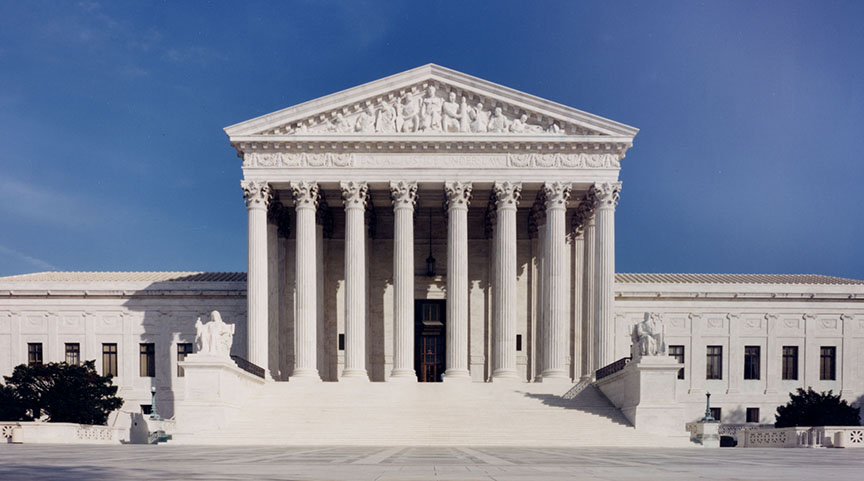
The Supreme Court ruled 5-4 to allow construction of a new White House state ballroom to continue, lifting lower court blocks on above-ground work.
Five conservative justices, including all three of President Trump’s appointees, sided with the administration in the closely watched case.
Chief Justice John Roberts broke from his conservative colleagues, joining the court’s three liberal justices in a sharply worded dissent.
Roberts was joined in dissent by Justices Sonia Sotomayor, Elena Kagan, and Ketanji Brown-Jackson, all appointed by Democratic presidents.
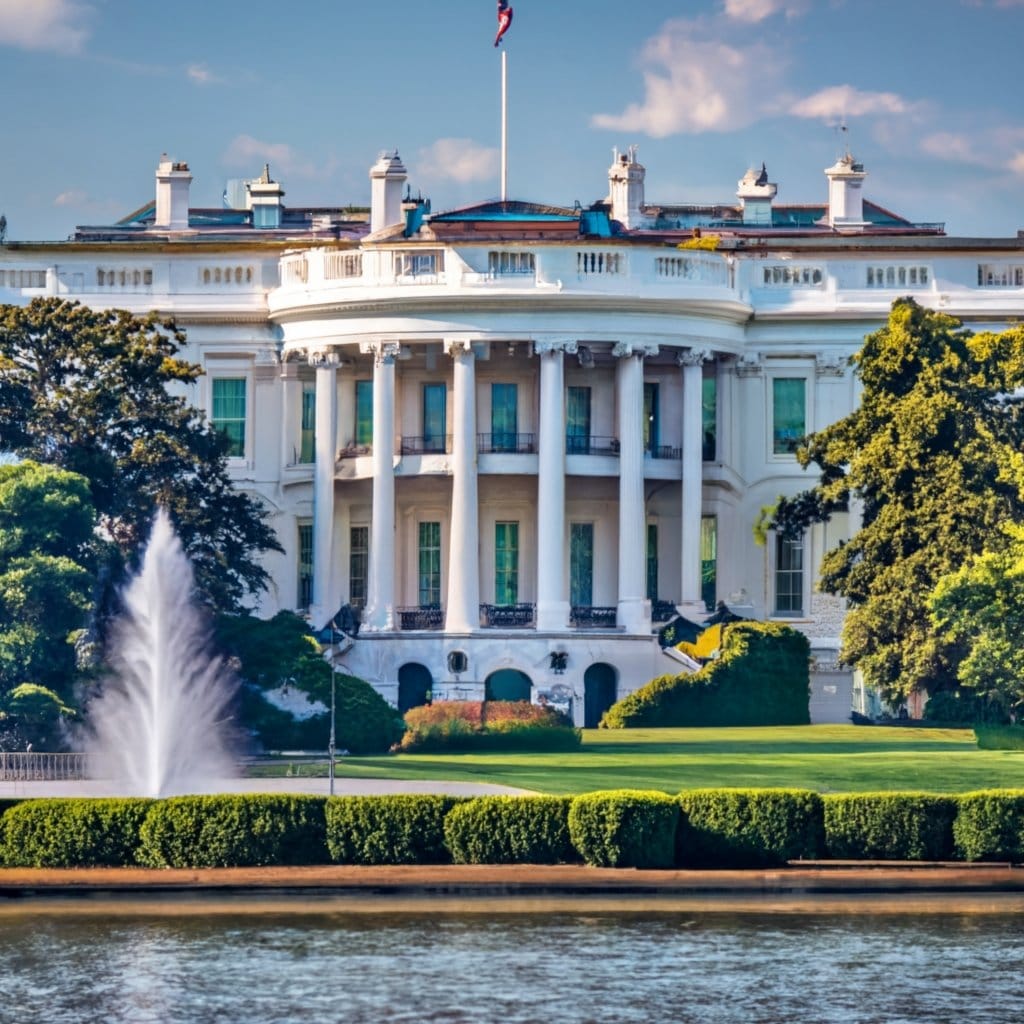
“The President ordered the demolition of the East Wing of the White House to make way for a new, privately funded state ballroom in its place,” the dissent stated.
Roberts wrote plainly that “construction is likely unlawful,” citing a federal statute that bars unapproved building on federal grounds in Washington without congressional authority.
The statute Roberts cited, 40 U.S.C. § 8106, prohibits constructing any “building or structure on any reservation, park, or public grounds of the Federal Government in the District of Columbia without express authority of Congress.”
The majority opinion did not rule on whether the construction itself was legal, focusing instead on whether the plaintiffs had the right to sue at all.
“Today, we do not pass upon the legality of the government’s East Wing project,” the majority wrote, concluding that the National Trust for Historic Preservation likely lacked standing to bring the challenge.
The trust had argued the Trump administration violated federal law by failing to seek congressional approval and bypassing required reviews by the National Capital Planning Commission and the Commission of Fine Arts.
The trust claimed a preservationist member living in Washington suffered “professional and personal injuries” from walking past the ongoing demolition and construction site.
The majority rejected that argument, writing that “mere offense, disagreement, or distaste does not qualify as a concrete and particularized injury” under established court precedent.
Construction on the project began in September 2025 and required demolishing the East Wing, which Trump said was too small and in poor condition to serve its purpose.
The new facility is now expected to accommodate 1,000 guests, up from an initial projection of 650, and the original $200 million price tag has reportedly doubled.
While the Supreme Court’s ruling lifts the lower court injunctions, the legality of the project will continue to be litigated, though the ballroom may be complete before any final legal resolution is reached.