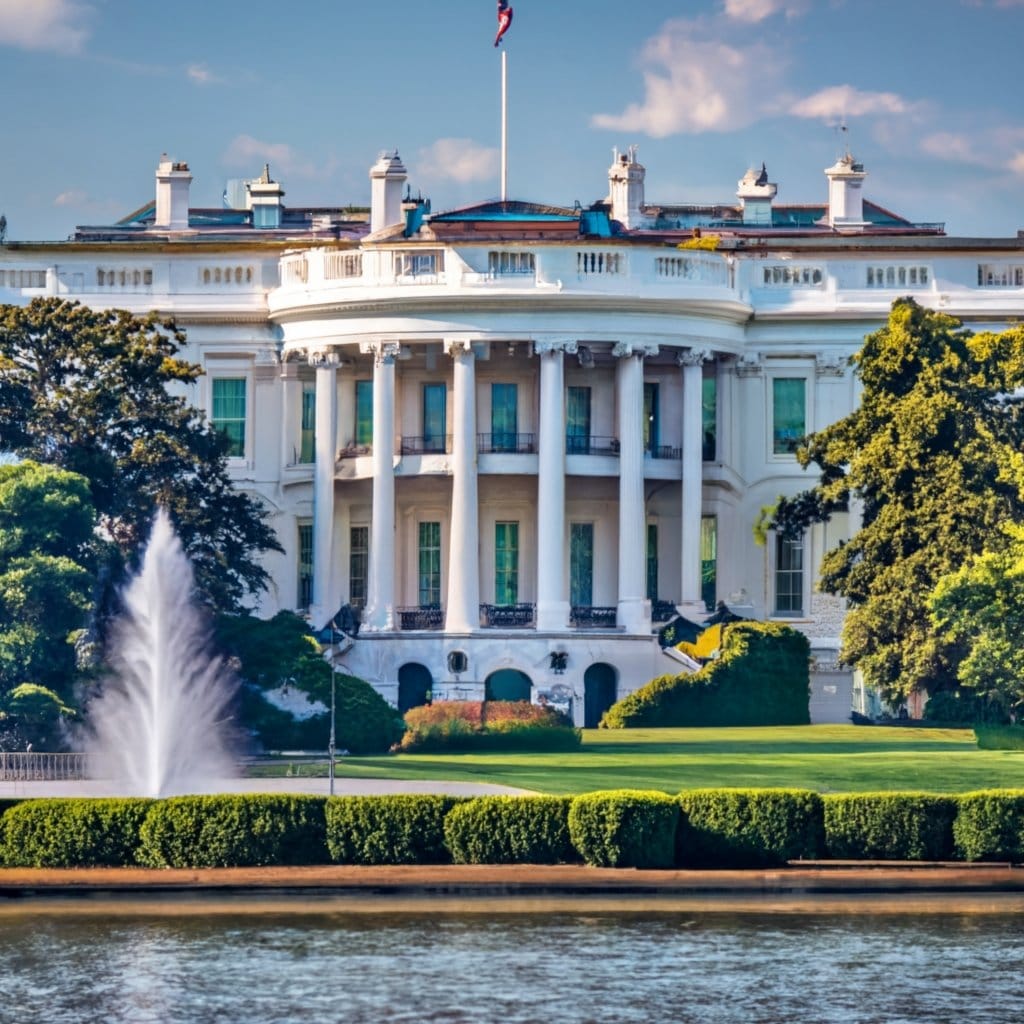
Washington’s AI debate has entered a new phase. After years of hearings, voluntary frameworks and warnings about safety, copyright, labor and national security, Congress is now attempting to write the first serious federal rulebook for artificial intelligence.
But energy regulators, utilities, data-center operators, governors and local communities are asking an increasingly urgent question: is Congress regulating the digital layer of AI while neglecting the physical one? The answer may determine whether the United States can sustain its lead at all.
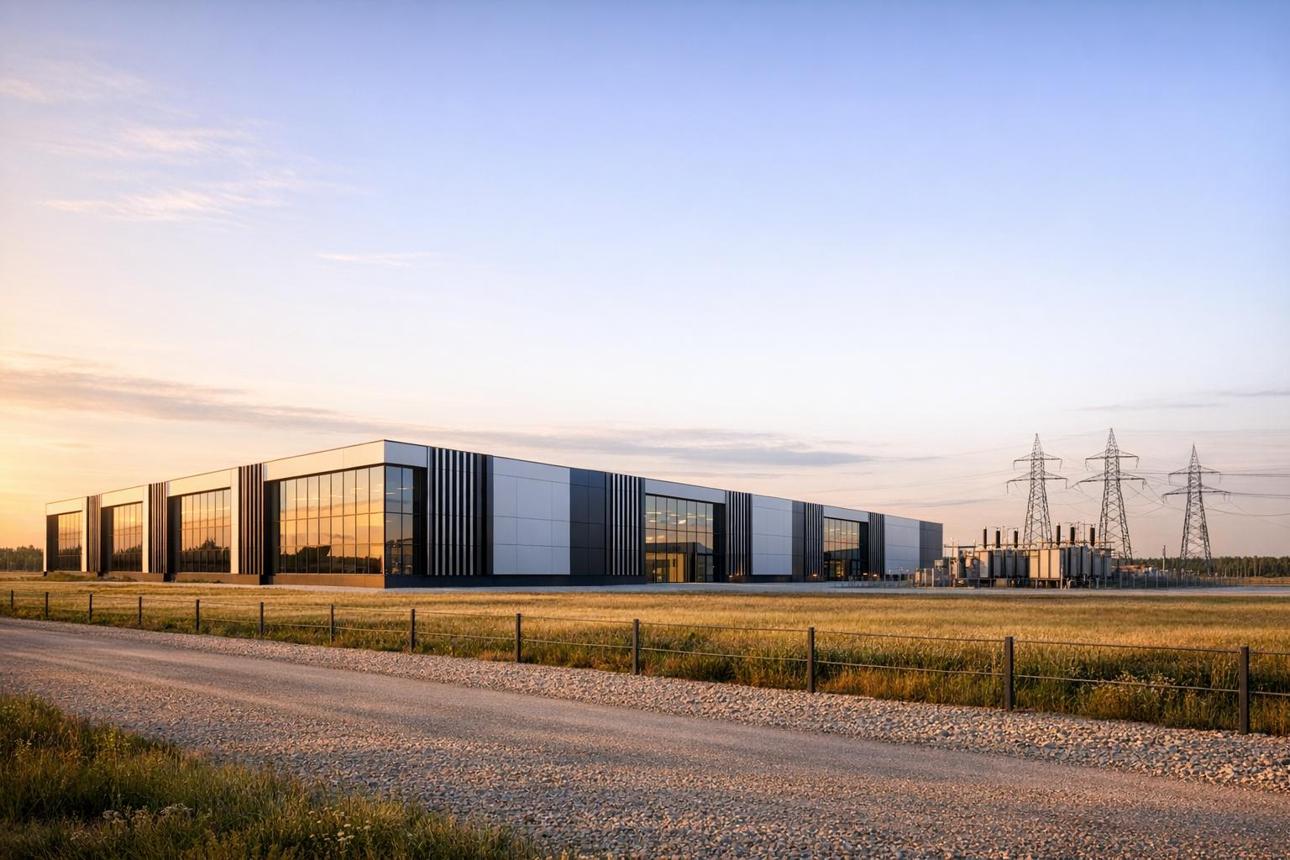
AI dominance is usually discussed in terms of models, chips and software talent. Yet the most advanced systems are not abstract digital products. They run inside facilities that require land, power, cooling, fiber, substations, transformers and specialized construction; data centers that increasingly resemble heavy industrial assets, not office parks. That reality is colliding with a political system still learning how to regulate the sector.
Recent proposals show lawmakers beginning to grasp the scale. The White House’s national AI framework calls for streamlined permitting so data centers can generate power on site, while insisting ordinary ratepayers not foot the bill for grid upgrades driven by private demand. The bipartisan Great American AI Act discussion draft from Representatives Jay Obernolte and Lori Trahan would create a broader governance framework addressing workforce, cybersecurity, standards and infrastructure barriers. FERC, meanwhile, has moved to force regional grid operators to reform how they connect very large power users.
Those are real signs of progress. But they also expose the core problem: AI infrastructure is still treated as an add-on to AI policy rather than its central constraint.
“AI is not just a software race anymore,” said Samir Tabar, CEO of WhiteFiber and Bit Digital, whose work sits at the intersection of AI infrastructure and data-center development. “It is a power, permitting and execution race. The countries that can bring energy and compute capacity online quickly, reliably and responsibly will have a strategic advantage over those that only regulate the model layer.”
The numbers explain why. Data centers already consume a meaningful share of U.S. electricity, and official estimates suggest their demand could rise sharply. AI workloads are more energy-intensive than traditional cloud applications, and demand is concentrated in hubs where land, grid capacity and political tolerance are finite.
The result is a new bottleneck. In some regions, developers can acquire chips and raise capital faster than they can secure power. Utilities face interconnection queues never designed for dozens of large-load projects arriving at once. Communities worry about bills, water, noise and opaque approvals. Industry warns that delay could push investment abroad.
Congress is trying to balance all of this at once. One camp argues America cannot win if developers must navigate a patchwork of state and local rules, favoring federal preemption and streamlined permitting. Another worries the buildout is moving too fast. The AI Data Center Site Selection Transparency Act of 2026, from Representative LaMonica McIver with co-leads including Andre Carson and Valerie Foushee, would require advance disclosure of proposed locations, electricity and water use and environmental impacts. Senator Bernie Sanders and Representative Alexandria Ocasio-Cortez go further, proposing a moratorium until stronger safeguards exist. That spectrum—from fast-track permitting to moratorium—shows how unsettled the debate remains.
The strongest case for Congress’s approach is that lawmakers are finally treating AI as a competitiveness issue. The country does need a federal framework, clearer rules for advanced systems, and protection from a freezing state-by-state patchwork. It also needs to recognize that energy policy is AI policy.
Here, regulators are moving in the right direction. FERC’s push on large-load interconnection matters because grid delays have become a leading obstacle to deployment. The White House’s emphasis on on-site generation matters because some data centers may need to bring their own power rather than wait years.
But recognition can curdle into reaction. Accelerate permitting without solving cost allocation, and communities will see AI as a private profit engine funded by public bills. Preempt state laws without a credible federal floor, and resistance intensifies. Govern the model layer while leaving energy to separate processes, and you get a law that is ambitious but operationally incomplete.
“The mistake would be to think of infrastructure as a secondary issue,” Tabar said. “In practice, infrastructure is the limiting factor. You can have the best model, the best engineers and the best capital base, but if you cannot power the compute, you cannot deploy at scale.”
The answer is not deregulation but a sharper federal bargain: faster approvals in exchange for transparency, clear cost responsibility, energy resilience and community benefits. A dedicated AI infrastructure title could set standards for interconnection reviews, require disclosure of power and water use, support on-site generation, protect residential ratepayers, and fast-track projects meeting reliability and environmental criteria. It could also distinguish a frontier training campus from an ordinary cloud expansion—moving past the false binary of “build everything” versus “pause everything.”
The geopolitics are unforgiving. China and the Gulf states are not treating infrastructure as an afterthought; they are aligning compute, energy, industrial policy and national security. If America lets delay and fragmentation slow deployment while competitors coordinate, its lead could erode even as U.S. firms keep producing the best models.
Congress is getting much right: a national framework, the risks of fragmentation, the link between AI and power, the concerns of affected communities. But it may be getting one thing dangerously wrong: legislating AI as if the challenge is governing intelligence, rather than building and powering the systems through which that intelligence exists.
The next stage should be judged by a simple test: does it help America deploy secure, reliable, affordable and accountable AI infrastructure at the speed required to compete? If not, Congress may pass an AI bill and still lose the AI infrastructure race.