Dick’s Sporting Goods Inc. (DKS) plunged nearly 31% on Tuesday, marking the worst single-day stock performance in the company’s history as a publicly traded retailer.
Shares closed at $124.31, a $55.20 drop from Monday’s closing price, after the company reported a disappointing second quarter and slashed its full-year outlook.
The retailer now expects net sales of between $21.9 billion and $22.2 billion for the current fiscal year, down from its previous forecast issued earlier this year.
Much of the revised guidance stems from continued struggles at Foot Locker, which Dick’s acquired last year for $2.4 billion to expand its footprint in the sneaker market and gain access to international retail channels.
Dick’s Executive Chairman Ed Stack acknowledged the challenge directly on the company’s second-quarter earnings call, describing the footwear lifecycle as experiencing a “hangover right now.”
Stack’s comments pointed specifically to legacy lifestyle sneaker models, which have lost momentum with consumers who once drove strong demand for retro and heritage silhouettes.
Executives on the post-earnings call said lifestyle and legacy silhouettes were “simply not resonating the way they once did,” contributing to bloated inventory levels that forced heavy discounting across the business.
The company noted that the footwear market became increasingly promotional last quarter as brands began offering deeper discounts directly through their own websites, squeezing margins at the retail level.
Dick’s said it is seeing a notable consumer shift away from traditional sneaker brands toward lifestyle footwear names such as Ugg and Birkenstock, reflecting a broader realignment in shopper preferences.
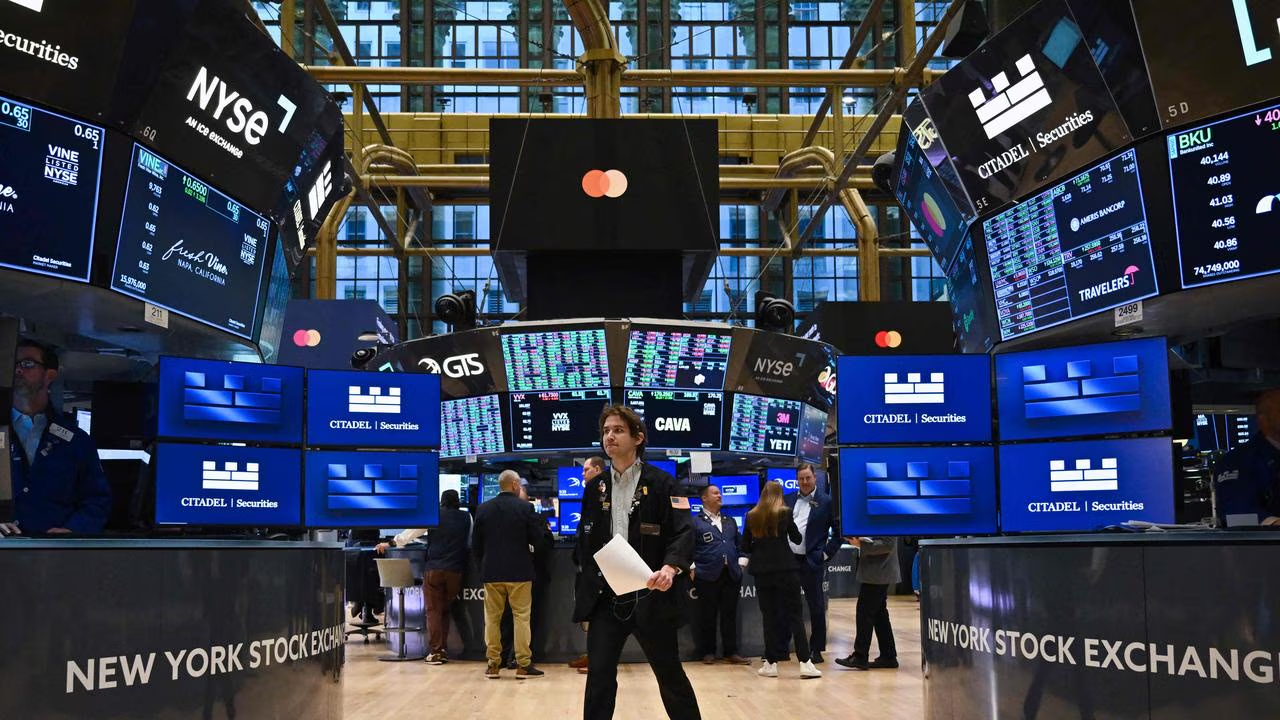
The fallout extended well beyond Dick’s own shares, with footwear, sportswear, and broader retail stocks all coming under pressure Tuesday as investors reassessed exposure to the sporting goods sector.
The sharp drop at Dick’s reversed the company’s prior expectations for annual comparable sales growth at Foot Locker, a significant reversal that rattled Wall Street’s confidence in the acquisition’s near-term payoff.
The $2.4 billion Foot Locker deal had been positioned as a strategic move to deepen Dick’s presence in premium sneaker retail and unlock growth in markets outside the United States.
Tuesday’s selloff underscores how quickly sentiment can shift when a high-profile acquisition begins showing cracks, particularly in a segment as trend-sensitive as athletic footwear.