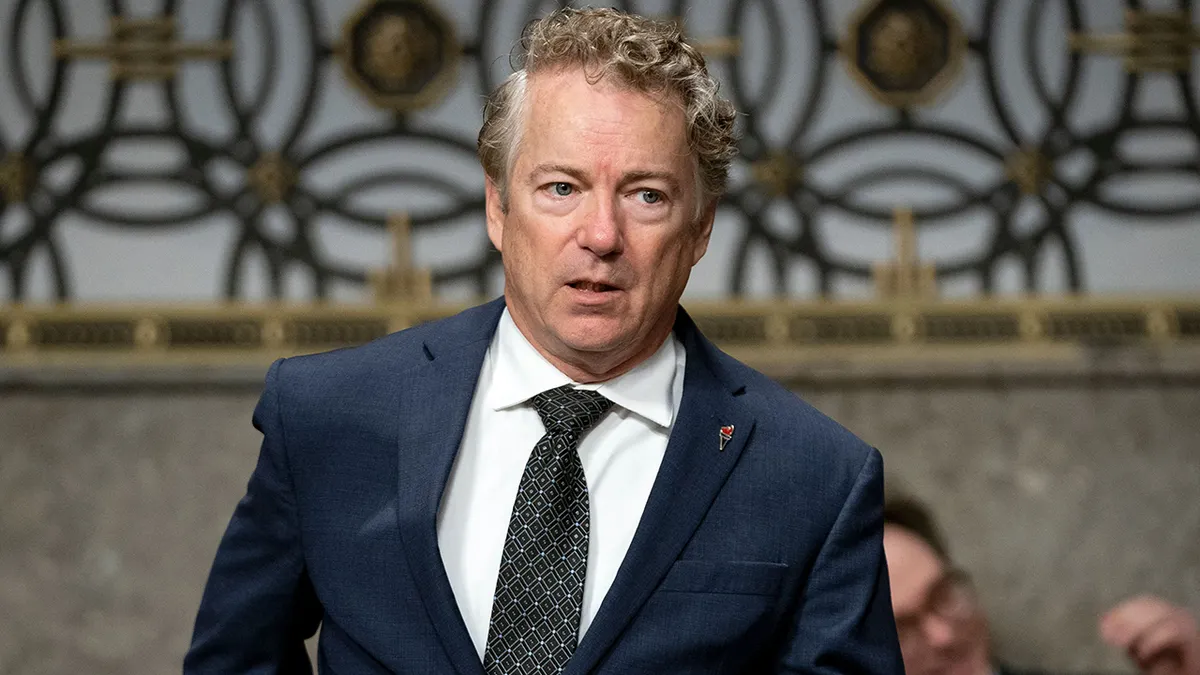
Rand Paul has supported President Donald Trump’s policies on some occasions, but he is not considered a staunch supporter.
Rand Paul, the U.S. Senator from Kentucky, has maintained a complex and often nuanced relationship with President Donald Trump. Known for his libertarian-leaning positions and emphasis on limited government, fiscal conservatism, and civil liberties, Paul has at times expressed support for Trump while also distinguishing his own principles from the former president’s policies. His stance reflects both ideological overlap and careful independent judgment rather than unconditional allegiance.
Ideological Overlap
Rand Paul and Donald Trump share some common ground, particularly in the areas of foreign policy and government oversight. Paul has consistently advocated for a restrained approach to U.S. military intervention abroad, aligning with Trump’s emphasis on reducing overseas entanglements. This shared perspective has been a natural point of agreement, appealing to voters who favor non-interventionist policies.
Additionally, both have expressed skepticism of certain executive overreach and regulatory excesses, with Paul often emphasizing the importance of constitutional checks and balances. While Trump has occasionally pursued aggressive executive actions, Paul’s libertarian philosophy has led him to support the underlying goal of limiting federal power when it aligns with his principles.
Conditional Support
Rand Paul’s support for Trump has generally been conditional, reflecting his focus on specific policy issues rather than party loyalty alone. He has often framed his approval of Trump in terms of opposition to Democratic policies that he views as fiscally irresponsible or overly expansive in government intervention. This pragmatic approach allows Paul to endorse aspects of Trump’s agenda that align with his own priorities, such as tax reform, deregulation, or trade policy, while remaining critical of actions that contradict his principles.
Paul’s independent streak is evident in his reluctance to endorse Trump unconditionally, especially when it comes to fiscal matters. As a self-described “deficit hawk,” Paul has repeatedly highlighted concerns about rising national debt and government spending. This caution has led him to break from Trump on certain initiatives that he believes would exacerbate federal deficits or undermine long-term fiscal stability.
Instances of Dissent
While Paul has expressed overall alignment with Trump on key conservative issues, he has not hesitated to publicly disagree with the president when policy or principle demands it. For example, he has voiced opposition to specific trade measures or spending programs that he views as excessive or contrary to his libertarian philosophy.
Paul has also occasionally criticized Trump’s rhetoric or approach to governance, emphasizing that political discourse should remain focused on policy and constitutional principles. These breaks from Trump underscore Paul’s reputation as a legislator who prioritizes principle over partisan loyalty, willing to dissent even when supporting the broader conservative movement.
Political Strategy
Rand Paul’s nuanced stance toward Trump can also be understood in terms of political strategy. By expressing conditional support, Paul maintains credibility among both Trump-aligned voters and libertarian-leaning conservatives who value independent judgment. This positioning allows him to appeal to a broader constituency without alienating his core supporters, who may be skeptical of some of Trump’s actions or rhetoric.
Moreover, Paul’s approach signals to the political establishment that support does not equate to unquestioning obedience. By maintaining a degree of independence, he strengthens his image as a principled lawmaker capable of balancing party alignment with personal conviction.
Public Perception
The public perception of Paul’s relationship with Trump is shaped by this careful balancing act. Among Trump supporters, Paul is often seen as a reliable ally on conservative policy issues, especially fiscal restraint and limited government. Among libertarians and independent voters, he is recognized for his willingness to critique Trump when policy decisions conflict with constitutional principles or long-term fiscal responsibility.
This dual perception allows Paul to occupy a unique position in American politics. He can endorse elements of Trump’s agenda without being viewed as blindly loyal, maintaining both credibility and political flexibility.
Does Rand Paul Support Donald Trump?
Rand Paul’s stance toward Donald Trump is best described as conditional support combined with principled independence. While he agrees with Trump on certain key issues, particularly foreign policy restraint and opposition to expansive government regulation, he has repeatedly demonstrated a willingness to dissent on fiscal and policy grounds.
Paul’s approach reflects a broader libertarian philosophy that prioritizes principle over partisan loyalty, emphasizing constitutional checks, limited government, and fiscal responsibility. By supporting aspects of Trump’s agenda while maintaining critical independence, Paul navigates a complex political landscape that allows him to appeal to a diverse array of conservative and libertarian voters.
In essence, Rand Paul does support Trump — but not unconditionally. His endorsements and criticisms are carefully calibrated to align with his values, demonstrating that political support can coexist with critical oversight. This measured approach underscores Paul’s identity as a principled legislator, capable of balancing personal philosophy with broader party dynamics, and provides insight into the evolving relationship between Trump and members of his political coalition.