The International Maritime Organization has paused its Gulf evacuation plan after a container ship was struck by an unknown projectile near the Omani coast.
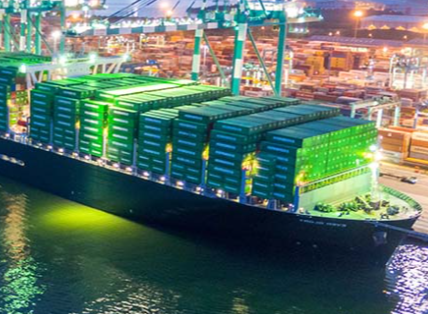
The attacked vessel, flagged in Singapore and owned by shipping giant Evergreen (EGSV), was hit on Thursday in the Gulf of Oman, raising immediate safety concerns.
A U.S. official told media that Iran was believed to be behind the attack, though an investigation remains ongoing.
IMO Secretary-General Arsenio Dominguez said the pause was necessary “in order to reconfirm that the necessary safety guarantees continue to be in place for the ships on our evacuation list and all those in the region.”
Dominguez also confirmed that the Evergreen vessel did not transit under the IMO’s evacuation framework, separating the attack from the agency’s formal operations.
When asked about Washington’s response, a U.S. official said “we are aware of these reports and looking into them. President Trump has been clear that Iran cannot subvert the free flow of traffic in the strait.”
The IMO initiative, launched on Tuesday, was designed to help hundreds of stranded ships and thousands of seafarers exit the Gulf using either a northern route via Iranian waters or a southern route via Omani waters with U.S. oversight.
The evacuation effort came after the U.S. and Iran struck an interim peace deal, pausing hostilities for 60 days while negotiations toward a permanent agreement proceeded.
Traffic through the Strait of Hormuz has partially recovered following the ceasefire, though volumes remain well below pre-war levels seen before late February.
In the week following the ceasefire, 125 vessels passed through the strait, according to Lloyd’s List Intelligence, representing the highest level of weekly transits since the conflict began.
Iran’s military complicated the situation further on Wednesday, warning vessels not to use the southern route approved by the IMO and declaring any transit route established without Tehran’s approval “unacceptable and dangerous.”
At least two vessels performed U-turns while attempting to exit the Middle East Gulf, according to Lloyd’s List Intelligence, after Iran insisted ships use only routes it had approved.
Both vessels that reversed course had been using the southern route nearest the Omani coastline, highlighting the growing tension between the IMO framework and Iranian demands.
Evergreen, Singapore’s Ministry of Trade and Industry, and Singapore’s Ministry of Foreign Affairs did not respond to requests for comment on the attack.