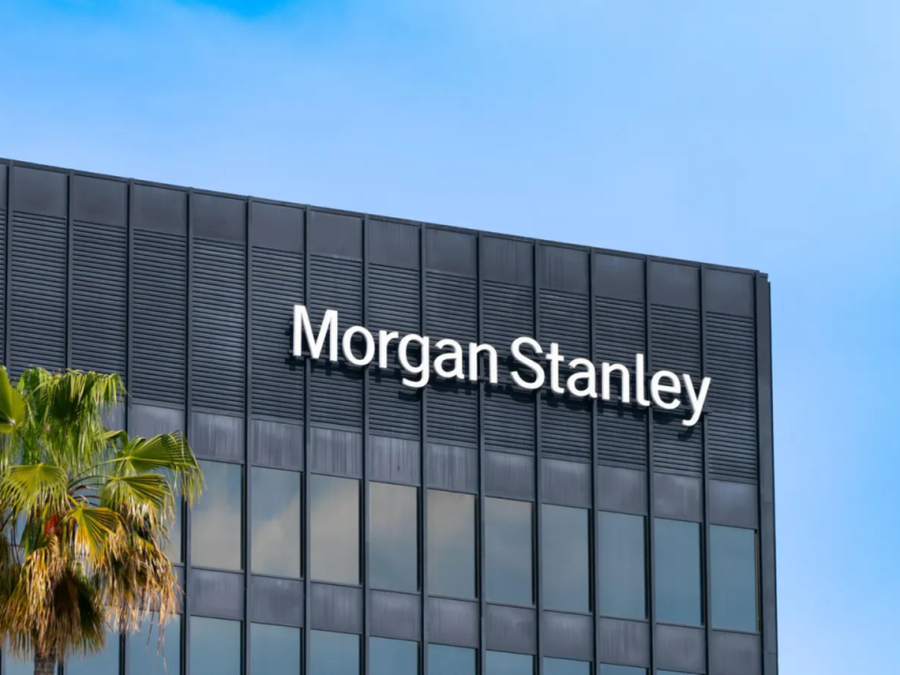
Morgan Stanley has delivered the strongest quarterly performance in its history, reporting first-quarter 2026 net revenues of $20.6 billion and earnings per share of $3.43, both of which substantially exceeded analyst forecasts and pushed the stock higher in pre-market and regular trading on Wednesday.
The results reflect a financial sector benefiting from elevated volatility, record client engagement and sustained momentum in wealth management, even as the broader macroeconomic environment remained complicated by geopolitical uncertainty.
The bank’s institutional securities division generated $10.7 billion in revenue, a 35% improvement from the previous quarter and a 19% increase from the same period a year ago. Equities and advisory drove the bulk of that performance, with market volatility generated by the US-Iran conflict providing a trading backdrop that consistently benefits the largest institutional participants.
Morgan Stanley’s equity trading desk continues to hold a leading position globally, and the results confirmed that the bank’s geographic and product diversification translates into strong results across varying market conditions.
Wealth management remained a pillar of stability. The division attracted $118 billion in net new assets during the first quarter, driven by what the bank described as an “unrivalled client acquisition funnel across workplace and advisor-led channels.” Total client assets now stand at approximately $9 trillion, approaching the $10 trillion milestone that management has set as a strategic target. Fee-based asset flows reached $54 billion, reflecting the continued migration of client portfolios toward advisory and managed product structures rather than transactional brokerage relationships.
CEO Ted Pick described the results in unambiguous terms: “Morgan Stanley entered 2026 from a position of strength. Amidst increased geopolitical uncertainty, the firm generated a record quarter with revenues of $20.6 billion and EPS of $3.43.” The commentary echoed a tone that has been consistent across the major bank earnings this season — confidence in the fundamental business model, cautious acknowledgement of macro risks but no indication that those risks are materially undermining client activity or credit quality.
The bank’s CET1 ratio stood at 15.1%, well above the regulatory requirement of 11.8%, confirming a capital position that gives management significant flexibility for future capital returns or strategic deployment. The quarter included $178 million in severance charges, reflecting ongoing organisational adjustments, but those costs were absorbed comfortably within the broader financial performance without material impact on the headline figures.
One technical development announced during the earnings call involves a bank reorganisation that will transfer over $100 billion in assets with the goal of optimising funding costs and improving competitiveness. Management indicated that the specific benefits of this restructuring are expected to manifest from 2027 onwards, suggesting this is part of a longer-term strategic evolution of the bank’s balance sheet architecture rather than an immediate near-term driver of results.
Analysts had forecast EPS of $3.02 heading into the announcement, making the $3.43 actual result a 13.58% beat against consensus — a substantial outperformance that carries more analytical weight than a modest upside surprise. The revenue beat relative to the $19.7 billion consensus estimate was similarly significant, with the actual $20.58 billion figure underscoring that the institutional securities outperformance was broad-based rather than driven by a single product area.
The market reaction was swift and positive. Morgan Stanley shares rose 4.3% in pre-market trading immediately following the announcement, and the stock held most of those gains through the regular session as investors processed the combination of record revenues, strong capital ratios and the forward-looking tone from management. The results place Morgan Stanley comfortably among the best-performing major banks through the opening phase of Q1 reporting, alongside JPMorgan, Bank of America, Wells Fargo and Citigroup, all of which also delivered year-over-year earnings growth.
Investment banking pipelines remain healthy, with management noting continued corporate and sponsor activity in strategic capital formation alongside a backlog of private companies seeking public market liquidity. The recovery of IPO markets from the disruption of the past two years remains a structural tailwind that has not yet fully played out, and Morgan Stanley’s position as one of the leading equity underwriters globally gives it meaningful exposure to any acceleration in issuance activity in the second half of 2026.