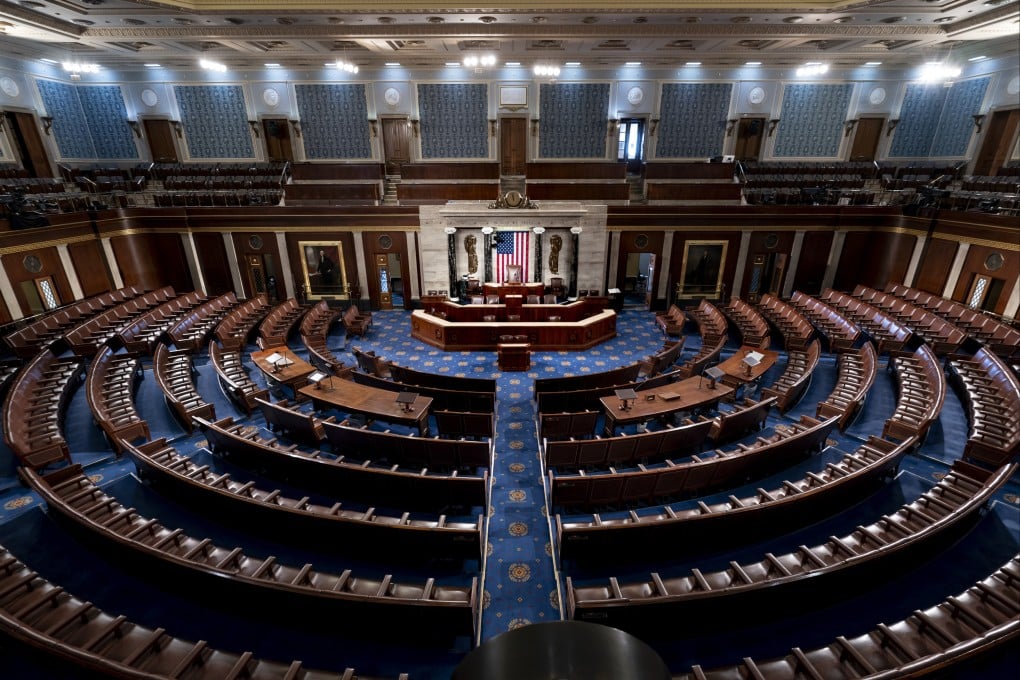
Analysts and investors have long observed a recurring pattern in U.S. equity markets that aligns with the congressional calendar each year.
When lawmakers leave Washington for summer recess, historical data suggests stock markets have a tendency to perform better than during active legislative sessions.
The relationship between congressional activity and market performance is more than anecdotal, with researchers pointing to several structural and behavioral reasons behind the trend.
One widely studied factor is that legislative uncertainty weighs on markets, and when Congress is in session, the threat of new regulations or tax changes can suppress investor confidence.
When that legislative risk temporarily disappears during recess periods, markets often respond with a degree of relief that pushes equities higher.
Research has also shown that full party control of both the White House and Congress does not necessarily translate into stronger stock market performance for investors.
In fact, split-party control of government has historically been associated with positive market returns, as gridlock limits dramatic policy shifts that can unsettle financial markets.
Another dimension of this issue involves the trading behavior of lawmakers themselves, who often have access to nonpublic information that can move financial markets.
Members of Congress also hold the power to shape policies in sectors where they maintain personal financial interests, raising concerns about potential conflicts between public duties and private portfolios.
Critics argue that when lawmakers are away from Washington and unable to act on privileged information in real time, one source of market distortion is at least temporarily reduced.
The debate over congressional stock trading has intensified in recent years, with reform advocates pushing for legislation that would ban individual stock ownership by sitting members of Congress.
Despite bipartisan public support for such restrictions, legislative efforts to ban congressional stock trading have repeatedly stalled before reaching a final vote on the floor.
Investors watching the summer 2026 session have renewed interest in whether the historical rally pattern holds amid ongoing volatility in U.S. equities and broader macroeconomic uncertainty.
Market strategists caution that while the seasonal pattern is real, it is not a guaranteed outcome and should not serve as the sole basis for any investment decision.
The intersection of political calendars and financial markets remains one of the more underappreciated dynamics shaping short-term price action on Wall Street throughout any given year.



