Visa and Mastercard shares climbed sharply, reinforcing the dominance of both payment giants as investor confidence in consumer resilience continued to build.
Both stocks surged more than 3% in a single session, pushing toward major technical resistance levels and setting fresh all-time highs in the process.
Visa’s fiscal third-quarter 2026 results delivered a powerful fundamental backdrop that helped drive the rally across both names.
Revenue at Visa rose 14% year over year to $11.6 billion, while earnings per share reached $3.32, beating analyst expectations by a comfortable margin.
The company also raised its full-year outlook following the strong quarterly performance, reinforcing investor confidence in its sustained growth trajectory heading into the second half of the year.
Mastercard posted quarterly earnings per share of $5.04 alongside revenue of $9.28 billion, with both figures surpassing analyst expectations and highlighting continued operational strength across its global payment network.
Institutional buying added further momentum to the rally after Pershing Square’s Bill Ackman disclosed an approximately $1.1 billion stake in Visa, lending high-profile credibility to the bullish investment case.
Analysts at Truist, Cantor Fitzgerald, and Wells Fargo each raised their price targets on Visa following the disclosure and strong earnings report, amplifying positive sentiment around the stock.
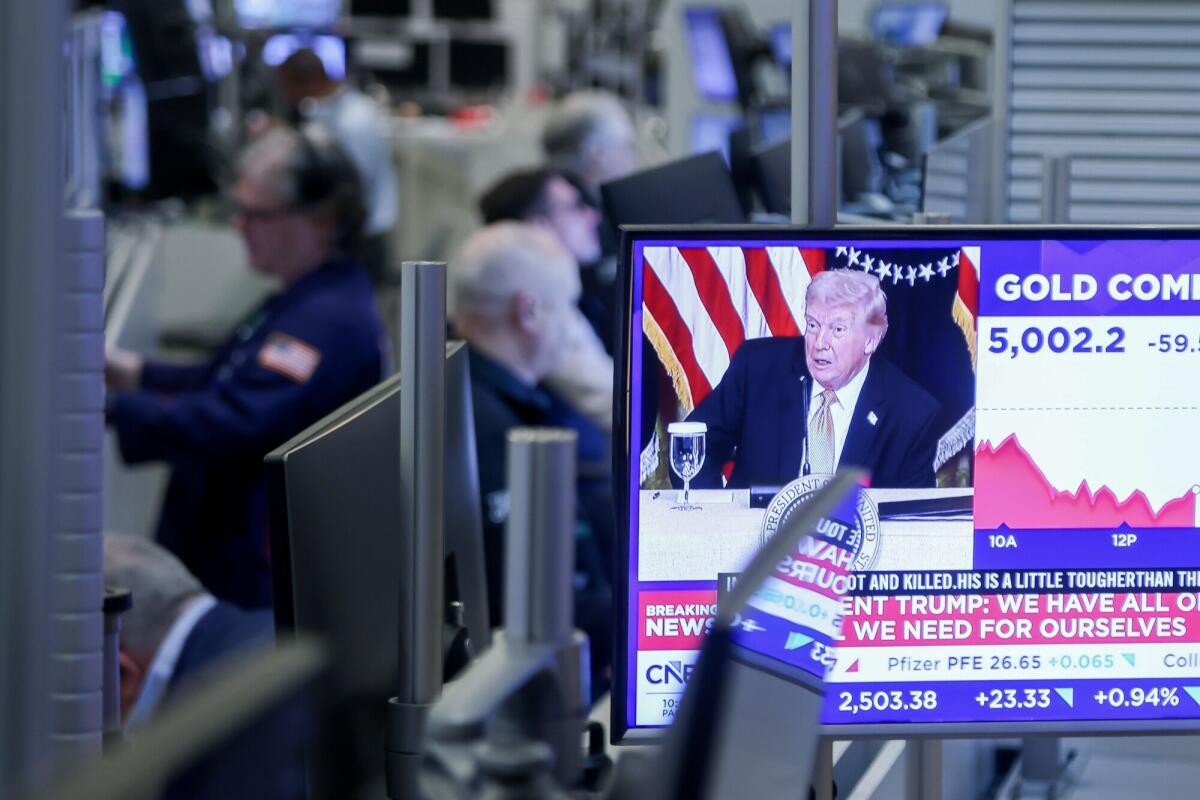
Recent financial disclosure filings revealed that investment accounts associated with President Trump purchased millions of dollars worth of Visa and Mastercard shares during June.
U.S. payments volume increased 10% from a year earlier, with credit volume rising 11% and debit volume climbing 9%, reflecting broad-based strength in household spending habits.
International payments volume also grew 10% on a constant-currency basis, while total payments volume surpassed $4 trillion for the first time in Visa’s history.
Visa Chief Financial Officer Chris Suh said spending remained strong across both discretionary and essential purchases, adding that the company has not seen signs of weakness among lower-spending consumers.
Suh’s comments suggest that despite broader macroeconomic uncertainty and persistent inflation concerns, American households have continued to spend freely across multiple categories.
The results from both companies are being closely watched as a real-time barometer of consumer health, given the vast scale of transactions processed across their combined global networks.