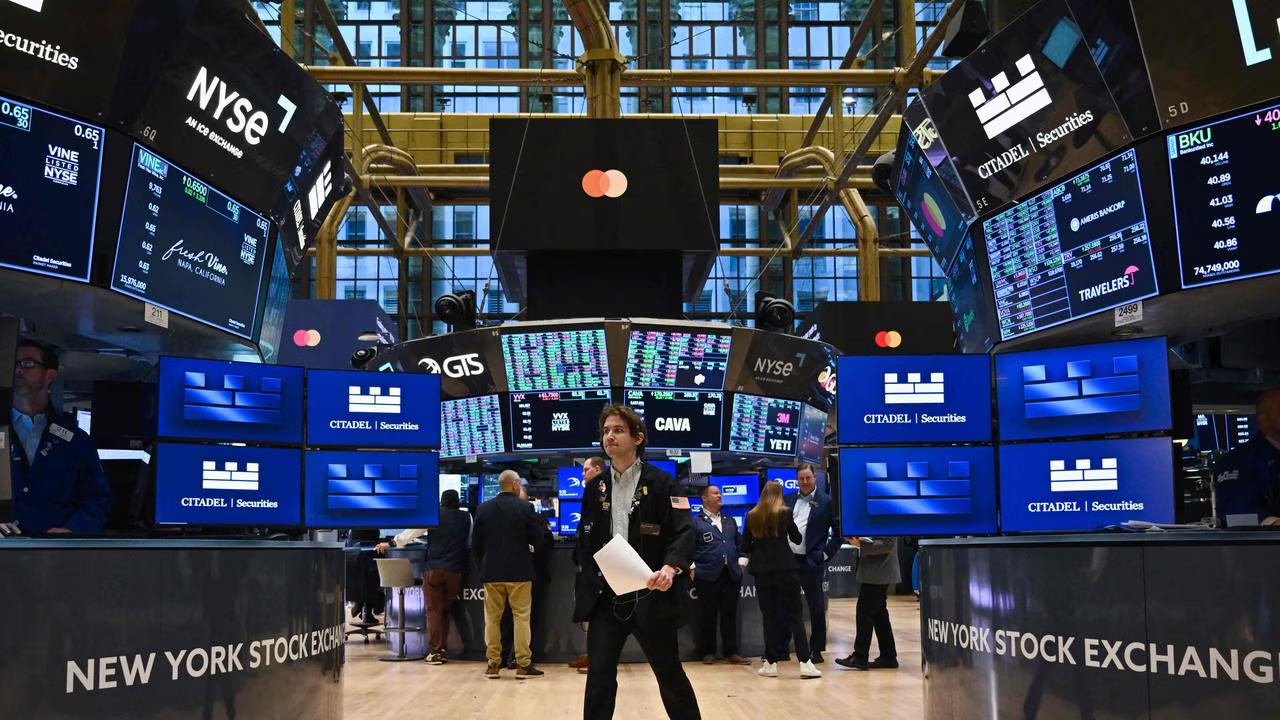
U.S. stocks have resumed their pattern of jumping from record high to record high after a brief pause in June and July of this year.
Investors are going all in on a FOMO-driven rally, pushing Wall Street’s widely watched “fear gauge” to its lowest level since January.
Demand for put options, which allow investors to protect their portfolios from a drawdown, has also eased considerably in recent weeks.
That shift in sentiment has prompted concern among some market watchers that investors may be growing too complacent in the face of mounting risks.
The unusual sense of calm has even spread internationally, extending to South Korea, which recently saw its stock market endure the most volatile episode in its history.
Local South Korean investors piled into leveraged products to chase a runaway rally in hot memory stocks like Samsung Electronics and SK Hynix.
South Korea’s Kospi 200 Volatility Index fell over 34% in a single month, dropping to its lowest level since April 30.
The Cboe Skew Index, which measures investor demand for crash protection, touched its lowest level of 2026 on August 4, signaling light demand for near-term protection.
SentimenTrader analysts noted that when previous episodes showed similarly low VIX readings, “obvious volatility usually did not arrive immediately” with VIX sitting below 15 at the bottom of its 126-day range.
Those same analysts offered a cautionary note, writing that “this is not a no-risk state but one where risk can be delayed, and the worst case may well fall harder after its buffer period.”
One analyst described the current environment by saying “that is why the calm feels deceptive,” adding that “the market does not need a huge new fundamental shock to move quickly.”
Veteran technical analyst Walter Deemer captured the prevailing mood succinctly on X, warning that the market has “nothing to fear but the lack of fear itself.”
Historical analysis of periods with low VIX readings alongside large shifts in options skew found that stock declines over the following month have tended to be relatively muted.
Still, traders and strategists are watching closely, aware that complacency itself can become a market risk when protective positioning drops this sharply.