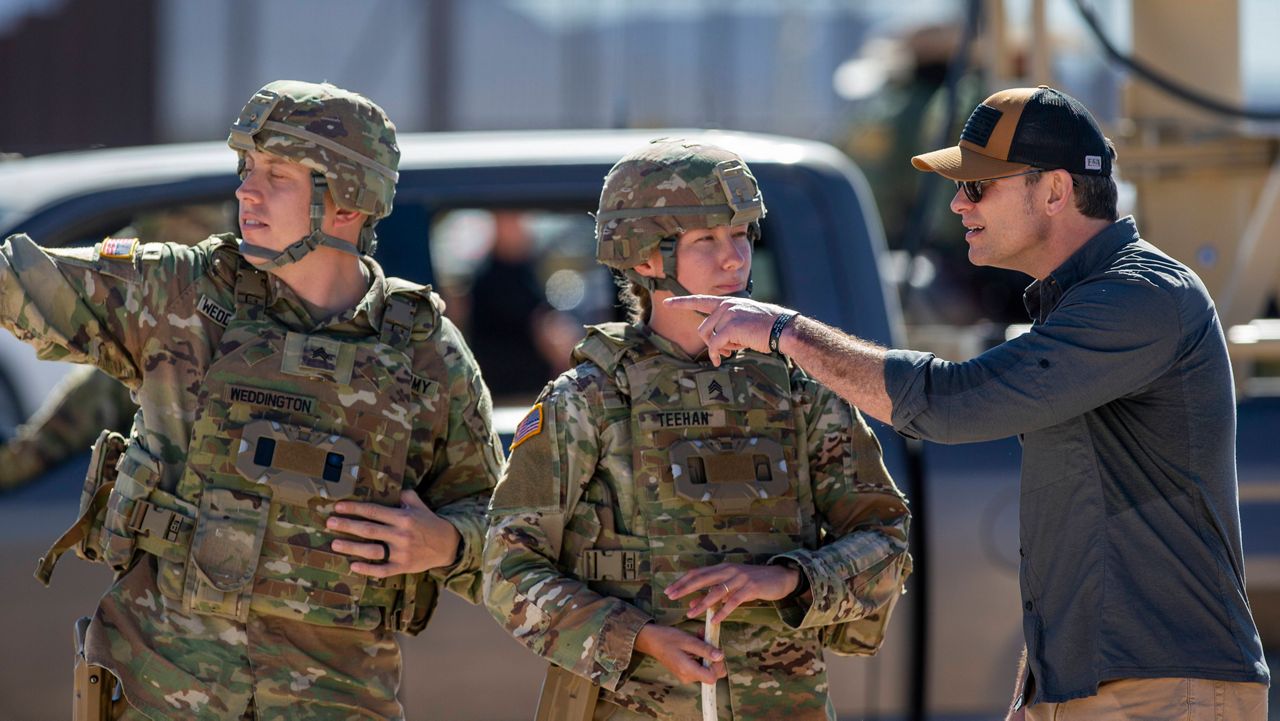
Rumors have circulated that Pete Hegseth was previously an army ranger, but this is untrue despite his career in the military.
Pete Hegseth has long been a prominent figure in conservative media and American political commentary, and his military service has played a central role in shaping his public persona. As a former Army National Guard officer who later became a familiar face on television and, eventually, a high-profile political figure, questions surrounding his military background continue to circulate widely. Among the most commonly asked are whether he was an Army Ranger, details about his combat experience, and what happened regarding his removal from the Defense Advisory Committee on Women in the Services (DACOWITS).
Here is a detailed, factual examination of Pete Hegseth’s military career and the DACOWITS termination that generated headlines and discussion.
Was Pete Hegseth an Army Ranger?
A frequent question online is whether Pete Hegseth served as an Army Ranger. The answer is no — Pete Hegseth was not an Army Ranger.
Serving as an Army Ranger requires completion of the U.S. Army Ranger School or assignment to one of the elite units within the 75th Ranger Regiment. There is no record of Hegseth completing Ranger School, nor was he ever a member of the 75th Ranger Regiment.
His service, while honorable and significant, was within the Army National Guard rather than within the Army’s specialized Ranger units. Misconceptions often arise because Hegseth did serve in combat zones and held leadership positions, but this should not be confused with Ranger qualification or Ranger Regiment membership.
Pete Hegseth’s Military Career and Service Overview
Pete Hegseth enlisted in the Army National Guard in 2003 after completing his undergraduate degree at Princeton University. His service included multiple deployments and leadership roles across a span of years in which he moved through the ranks and earned military commendations.
During his time in the National Guard, Hegseth rose to the rank of Major. His postings included deployments to Cuba, Iraq, and Afghanistan — experiences he has spoken about frequently in interviews, speeches, and writings.
His first notable assignment was serving as an infantry platoon leader at Guantánamo Bay, where he was involved in operations to guard detainees. That early leadership position helped set the tone for the rest of his military career, demonstrating his ability to lead in challenging environments.
Hegseth later deployed to Iraq during the troop surge era, where he served as a civil–military operations officer. His responsibilities involved interacting with local communities, helping manage reconstruction projects, and coordinating with U.S. military and political structures. His work during this period earned him recognition within his unit.
A subsequent deployment to Afghanistan added further combat-zone experience to his résumé. While there, he served as a counterinsurgency instructor and adviser, roles that required not only field knowledge but broader strategic understanding.
His service earned him several military awards, including the Bronze Star Medal and the Combat Infantryman Badge, both of which are significant indicators of frontline involvement and leadership under operational conditions.
Transition From Military to Public Political Voice
Following his deployments, Hegseth became increasingly involved in political advocacy for veterans’ issues. He became the executive director of Vets for Freedom, an organization focused on supporting strong national defense policies and highlighting the experiences of military personnel.
His advocacy work led to media appearances, which eventually propelled him into a full-time role with Fox News. There, his military background became one of his defining attributes, shaping much of his commentary on national security, foreign policy, and military culture.
Despite his public profile, debates over the nature and limits of his military experience — particularly the misconception about Ranger service — have followed him throughout his media career. Nonetheless, his documented record reveals years of legitimate service within the National Guard and combat-zone deployments, even though he was never part of Ranger School or the 75th Ranger Regiment.
What Was DACOWITS and Why Was Pete Hegseth Removed?
The Defense Advisory Committee on Women in the Services (DACOWITS) is a long-standing advisory body within the Department of Defense. Established in 1951, the committee offers recommendations on policies affecting women in the U.S. armed forces, including recruitment, integration, training, retention, and readiness.
Pete Hegseth was appointed to the committee but was later removed during the Biden administration in 2021. His termination came as part of a broader wave of removals and reassignments across multiple Pentagon advisory boards. The incoming administration sought to restructure advisory committees after determining that several had been filled during the final months of the previous administration by individuals seen as politically aligned rather than policy-focused.
Hegseth’s removal was part of that sweeping reorganization. It did not involve misconduct or disciplinary action specifically related to him personally. Instead, the Pentagon dismissed dozens of appointees simultaneously as part of a review of defense advisory boards and their membership.
The decision drew public attention because of Hegseth’s media prominence, his outspoken political views, and his close association with the Trump administration. However, it was not unusual for advisory committees to undergo realignment during administrative transitions, and his removal was consistent with that pattern.
Public Reaction and Discussion Following the Termination
Hegseth publicly criticized the decision at the time, arguing it demonstrated politicization of military advisory bodies. Supporters echoed that view, saying his military experience and advocacy made him a valuable voice on the committee.
Critics countered that the review and removal were justified given the extensive changes to advisory boards made late in the prior administration. The debate became part of a broader conversation about political influence within Pentagon advisory structures and how appointments should be managed across differing administrations.
A Military Career Marked by Service — But Not Ranger Qualification
Pete Hegseth remains a figure who attracts intense public interest and scrutiny. His military career is marked by multiple deployments, leadership roles, and meaningful contributions to U.S. military operations in the post-9/11 era. But it is equally important to clarify that he was not an Army Ranger, despite occasional online speculation to the contrary.
The DACOWITS termination, meanwhile, stands as an example of how administrative changes can shape advisory roles within the Pentagon, especially when public political figures are involved. Hegseth’s career continues to bridge the worlds of military service, political advocacy, and public commentary — ensuring that his background will remain a topic of discussion for years to come.