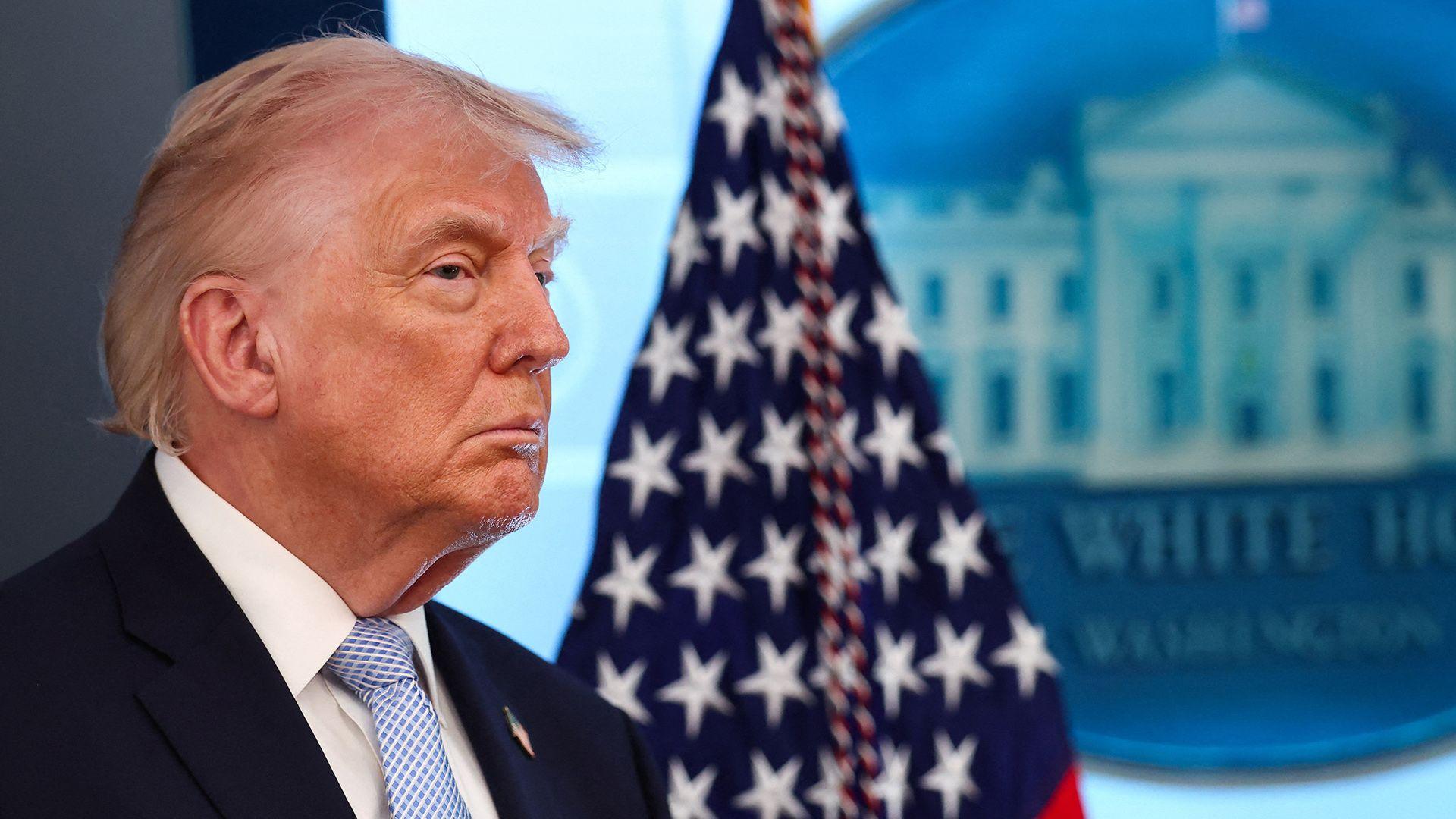
Senator Bill Cassidy of Louisiana became the first sitting senator to lose a regularly scheduled Republican primary since Indiana’s Richard Lugar in 2012, eliminated from the race for a third term after Trump-backed congresswoman Julia Letlow and state Treasurer John Fleming outpolled the two-term incumbent on Saturday night.
Letlow, who carried Trump’s “complete and total endorsement,” finished with approximately 45% of the vote, comfortably ahead of Fleming at 28% and Cassidy at around 25%.
With no candidate reaching the 50% threshold required for outright nomination, Letlow and Fleming will contest a runoff on June 27, but the political message of the primary is unambiguous: Cassidy’s career in elected office is over.
The result is the most significant demonstration of Trump’s primary power since his return to the White House. Cassidy was one of seven Republican senators who voted to convict Trump at his January 2021 impeachment trial, a vote cast in a state that backed Trump by 22 percentage points in 2024. Despite Cassidy’s subsequent efforts to rebuild the relationship, including voting to confirm Health Secretary Robert F. Kennedy Jr. and nominating Trump for the Nobel Peace Prize, the president remained determined to end the senator’s political career. Trump posted on Truth Social on election night: “His disloyalty to the man who got him elected is now a part of legend, and it’s nice to see that his political career is OVER!”
Cassidy, for his part, used his concession to deliver a thinly veiled rebuke directed not at the voters but at the president. “Insults only bother me if they come from somebody of character and integrity, and I find that people of character and integrity don’t spend their time attacking people on the internet,” he said. He added: “Our country is not about one individual. It is about the welfare of all Americans, and it is about our Constitution.” The dignified exit contrasts sharply with the posture Trump required of his allies during the campaign, where attacks on Cassidy escalated to the point of calling him “a very disloyal person” in the weeks before the primary.
The financial dynamics of the race made the outcome more remarkable. Cassidy and his supporters spent more than $17 million on advertising, against just $5 million for Letlow and $680,000 for Fleming. Outspending your opponent by more than three to one and still finishing third is the kind of result that demonstrates the limits of campaign cash when voter sentiment has been decisively shaped by a presidential narrative of loyalty and betrayal. Letlow thanked “a very special man who you all know, the best president this country has ever had, President Donald Trump,” when addressing supporters on Saturday night, cementing her positioning for both the runoff and the general election in a state where the Republican nominee is a heavy favourite.
The result has immediate implications for the broader political landscape. Cassidy served as chairman of the Senate Health, Education, Labor and Pensions Committee, and his departure removes one of the few remaining Republican voices willing to publicly challenge Kennedy’s health agenda from a position of medical expertise. On the redistricting question, Trump said before his China trip that Republicans had “redistricted for years, and now we took our shot and it looks like we’re going to pick up a lot of seats,” though Louisiana’s Senate primary operated under a newly introduced closed primary system that generated some voter confusion around participation rules for unaffiliated voters.
Steve Bannon, who has been tracking the midterm landscape closely, told NBC that he expects Republicans to hold the House but lose the Senate, while describing the Iran war as a “costly distraction from pocketbook issues.” That internal tension between the president’s foreign policy positioning and the domestic economic concerns that typically drive midterm outcomes represents the central political challenge facing the Republican Party heading into November.