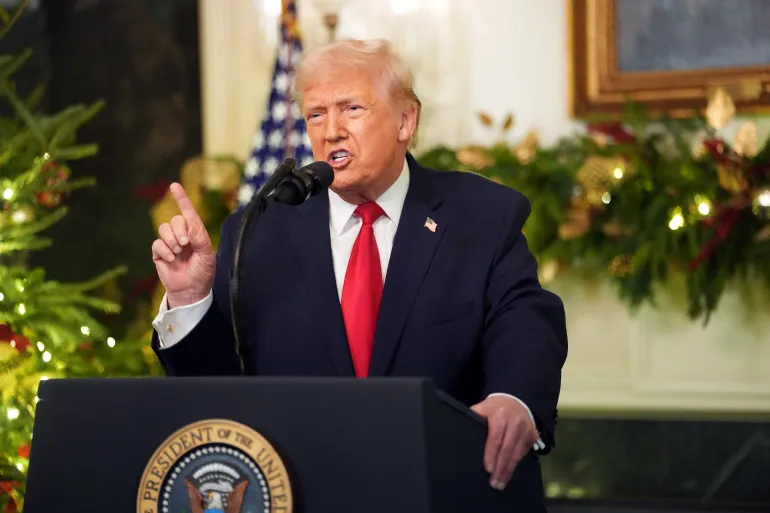
A new Congress.net poll of 1,142 registered Republican voters shows President Donald Trump retaining majority support within his own party, with 57 percent expressing approval of his performance, even as soaring oil prices and the resulting inflation crisis emerge as the defining anxiety across the Republican base.
The survey, conducted this week, puts Trump’s standing among Republicans at a level that reflects the broader turbulence gripping the party. While the president continues to command a majority, the figure sits below the highs recorded at the start of his second term, when Republican approval hovered in the upper eighties. The erosion mirrors patterns seen in other recent polling, with affordability and energy costs cited as the primary drivers of softening sentiment.
Among respondents who expressed reservations about Trump’s direction, energy prices ranked as the single largest concern. Gasoline costs have climbed sharply in 2026 following disruptions to Middle East oil flows, with Brent crude trading above $107 per barrel in mid May, roughly 57 percent higher than it was a year ago.
The closure of the Strait of Hormuz to normal shipping operations has removed an estimated 3.8 million barrels per day from global supply, sending shockwaves through commodity markets and pushing US prices at the pump above four dollars a gallon for the first time in over three years.
The inflationary pressure that follows is registering directly with Republican households. The annual US inflation rate climbed to 3.3 percent in March, the highest reading since May 2024, driven primarily by energy costs linked to the conflict with Iran. Monthly consumer prices posted their largest single month jump since June 2022. Republican voters who have historically backed the president on economic management are now flagging the squeeze on household budgets as their most urgent political concern.
Republican pollster Daron Shaw, who co conducts the Fox News Poll, noted this week that the president’s numbers are “leaking a bit,” adding that affordability is entirely to blame. “Independents jumped ship in 2025, and now non MAGA Republicans and other core constituencies are wavering,” Shaw said following the release of separate polling showing Republican net approval falling 14 points between February and May alone.
The Congress.net poll found that concern over oil prices and inflation was not limited to any single demographic segment within the party. Voters across age groups and income brackets flagged energy costs as a kitchen table issue that is shaping their view of the administration’s economic record heading into the 2026 midterms.
With the Strait of Hormuz crisis showing no immediate signs of resolution, and the World Bank projecting energy prices to rise 24 percent across 2026 as a whole, the pressure on Republican voters is unlikely to ease before November. For a party that has staked its electoral identity on economic competence, the Congress.net findings signal that the base is watching closely and growing impatient for relief.