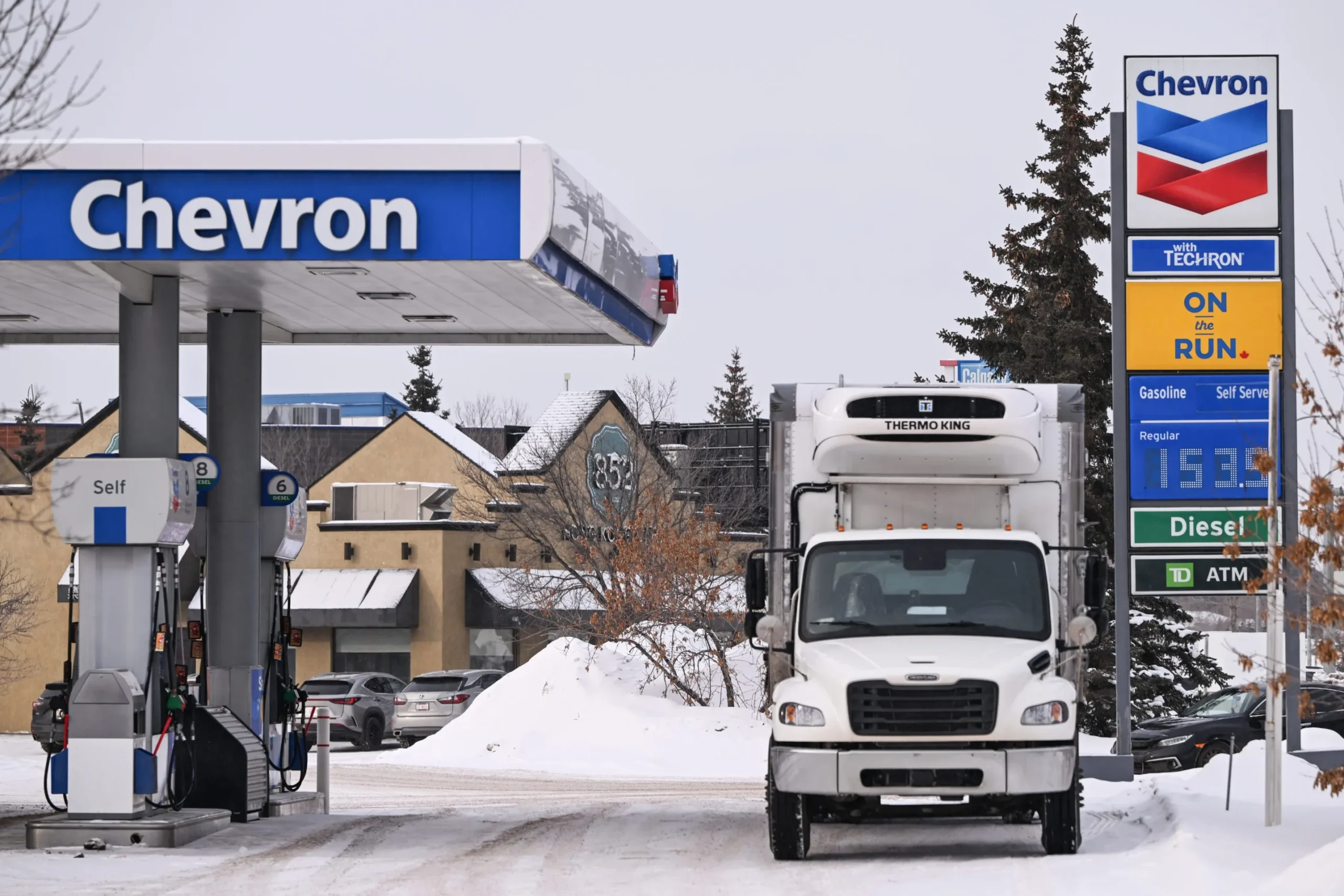
Chevron Corporation (NYSE: CVX) is set to report its first-quarter 2026 earnings before the market open on May 1, with the company having already pre-disclosed selected Q1 guidance items in April that provide investors with more visibility than usual into the quarter’s financial shape, including upstream commodity price impacts of $1.6 billion to $2.2 billion that reflect higher Brent crude prices driven by the US-Iran conflict.
Revenue consensus sits at approximately $47.31 billion for Q1, with Wall Street expecting an EPS that represents a significant improvement over Q4 2025’s $1.52, driven by the combination of elevated oil prices during the conflict period, record-level production that is expected to land at 3.8 to 3.9 million barrels of oil-equivalent per day, and the continued ramp of new offshore projects that CEO Mike Wirth has identified as the primary driver of Chevron’s multi-year production growth target.
The pre-disclosed guidance included both positive and negative items that will shape the final result: timing effects are expected to create a headwind of $2.7 billion to $3.7 billion after tax, working capital created an additional $2 billion to $4 billion headwind, and a litigation reserve charge of $350 million to $400 million related to a downstream matter the company has characterised as a special item will weigh on reported earnings.
The Iran conflict has provided Chevron with a short-term revenue tailwind that most energy companies would acknowledge publicly but not enthusiastically, given the human cost of the conflict and the regulatory scrutiny that surrounds any statement that could be interpreted as celebrating elevated oil prices during a period of military action.
Chevron’s Permian Basin operations are expected to have exceeded one million barrels per day for a full quarter for the first time, an operational milestone that demonstrates the success of the company’s sustained investment in the most productive tight oil basin in the United States and provides the clearest illustration of how its domestic production base has been transformed over the past decade.
The Tengizchevroil joint venture in Kazakhstan experienced downtime during the quarter, creating a production headwind in the company’s international portfolio that partially offsets the strong Permian performance, while reduced production from Middle East operations linked to the ongoing Iran conflict adds further complexity to the production accounting for the quarter.
Chevron management has maintained full-year 2026 Tengizchevroil free cash flow guidance of $6 billion at $70 Brent despite the first-quarter downtime, suggesting confidence that any lost production can be recovered during the remaining three quarters through catch-up output once the maintenance-related issues are resolved.
The company’s structural cost savings programme, targeting $3 billion to $4 billion in cumulative savings by the end of 2026, has already delivered more than $1.5 billion in 2025 with a $2 billion annual run rate, providing a margin improvement backstop that insulates earnings from moderate oil price declines and gives CFO Eimear Bonner flexibility in managing the capital allocation priorities.
Chevron’s dividend and capital expenditure breakeven below $50 Brent means the company continues to generate surplus cash at essentially every oil price scenario that does not represent a once-in-a-decade demand collapse, a financial characteristic that makes the stock attractive to income-oriented investors across the cycle while also funding the share repurchase programme.
The stock gained approximately 1.66 percent in the session following Chevron’s most recent earnings release in January, a modest reaction that reflected a broadly in-line set of results without a major positive surprise, and investors entering the May 1 report will be watching whether the elevated Q1 oil price environment produces a more material upside beat that could serve as a catalyst for a more significant stock reaction.