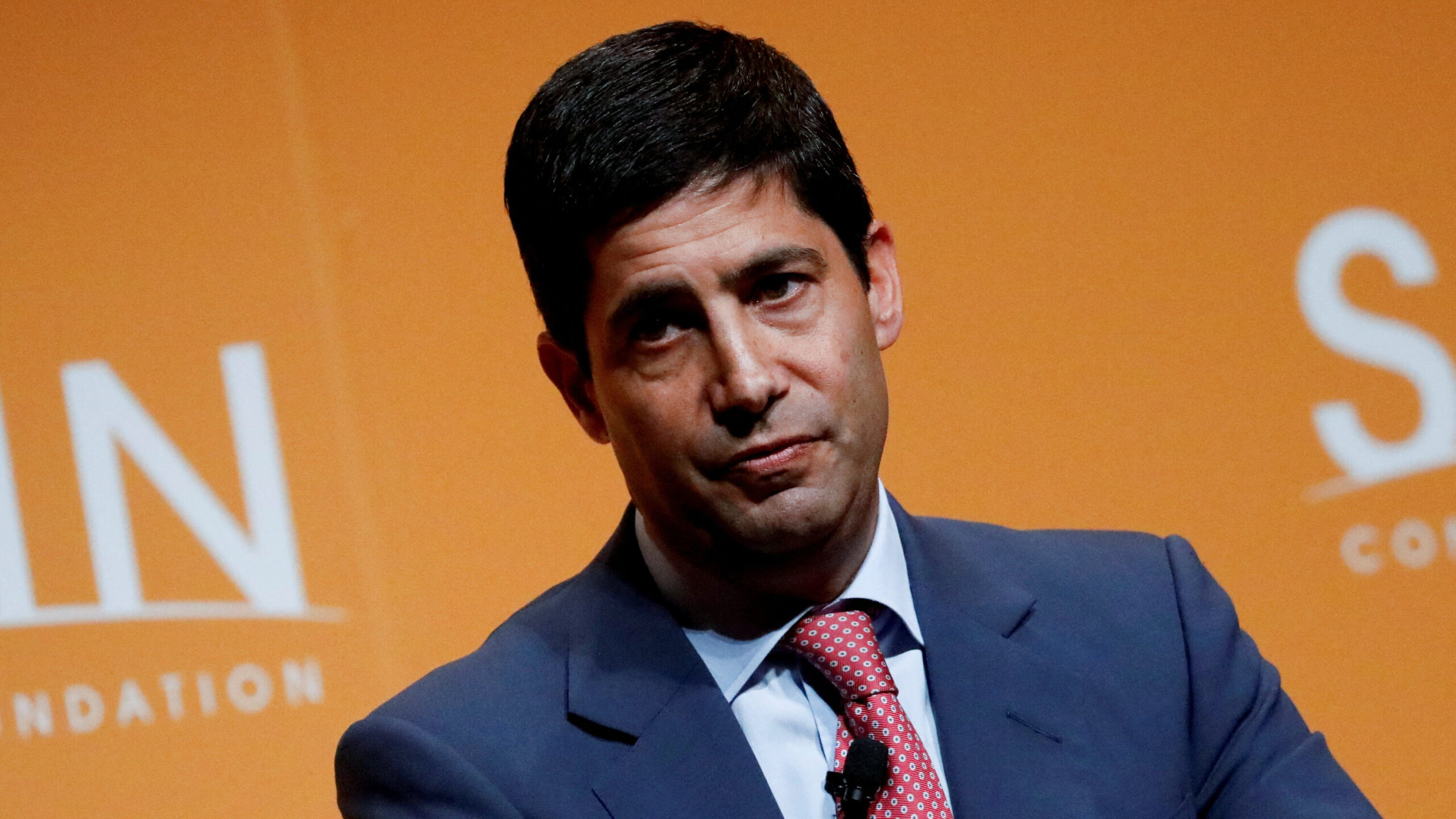
Investors and economists are heading into the first Federal Reserve meeting chaired by Kevin Warsh with an unusual degree of uncertainty about his monetary policy intentions.
Warsh has remained largely silent on key economic questions since assuming office, including where he stands on the recent surge in job growth and the persistent acceleration in inflation.
That silence may be deliberate, as new Fed chairs often avoid staking out public positions early in order to build internal consensus among policymakers.
The immediate question confronting markets is whether Warsh will move to remove the so-called easing bias from the Fed’s policy statement, which signals the central bank’s preference for cutting rates.
Three FOMC members dissented at the previous meeting, indicating they wanted the Fed to stop leaning toward rate reductions, adding further complexity to Warsh’s opening act.
JP Morgan Chief Economist Michael Feroli offered a measured view on how far Warsh might go, saying he doesn’t think Warsh will say he’s “open” to rate hikes, “but I could see him saying he can’t rule it out.”
The Fed was widely expected to hold rates steady at its June 16-17 FOMC meeting, with the CME FedWatch tool showing a 97.4% probability of rates remaining in the 3.50% to 3.75% range.
Warsh’s hawkish reputation stems partly from his conduct during the 2008 financial crisis, when he told colleagues that “inflation risks continue to predominate as the greater risk to the economy,” even as unemployment was on the verge of skyrocketing.
Joe Brusuelas, chief economist at RSM, called Warsh’s 2008-2009 inflation calls a “red flag,” arguing his “first instinct is hawkish and rarely saw a potential rate hike he didn’t like.”
However, the current version of Warsh has projected a more pragmatic image, championing what he describes as a “stronger, not hotter” economic thesis tied to artificial intelligence productivity gains.
His argument holds that AI-driven productivity growth could allow the Fed to reduce rates without triggering an inflationary spiral, a notably softer stance than his earlier record would suggest.
Warsh led an internal review of the Bank of England’s communications strategy in 2014, generally advocating for greater transparency but less frequent public signaling overall.
He has not committed to holding a press conference after every Fed meeting, breaking from the practice established by his predecessor Jerome Powell, and has argued central banks do not need to telegraph every potential move to financial markets.
That shift in communications posture may itself be the clearest early signal of how Warsh intends to run the institution, prioritizing deliberate ambiguity over the forward guidance markets have grown accustomed to in recent years.