The US war with Iran — launched without a Congressional vote and now in its fourth week — is beginning to fracture the Republican unity that Trump typically relies upon for military and foreign policy initiatives.
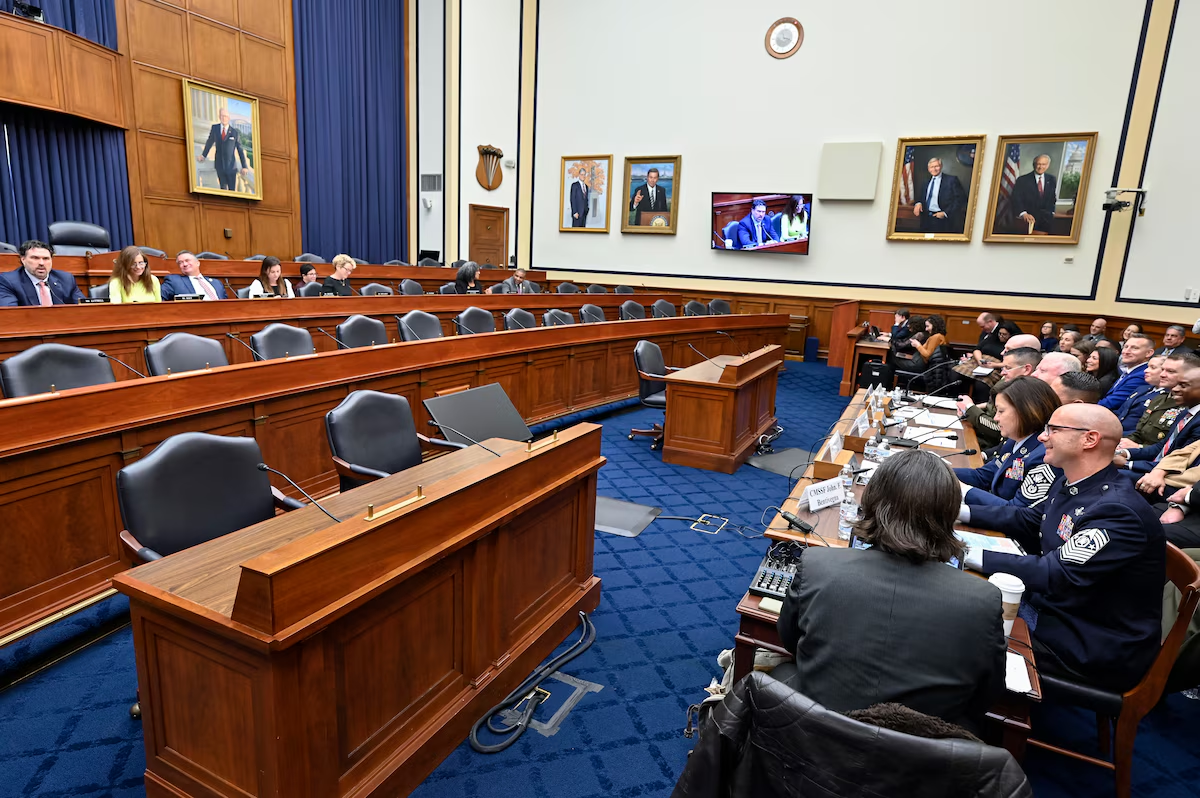
A closed-door briefing for the House Armed Services Committee on Wednesday involving Department of Defense and intelligence officials left members of both parties deeply dissatisfied, with some leaving saying there was “no plan, no strategy, no end game shared.”
The frustration has been building across multiple fronts simultaneously. At least 13 US military personnel have been killed and more than 230 wounded since the conflict began. A $200 billion Pentagon war funding request is pending at the White House.
Allies in the Gulf have come under attack. Oil prices have remained elevated, disrupting supply chains and pushing consumer energy costs higher. A poll taken shortly after Trump won re-election found that 30% of Americans thought the economy was in poor shape — a figure that has worsened considerably since the Iran conflict began.
Republican House members left the Armed Services Committee briefing with specific unresolved concerns about whether US ground troops would be deployed to Iran, under what authority they would operate, and whether sufficient protections existed.
GOP Rep. Clay Higgins described it as “the most contentious” Armed Services Committee briefing he had witnessed, though he personally said he was satisfied. One congressional official was considerably less diplomatic, saying “it’s unclear if there isn’t a plan or if there is a plan and they wouldn’t share it with members.”
The White House has countered that 20 bipartisan briefings have been conducted across both chambers since the conflict began, and that the administration remains committed to “completely demolishing the Iranian regime’s ballistic missile capabilities, navy, ability to arm proxies, and dreams of possessing a nuclear weapon.” Congressional Republican leaders have largely held the line publicly. Speaker Johnson said he trusts the president’s assurances that economic disruptions “won’t last.” National Republican Congressional Committee chair Richard Hudson said voters are “smart enough to know this is a temporary increase.” The challenge for Republicans is that the midterms are in November, and temporary can last a long time.