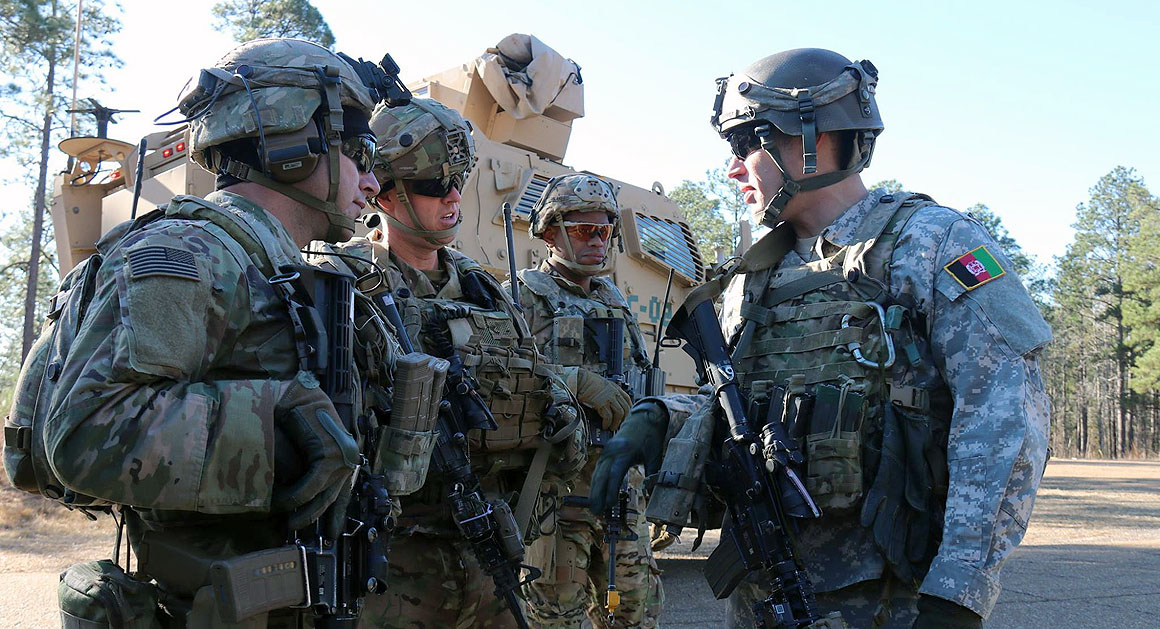
Raytheon UK has led the Omnia Training consortium to secure a £2,000 million, 15-year British Army collective training contract, renewing investor focus on RTX’s long-term valuation.
The contract win raises fresh questions about whether the market has fully priced in RTX’s expanding international defense footprint and what that means for shareholders.
RTX shares are currently trading at $194.44, with a 30-day share price return of 4.76% and a year-to-date return of 3.84%, reflecting measured but steady momentum.
The stock’s one-year total shareholder return stands at 30.34%, while its five-year total shareholder return has climbed to an impressive 152.54%, pointing to durable long-term gains.
Those figures suggest that recent defense wins and engine contracts are feeding into a longer-running positive narrative rather than sparking a sudden new surge in the share price.
Despite moving higher, RTX still trades below both analyst price targets and an internal fair value estimate, leaving a meaningful gap that investors are now examining more closely.
The most widely followed valuation narrative places RTX’s fair value at approximately $215.73 per share, compared to the last close of $194.44, implying the stock is roughly 9.9% undervalued.
Supporting that assessment is RTX’s robust and growing backlog, which includes a 1.86 quarter book-to-bill ratio and a $236 billion backlog that is up 15% year-over-year.
Major new international contracts spanning EU, MENA, and Asia-Pacific markets indicate RTX is well-positioned to benefit from sustained increases in global defense spending and heightened geopolitical tensions.
That backlog-driven story leans on measured revenue growth assumptions, rising margins, and a future earnings multiple typically associated with higher-growth sectors, a combination that could surprise investors who dig into the details.
RTX’s narrative could shift quickly, however, if jet engine reliability issues or tariff costs flare up again, both of which could pressure margins and put that 9.9% upside figure into question.
The British Army training contract adds yet another layer to a defense portfolio that already spans multiple continents, reinforcing the case that RTX’s order pipeline remains one of the most visible in the aerospace and defense sector.
With global governments continuing to increase defense budgets in response to geopolitical pressures, RTX appears positioned to convert its massive backlog into consistent, long-term revenue growth.
Investors weighing the stock will need to balance the compelling backlog story against execution risks, including supply chain pressures and the ongoing costs associated with engine development programs.