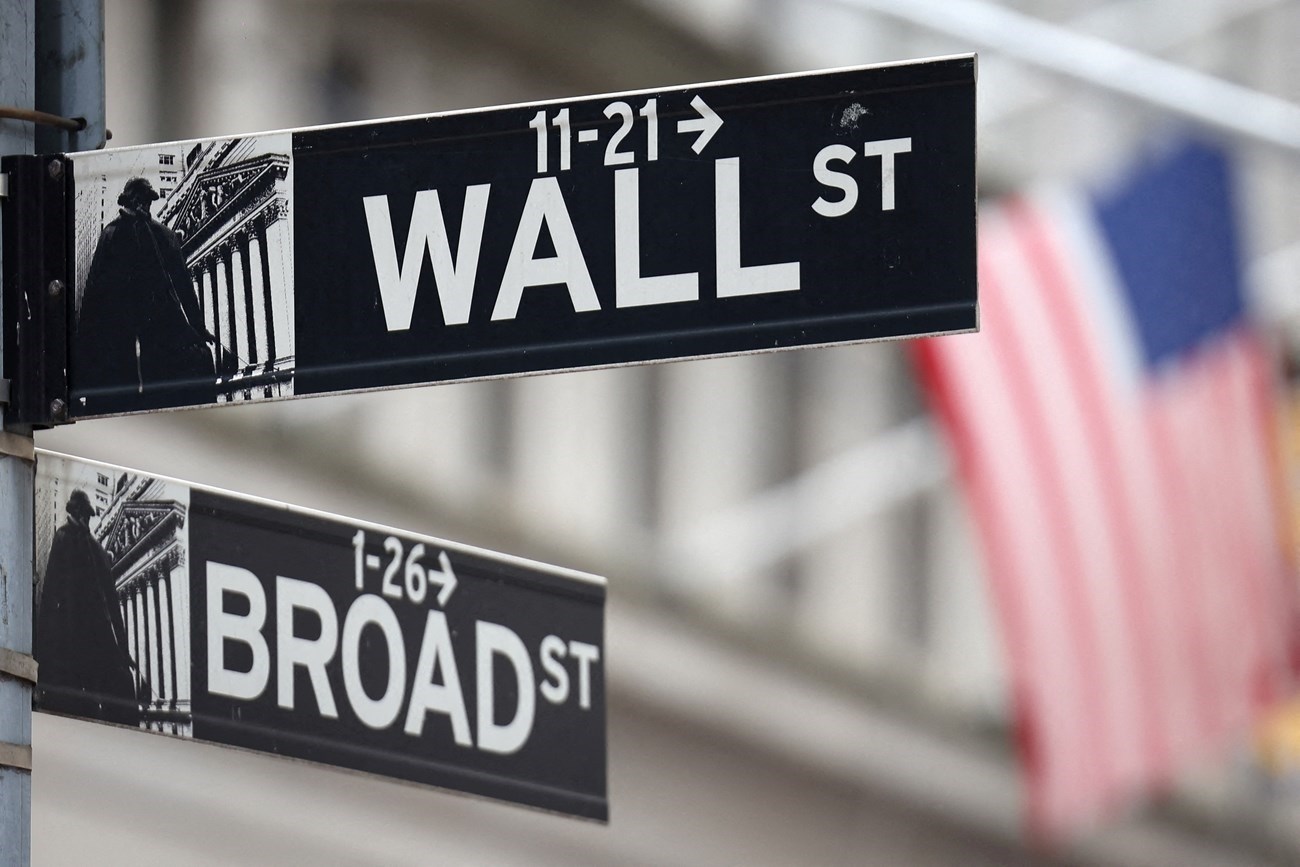
The U.S. stock market suffered its worst single day since October as a sweeping sell-off in major technology companies dragged down the broader market.
A stronger-than-expected jobs report intensified fears that the Federal Reserve could be forced to raise interest rates at some point this year.
The S&P 500 dropped 2.6%, marking its steepest one-day decline since October 10, when the Trump administration threatened a 100% tariff on Chinese imports.
The losses pushed the benchmark index to its first losing week in the past ten, ending a notable stretch of consecutive weekly gains.
The Dow Jones Industrial Average fell 1.4%, while the Nasdaq composite bore the brunt of the damage with a 4.2% decline.
In total, the S&P 500 shed 200.57 points to close at 7,383.74, while the Dow dropped 695.15 points to settle at 50,866.78.
The Nasdaq lost 1,121.53 points, finishing the session at 25,709.43 as technology names continued to weigh heavily on sentiment.
Nvidia (NVDA) fell 6.2%, Broadcom (AVGO) dropped 7.9%, and Micron Technology (MU) slid 13.3%, the single largest loss among all S&P 500 components on the day.
Stocks within the S&P 500 were nearly evenly split between gainers and losers, but the outsized market weightings of major tech stocks amplified the index-level damage.
Lululemon slumped 7.9% after the company trimmed both its revenue and profit forecasts, adding further pressure to an already struggling session.
The price of Brent crude, the international oil benchmark, fell 2% to settle at $93.09 per barrel, reflecting broader risk-off sentiment across asset classes.
A key inflation measure closely watched by the Federal Reserve showed that prices rose 3.8% overall in April, the largest such increase in two years.
The inflation reading reinforced concerns that the Fed may have limited room to cut rates, or could even resume hiking, putting pressure on rate-sensitive growth stocks.
Markets were mixed across Europe following the U.S. session, while Asian markets had already declined earlier in the trading day.