The federal government is in preliminary talks with major artificial intelligence companies about taking ownership stakes in the rapidly expanding sector.
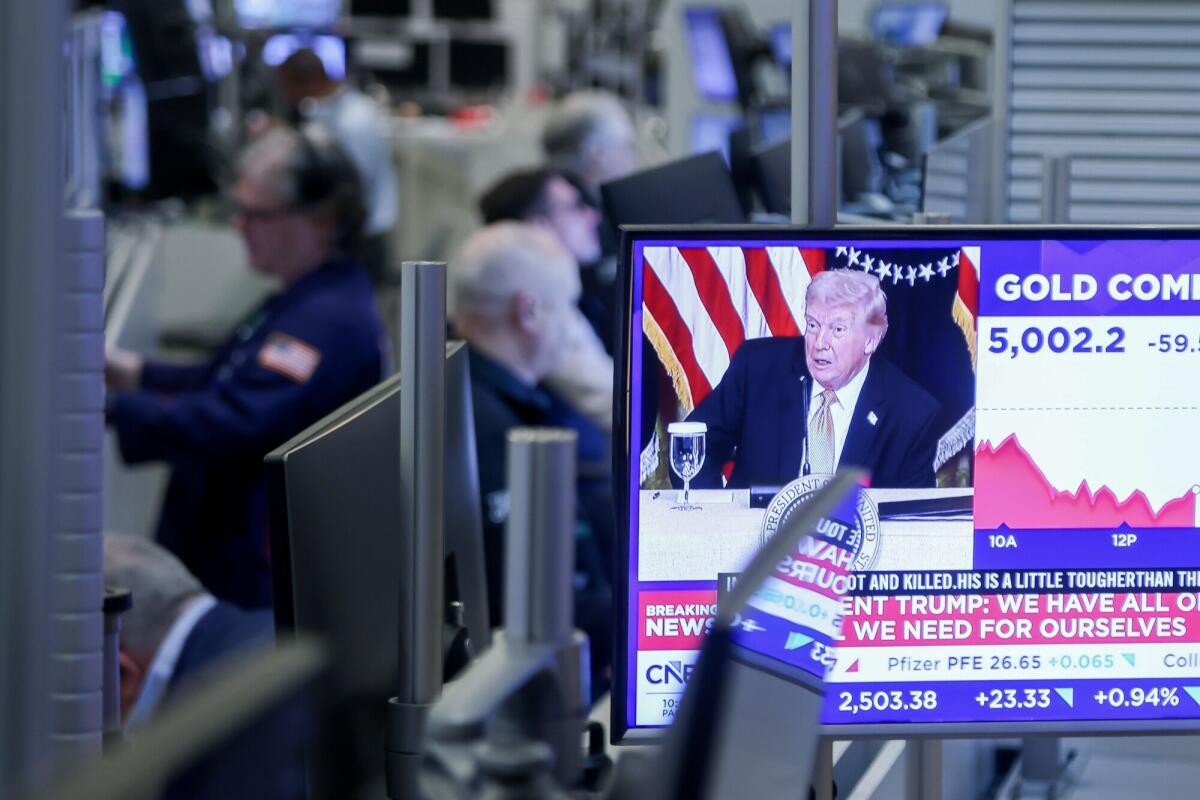
President Donald Trump confirmed Friday that his administration is actively considering acquiring government equity positions in leading AI developers.
Speaking to reporters aboard Air Force One, Trump said discussions had already taken place with major AI companies about a potential federal ownership arrangement.
Senior U.S. officials are exploring a rare arrangement in which the government would hold shares in private AI firms and direct any returns toward public purposes.
One proposal under consideration would channel earnings from government-held shares toward American households, potentially in the form of direct dividend payments.
OpenAI CEO Sam Altman first brought the equity-sharing idea to Trump personally in early 2025, framing it as a mechanism to distribute AI’s financial rewards more broadly across the public.
Altman has referenced the Trump accounts program, a child-oriented IRA vehicle that parents can open at tax time, as one possible model for directing those returns.
During a visit to Washington, Altman met with Republican House Speaker Mike Johnson and other administration figures to promote his vision for public-private AI collaboration.
In an April blog post, OpenAI recommended creating a so-called “Public Wealth Fund” to allow “people to directly share in the upside of that growth” from artificial intelligence.
Anthropic confidentially filed its IPO prospectus with the SEC on June 1, while OpenAI is preparing its own confidential filing, putting both companies on a path toward public markets.
The U.S. government already holds shares in chipmakers, miners, and quantum computing companies, often acquiring stakes in exchange for federal funding that originally came without ownership conditions.
Even a modest government position in these firms could carry enormous financial weight, as a 2% stake in a $3 trillion company would represent $60 billion in value.
Senator Bernie Sanders proposed legislation that would impose a one-time 50% tax on AI company stock, with proceeds directed into a U.S. sovereign wealth fund, drawing further attention to the idea.
Former White House AI czar David Sacks and other Trump allies have nonetheless warned about the risks of giving the government an ownership position in companies developing cutting-edge technology.
The United States lacks the formal sovereign wealth fund infrastructure that countries like Norway and Singapore have built over decades to manage public investment portfolios.
The legal mechanism for companies to voluntarily transfer stock to the federal government remains unclear, and a White House spokesman declined to comment on the matter.
Whether this concept moves beyond preliminary discussions will depend heavily on execution, institutional capacity, and political will within an already-divided Washington.