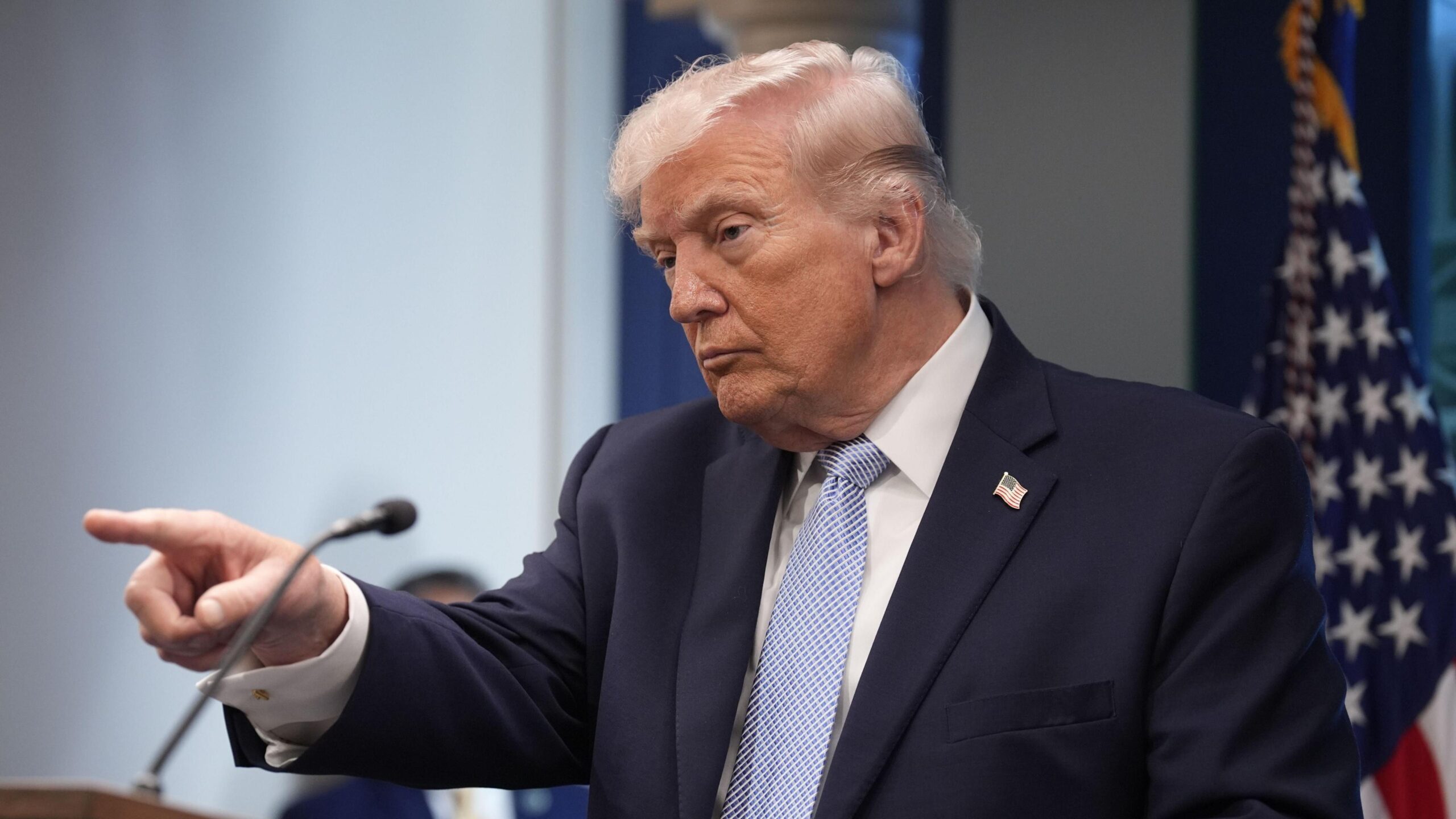
President Donald Trump reversed himself on Tuesday, announcing an indefinite extension of the US ceasefire with Iran hours before the agreed two-week truce was due to expire — a decision that came despite Trump telling CNBC earlier that same morning that he did not want to extend it and that the US was in a strong negotiating position.
The reversal followed a direct request from Pakistani Prime Minister Shehbaz Sharif and Army chief Field Marshal Asim Munir, who asked Washington to hold off on resuming military operations while Iranian leaders attempted to produce a coherent negotiating position.
“Based on the fact that the Government of Iran is seriously fractured, not unexpectedly so and, upon the request of Field Marshal Asim Munir, and Prime Minister Shehbaz Sharif, of Pakistan, we have been asked to hold our Attack on the Country of Iran until such time as their leaders and representatives can come up with a unified proposal,” Trump said in a Truth Social post announcing the decision. The framing of Iran as “seriously fractured” reflects what US officials have described privately as a genuine structural obstacle to reaching a deal — a deep divide between Iran’s civilian negotiating team, led by Parliament Speaker Mohammad Bagher Ghalibaf and Foreign Minister Abbas Araghchi, and the Islamic Revolutionary Guard Corps, whose commanders have consistently pushed for a harder line.
The ceasefire extension was not welcomed by everyone in Tehran. An adviser to Ghalibaf, Mahdi Mohammadi, called Trump’s announcement “a ploy to buy time for a surprise strike,” adding in a post on X that the continued US Navy blockade of Iranian ports is “no different from bombardment and must be met with a military response.” The Iranian foreign ministry separately accused the United States of “provocative actions” and continued ceasefire violations in a statement published the same day, citing the seizure of an Iranian cargo vessel by US forces over the weekend and what Tehran described as contradictory and threatening rhetoric from American officials.
The extension makes the situation structurally more complicated in at least one important respect: an open-ended ceasefire without a defined deadline removes the pressure on Iran that has been one of the US’s key sources of leverage, and Trump’s own advisers have reportedly warned him privately that Tehran could use an indefinite truce to drag out talks without making substantive concessions. Pakistan Prime Minister Sharif thanked Trump for “graciously accepting our request,” pledging that Islamabad would continue its mediation efforts, but whether Pakistan can actually bring fractious Iranian factions to a unified negotiating table is a different question entirely.
Vice President JD Vance, who had been expected to travel to Islamabad on Tuesday for a second round of peace talks, did not make the trip. A White House official confirmed the delegation would not travel on Tuesday in light of Trump’s Truth Social post, and said any further updates on in-person meetings would be announced separately. The previous round of Islamabad talks, led by Vance alongside Jared Kushner and Steve Witkoff in April, ran for 21 hours and produced no agreement — a precedent that underscores how far apart the two sides remain on the core issues of uranium enrichment, Strait of Hormuz control, sanctions relief and Iran’s regional military presence.