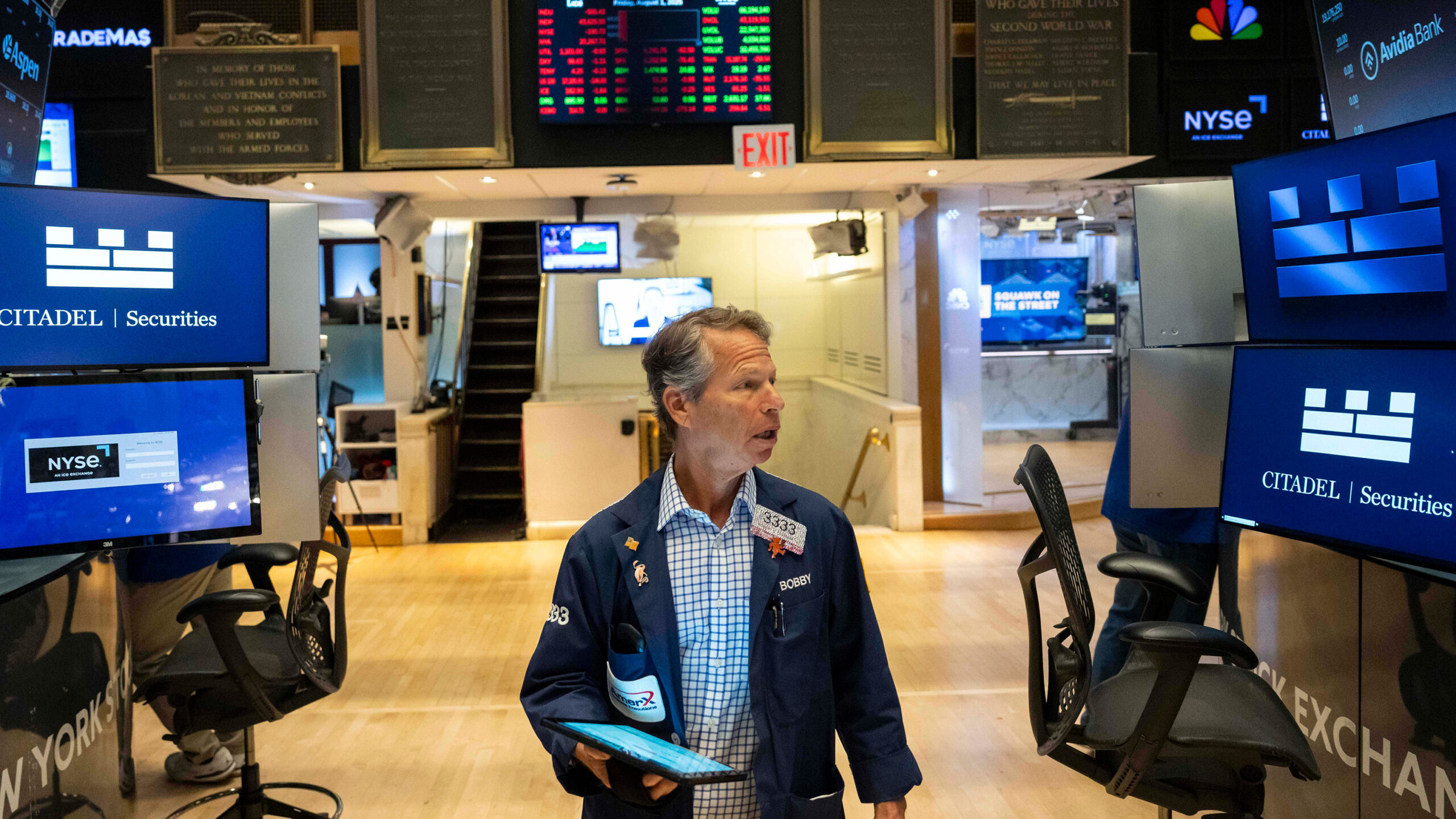
July ended on a cautiously optimistic note for U.S. equity markets after one of the most turbulent months Wall Street has seen in decades.
The Nasdaq Composite (COMP) surged 2.8% to close at 25,122.18 on the final trading day of the month, snapping a bruising six-session losing streak.
The Dow Jones Industrial Average (DJIA) climbed 613.92 points, or 1.2%, finishing at 52,208.06, while the S&P 500 (SPX) rose 1.7% to settle at 7,437.63.
Despite the late-month bounce, Goldman Sachs’s high-beta momentum basket had fallen 37% across July, marking its worst monthly performance on record.
That decline undercut both the dot-com unwind of 2000 and the financial crisis crash of 2009, the two previously worst months for momentum strategies on record.
Microsoft (MSFT) shares led the charge on the final day, surging 16% after the company reported strong growth from its Azure cloud computing business.
Semiconductors also staged a dramatic recovery, with the iShares Semiconductor ETF (SOXX) climbing more than 8%, Micron Technology (MU) jumping 18%, and Advanced Micro Devices (AMD) gaining more than 13%.
The iShares MSCI Momentum Factor ETF (MTUM) jumped 5.5% on Thursday, its largest single-day advance since April 9, 2025, according to data referenced by Wolfe Research.
Wolfe Research pointed to the Bloomberg Pure Momentum Factor, noting the strategy recorded its strongest one-day gain since December 2000 during the session.
Higher oil prices pushed Treasury yields upward, adding another layer of complexity for investors already struggling to interpret signals from Federal Reserve Chair Kevin Warsh.
The Federal Reserve opted to hold interest rates unchanged, while Treasury yields remained near multi-year highs heading into the final session of July.
Markets also spent much of the week assessing whether massive artificial intelligence investments by major corporations are beginning to translate into measurable financial results.
The final day of July capped one of the busiest weeks of earnings season, with corporate results continuing to drive sharp moves across individual stocks and sectors.
Goldman Sachs’s trading desk offered investors a cautiously hopeful historical footnote on the momentum trade’s dramatic collapse through the month.
Once the momentum factor drops more than 20% in a single month, Goldman noted that forward returns have historically tended to be positive, with a median gain near 4% over the following week and close to 6% over the following month.