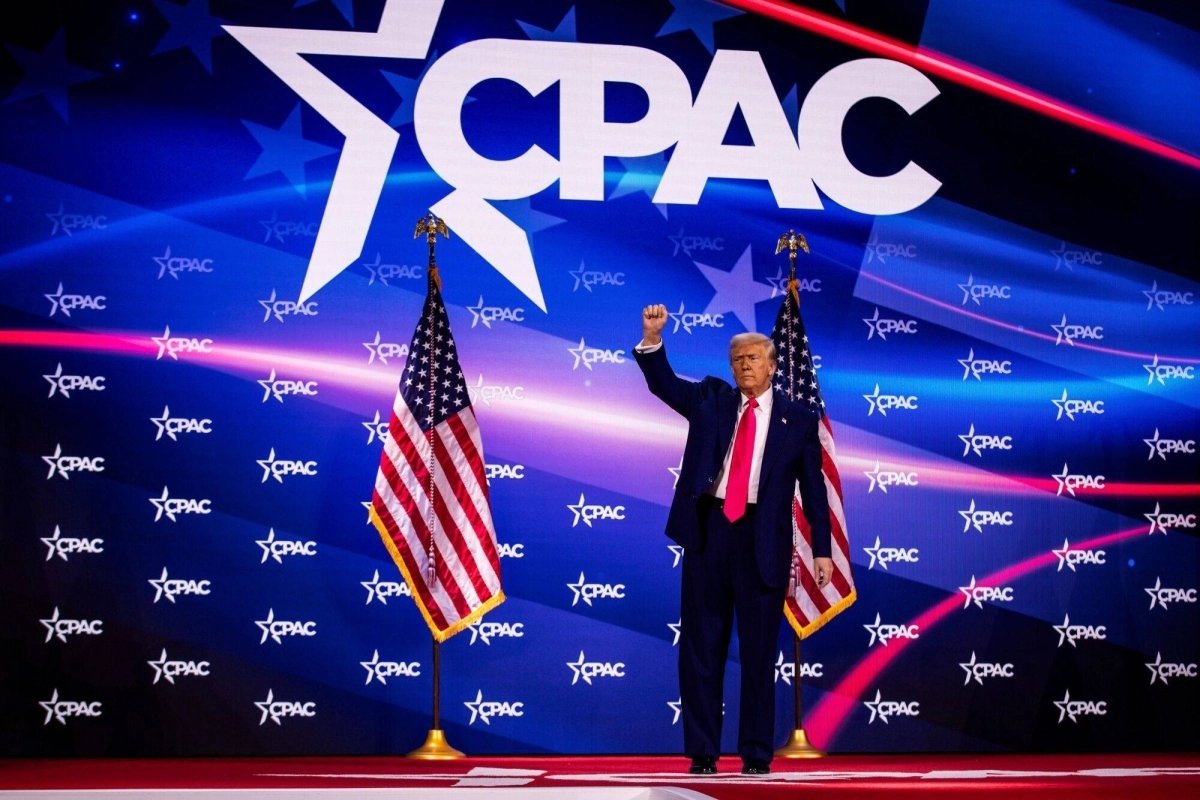
The annual Conservative Political Action Conference wrapped up in Dallas on Saturday with a notable absence at its centre: President Trump skipped the event entirely, breaking a decade-long tradition of closing the conference with a signature rally.
His absence comes exactly one month after the United States launched strikes against Iran — a military operation ordered without congressional approval on February 28 and one that has split conservative opinion in ways the movement has rarely experienced.
The conference has historically been a controlled showcase of Republican unity. This year, the Iran war introduced genuine tension into a gathering that usually functions as a loyalty rally.
A Pew Research Center survey found that nearly eight in ten Republicans approve of Trump’s handling of the war. But among younger Republicans and conservative-leaning independents, that support drops substantially.
Former Florida congressman Matt Gaetz was one of the few speakers willing to criticise the conflict from the stage directly. “A ground invasion of Iran will make our country poorer and less safe,” he told the audience. “It will mean higher gas prices, higher food prices.”
The crowd received Gaetz’s remarks without hostility, which is itself significant. A year ago, dissent on a Trump military operation at CPAC would have been unthinkable.
Attendee Jeff Hadley, who drove from Raleigh, North Carolina, to be there, articulated the dominant view among those present. “I think a lot of people feel more confident in Trump doing it than a lifelong politician that wants to follow the rules of their party,” he said.
That sentiment explains why Trump remains personally popular even as his specific decisions generate unease. The MAGA movement has always been more about trust in a figure than agreement on every policy.
Fewer congressional candidates than usual used CPAC as a campaign stop this cycle — a sign that the political calculations around the war are shifting even if the surface-level loyalty remains intact.
The conference’s most lasting significance this year may not be what was said on stage, but what Trump’s absence said about the political moment he is navigating.