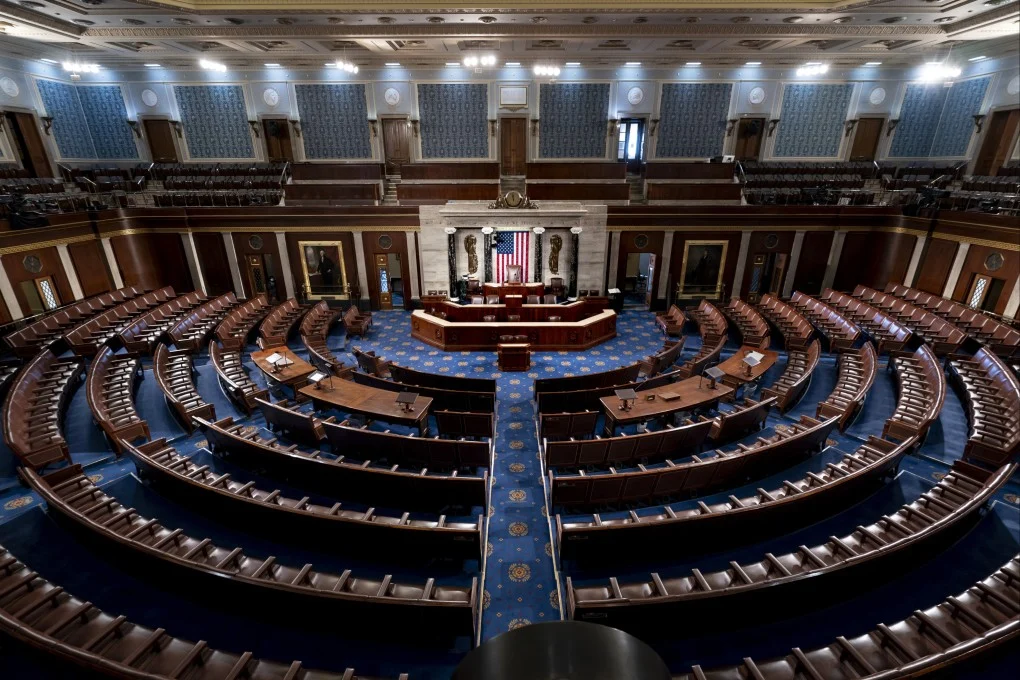
House Democrats are preparing to force a second War Powers Resolution vote when the chamber returns from recess on April 14, having spent the intervening weeks repairing the fractures that caused the first attempt to fail on a 212-219 vote in early March. The effort to rein in President Trump’s authority to continue military operations in Iran is now closer to passing than at any point since the war began.
The previous vote failed when four Democrats crossed the aisle: Henry Cuellar of Texas, Jared Golden of Maine, Greg Landsman of Ohio, and Juan Vargas of California. Intensive party whipping has since brought most if not all of those members back in line.
Landsman issued a public statement saying he will vote for the resolution next time it comes to the floor. Cuellar’s office pointed to an alternative resolution he had previously supported as context, and sources familiar with the whip count say the four defectors are largely expected to fall in line.
House Minority Whip Katherine Clark explained the tactical reasoning behind the delay. “We can’t win this, procedurally, every day. So we are holding that option until we can pass it or events turn and we can get more Republicans to join us,” she said.
On the Republican side, Thomas Massie and Warren Davidson voted for the resolution in March. Representative Nancy Mace told reporters this week she would “most likely” vote with Democrats the next time. That would give the resolution a narrow but realistic path to passage.
Minority Leader Hakeem Jeffries said he is committed to “moving forward with the war powers resolution sooner rather than later,” while Representative Ro Khanna confirmed he is working with Massie and has identified “five or six” Republican lawmakers who are potentially persuadable.
A successful House vote would still face enormous obstacles. Trump could veto any resolution that reached his desk, and overriding that veto would require two-thirds support in both chambers, which is currently impossible given Republican Senate margins.
The political value of passing a resolution lies primarily in the signal it sends. A bipartisan House majority formally rebuking the president’s conduct of a war six months before midterm elections would carry significant narrative weight.
CNN polling from the final week of March showed 94% of Democrats and 74% of independents disapprove of the Iran war. Republicans are divided, with those identifying as MAGA significantly more supportive than the broader Republican-leaning electorate.
The House’s return from recess on April 14 will immediately test whether the whipping effort has held. Democrats are also conscious that any further escalation in Iran over the Easter weekend could harden opinion and bring more Republican votes to their side.