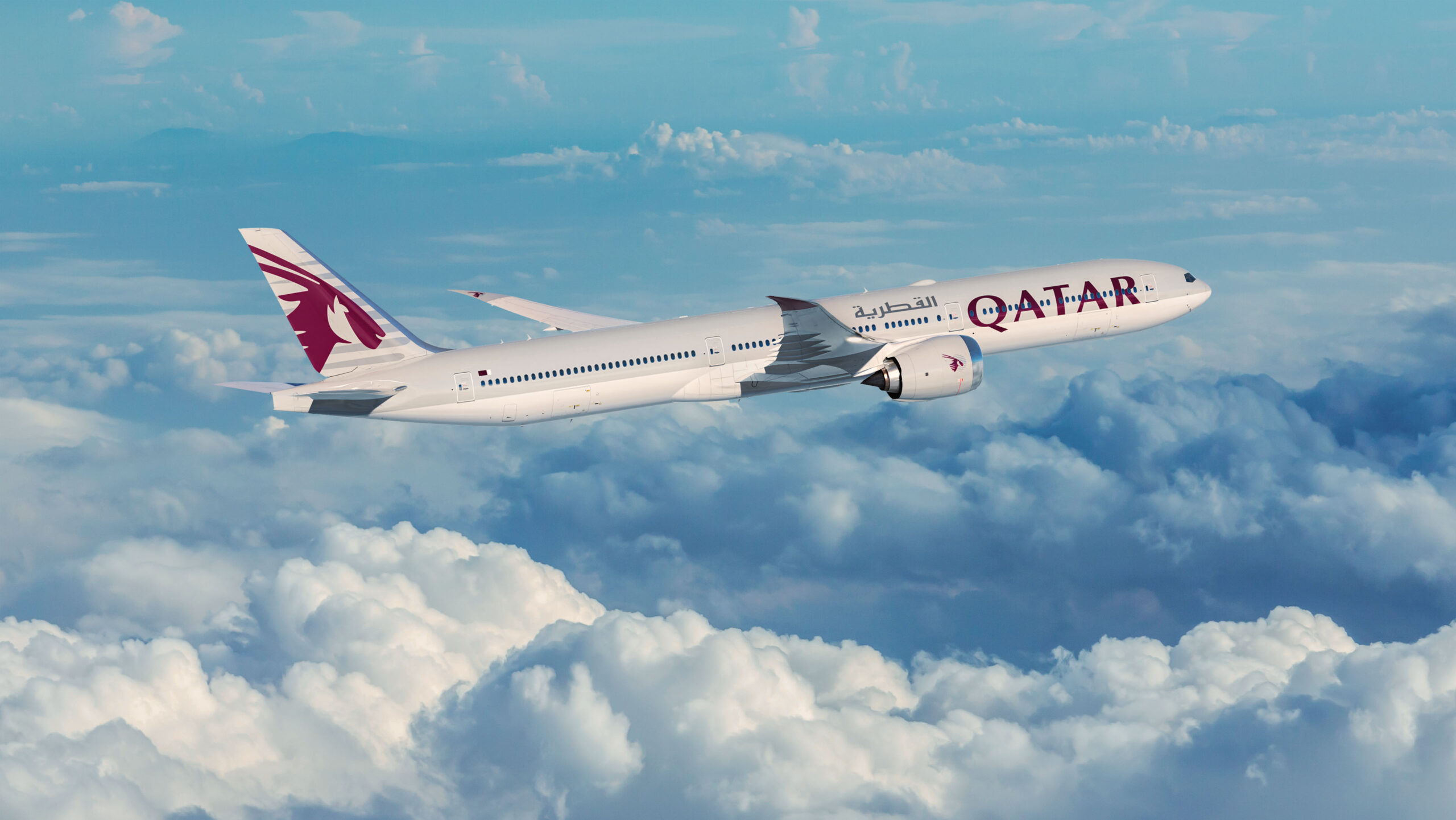
Three weeks after Iranian missile and drone strikes forced the closure of Qatari airspace and grounded virtually the entire Qatar Airways fleet, the airline is attempting a partial return to operations this week, beginning with a limited scheduled service to dozens of destinations that started on March 18 and runs through to March 28. It is a meaningful step, but one that falls well short of anything resembling normal, and the broader picture across Gulf aviation remains fragile.
The context requires some explaining for those who have not been tracking the conflict’s aviation impact closely. The US-Israeli military campaign against Iran began on February 28, triggering Iranian retaliatory strikes across multiple Gulf countries that host American military bases. Qatar, the UAE, Kuwait and Saudi Arabia all became targets or near-targets for Iranian missiles and drones, and aviation authorities across the region responded by closing airspace at various points. Hamad International Airport in Doha, one of the world’s most important connecting hubs, went from processing tens of thousands of passengers daily to operating as few as 15 departing Qatar Airways flights per day during the worst of the disruption.
Qatar Airways’ official position remains that full scheduled operations will only resume once the Qatar Civil Aviation Authority announces the complete reopening of Qatari airspace as safe for commercial traffic. The limited service that began Wednesday operates through what the airline described as “designated navigational contingency routes with limited operational capacity,” coordinated with the Qatari armed forces, which effectively means the flights are running through corridors that military authorities have assessed and approved in real time.
The routes currently in play are themselves a reflection of how dramatically the conflict has reshaped commercial aviation across the region. With the normal Gulf corridor effectively closed due to Iranian and Israeli military activity in the airspace between them, airlines operating between Europe and Asia now face two viable routing options: north through the Caucasus and then over Afghanistan, or south through Egypt, Saudi Arabia and Oman. Both add significant flight time and fuel costs, neither is a permanent solution, and both create logistical pressure on ground handling at alternative transit points that were not designed to absorb this volume.
Qatar Airways is structurally more exposed to this disruption than almost any other carrier in the world precisely because its entire business model is built around the connecting hub model. Unlike Emirates, which has a significant point-to-point premium market, Qatar Airways moves the large majority of its passengers through Doha as a transit stop between other continents. The airline cannot generate meaningful revenue operating point-to-point flights between European capitals and Asian cities if its network is not connected through Doha, which means the financial bleeding from three weeks of near-total grounding has been severe.
Emirates, operating out of Dubai, has stabilised at roughly 60% of its pre-conflict schedule, and industry analysts expect Qatar Airways to target a similar recovery level once the limited service period from this week proves operationally stable. Flydubai, Emirates’ short-haul affiliate, is running below 40% of its normal capacity, which illustrates how differently sized carriers are experiencing the same disruption depending on their fleet composition and route mix.
The European Union Aviation Safety Agency extended its safety bulletin covering airspace across Iran, Iraq, Israel, Jordan, Lebanon, Bahrain, Kuwait, Qatar, the UAE, Oman and Saudi Arabia through March 18, advising operators not to fly at any altitude through those zones due to risks from missiles, air defence systems and ongoing military activity. That bulletin’s extension cycle has become one of the most closely watched pieces of aviation intelligence in the industry, because every renewal signals that the conflict has not de-escalated to a point where normal commercial operations can safely resume.
For travellers who have been stranded or who hold forward bookings, Qatar Airways has offered two complimentary date changes of up to 14 days from the original travel date and a full refund option for affected journeys between February 28 and March 22. The airline has been direct in its communications that passengers should not travel to their departure airport without a confirmed ticket for a flight on the limited schedule. Given the pace of change in the region, that advice is genuinely prudent rather than merely procedural.
The wider commercial casualty of this disruption, beyond the airlines themselves, is the Gulf aviation hub model that took decades to build. Dubai, Doha and Abu Dhabi collectively positioned themselves as the connective tissue between East and West in global air travel, and the current conflict has exposed how vulnerable that model is to precisely the kind of regional instability that geopolitical analysts have warned about for years.