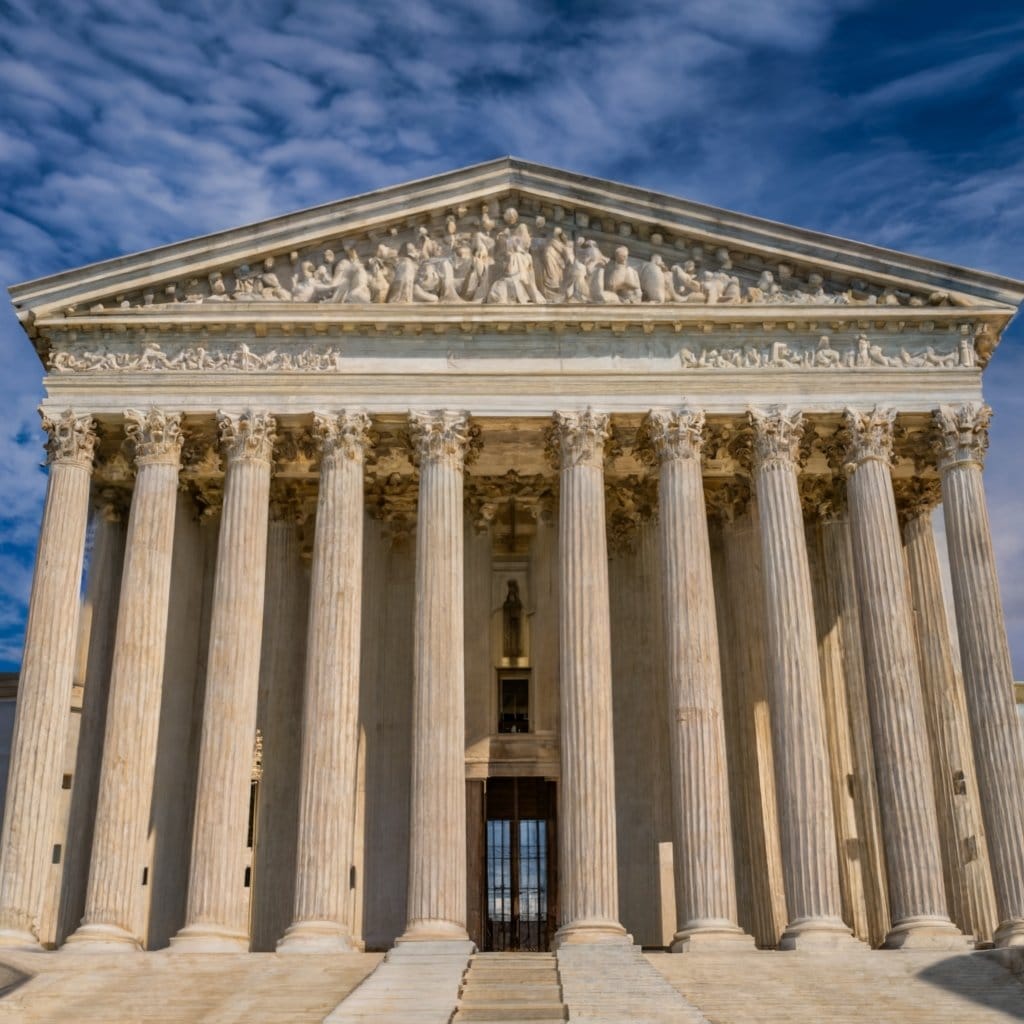
The Republican Party’s campaign arms have formally asked the Supreme Court to intervene in a dispute over television advertising rates ahead of the midterm elections.
The request follows a federal appeals court ruling that determined only candidates, not political party committees, are entitled to the lowest available broadcast television ad rates.
The GOP campaign committees argue the ruling puts them at a significant disadvantage during a critical period of the election cycle, with campaign advertising spending ramping up sharply.
Political parties rely heavily on television advertising to support their candidates, and access to discounted rates can dramatically affect how far campaign dollars stretch.
The Fourth Circuit Court of Appeals issued a divided panel ruling that drew a sharp distinction between candidates and the party organizations that back them on broadcast rate eligibility.
The Republican groups cited the timing of the ruling as particularly damaging, arguing it landed squarely in the middle of active electioneering and fundraising operations.
In their filing, the GOP campaign arms stated, “In the midst of election season, a divided Fourth Circuit panel…” signaling their urgency in seeking immediate Supreme Court relief.
The lowest television advertising rates, often referred to as the lowest unit rate, are a federal broadcast requirement designed to give candidates affordable access to the public airwaves.
The distinction the appeals court drew between candidates and party committees could reshape how political organizations budget and plan their media strategies going forward.
If the Supreme Court declines to intervene, Republican campaign committees would be forced to pay higher commercial rates for television advertising in the remaining weeks of the election season.
The case raises broader questions about the legal rights of political party organizations under federal broadcast regulations and could have lasting implications for future election cycles.
A Supreme Court decision to take up the matter, even on an emergency basis, would signal the justices see a substantial legal question worth addressing before Election Day.
Democrats have not yet publicly responded to the GOP’s Supreme Court filing, though the ruling technically applies to party committees regardless of political affiliation.
The outcome could affect billions of dollars in political advertising spending and alter the media buying strategies of both major parties in upcoming races.