US stocks managed a slim fourth consecutive day of gains on Monday, with the S&P 500 rising 0.44% to close at 6,611.83, the Dow adding 165.21 points to settle at 46,669.88 and the Nasdaq Composite gaining 0.54% to 21,996.34 — but futures reversed course after the close as Trump held a White House press conference reiterating his most severe threats against Iran yet.
Dow futures slipped around 130 points in after-hours trading, S&P 500 futures fell 0.45% and Nasdaq futures dropped 0.58%, reflecting the market’s acute sensitivity to whatever comes next out of the Middle East.
The day’s trading was defined by two competing forces that have been arm-wrestling since the war began five weeks ago: genuine diplomatic optimism in the morning hours and renewed military escalation language from the White House in the afternoon.
An Axios report published early Monday that the US, Iran and regional mediators were discussing a potential 45-day ceasefire framework assembled by Pakistan provided the morning catalyst, lifting risk assets across the board and sending oil prices briefly lower.
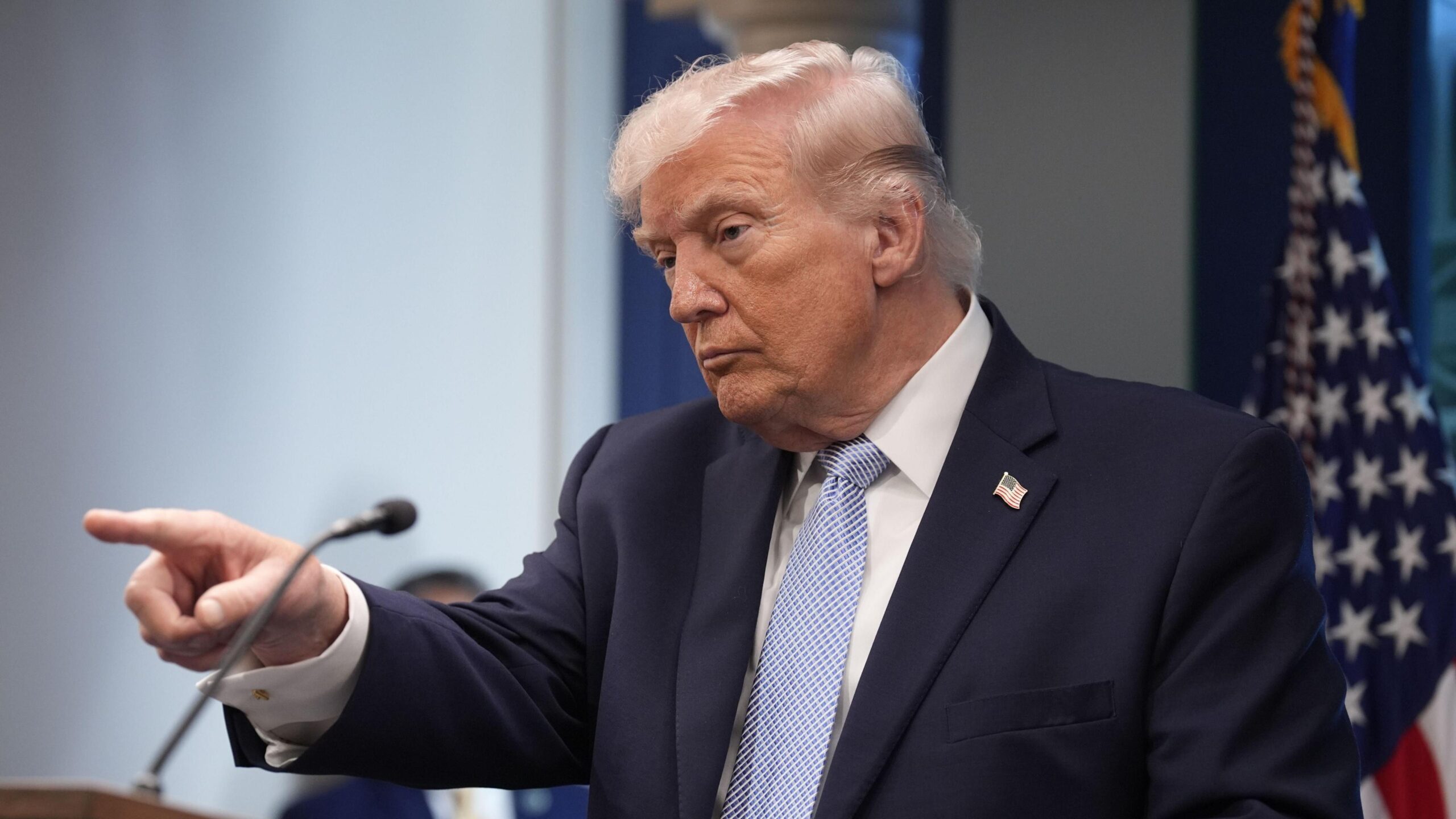
By the afternoon, Trump had stepped to the podium and described in specific terms a planned four-hour strike operation targeting Iranian power plants and bridges unless the Strait of Hormuz reopened by 8pm Eastern Tuesday.
“The entire country can be taken out in one night, and that night might be tomorrow night,” Trump told reporters directly, adding that “every bridge in Iran will be decimated” and “every power plant in Iran will be out of business, burning, exploding and never to be used again” if a deal is not reached. The language was the most explicitly escalatory Trump has used in a single public setting since the war began on February 28, and the futures market’s evening decline suggests traders are pricing in genuine uncertainty about what Tuesday night will bring.
Iran’s response to the Pakistan ceasefire framework was to reject the proposal outright and submit its own 10-point plan as a counter, including conditions that the US has already ruled out.
Iran’s Foreign Ministry declared that the US had “destroyed the path to diplomacy,” while spokesman Esmaeil Baghaei urged Americans to “hold their government responsible” for what he described as an aggressive war. Tehran’s Revolutionary Guards intelligence chief was separately reported dead, adding to a day of military and political developments that markets are struggling to process in any systematic way.
West Texas Intermediate crude oil hovered above $112 per barrel as of early Tuesday, while Brent pushed past $109 — levels that are already feeding inflation data significantly above pre-war projections.
The ISM services sector report released Monday showed the prices-paid index surging to 70.7 for March, its highest reading since October 2022, representing an increase of 7.7 points from February in the single largest monthly jump in nearly 14 years. The employment sub-index fell sharply to 45.2, its lowest since December 2023, pointing to a labour market beginning to feel the uncertainty the headline index has not yet fully reflected.
JP Morgan’s Joyce Chang and Natasha Kaneva warned in a client note that gasoline prices could reach $5 per gallon nationwide if the Strait of Hormuz remains effectively closed into mid-April — up from a national average of $4.11 at the weekend. That would represent a 40% increase in fuel costs from pre-war levels in the space of roughly six weeks, a pace of price acceleration that, if sustained, would rival any inflationary episode in the post-financial crisis era.
Starbucks shares gained more than 4% on Monday after the company announced the return of several popular limited-edition drinks for summer, including the S’mores Frappuccino, with CEO commentary suggesting the brand’s consumer recovery is continuing. Boot Barn shares surged 8% after a Jefferies analyst upgrade, though the stock remains down about 17% on the year. Health insurer stocks rose in after-hours trading following the CMS finalisation of Medicare Advantage payment rates for 2027.