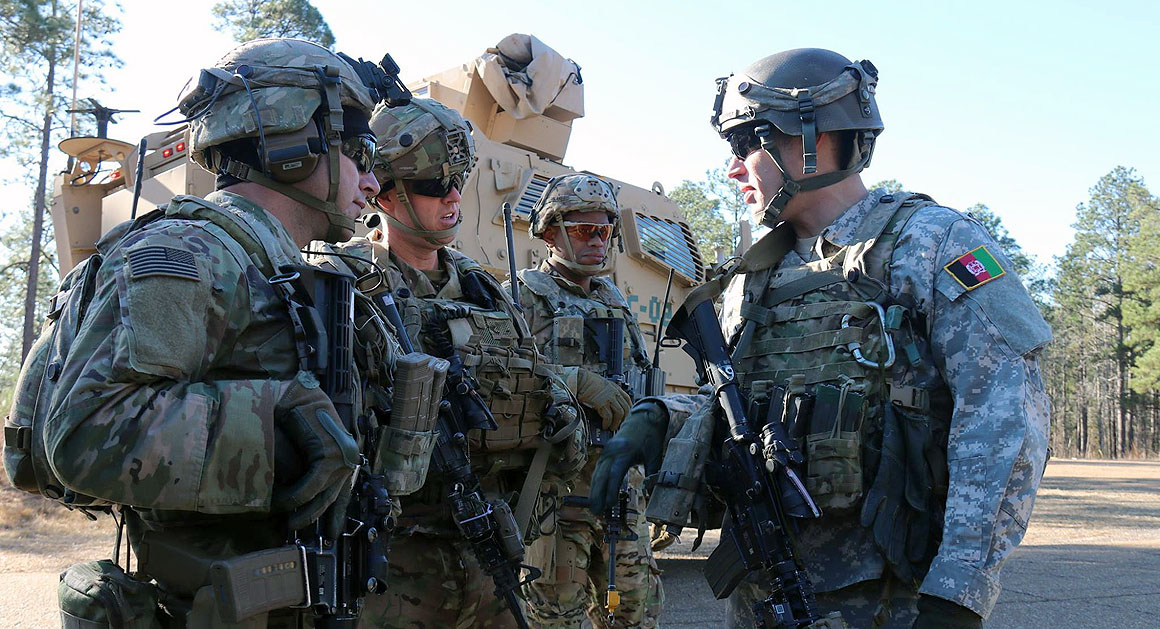
The Third Amendment protects US citizens from being forced to house troops, and it was especially pertinent at the time of it being ratified.
Of all the amendments in the Bill of Rights, one stands out for being the least litigated, the least controversial, and — to modern eyes — perhaps the most historically distant: the Third Amendment, which protects American citizens from being forced to house troops in their private homes.
The full text of the amendment reads: “No Soldier shall, in time of peace be quartered in any house, without the consent of the Owner, nor in time of war, but in a manner to be prescribed by law.”
The amendment was passed by Congress on September 25, 1789, and ratified on December 15, 1791, as part of the first ten amendments collectively known as the Bill of Rights.
To understand why it was written, one has to go back to the grievances that sparked the American Revolution.
In 1765, Parliament passed a Quartering Act requiring the colonies to feed and house British soldiers, a measure that was deeply unpopular among colonists who saw themselves as British subjects entitled to the same protections as those living on English soil.
As opposition to the so-called Intolerable Acts led to outright revolution, the colonists’ experiences with forced quartering influenced the Declaration of Independence, which counted among its grievances against King George III the stationing of large bodies of armed troops among the civilian population.
When the amendment was drafted in the eighteenth century, Americans and Englishmen generally regarded the issue of quartering troops in private homes as a matter of profound moral and political significance, rooted in a long-held suspicion of standing armies.
The amendment’s historical importance was undeniable, but its modern relevance is a different matter.
The Third Amendment is among the least cited sections of the U.S. Constitution and has never served as the primary basis of a Supreme Court decision, though it was the central issue in the Court of Appeals for the Second Circuit case Engblom v. Carey in 1982.
The amendment is broadly described by scholars as reflecting a preference for civilian authority over military power, and it is not considered politically controversial in any era of modern American history.
That does not mean legal scholars have ignored it entirely.
Some have argued that the amendment’s underlying principles could apply to government responses to terror attacks and natural disasters, to questions involving eminent domain, and to broader debates over the militarization of domestic law enforcement.
Justice William O. Douglas also invoked the amendment, alongside other Bill of Rights provisions, as partial foundation for the majority decision in Griswold v. Connecticut, a landmark case establishing a constitutional right to privacy.
Today, with a vast network of military bases and permanent barracks across the country, the scenario the amendment guards against is effectively impossible under normal circumstances — a testament to how thoroughly the Founders’ core concern was resolved by the very constitutional framework they built.