President Donald Trump has spent the better part of fourteen months trying to push Jerome Powell out of the Federal Reserve, deploying every tool available short of the one he does not legally possess: the power to fire him.
The irony now developing at pace is that the Justice Department investigation Trump encouraged into Powell’s handling of the Fed’s $2.5 billion Washington headquarters renovation could end up keeping Powell in position considerably longer than either man ever anticipated.
The mechanism is straightforward enough, even if the politics are anything but simple. Kevin Warsh, the former Fed governor Trump nominated to succeed Powell, cannot advance through the Senate Banking Committee while the DOJ probe remains active.
Senator Thom Tillis, a North Carolina Republican, has made his position unambiguous: he will not vote to confirm any Fed nominees until the investigation is dropped entirely, and with all Democrats on the committee also opposed to moving forward in the current environment, Warsh’s nomination is frozen in procedural ice.
A federal court last week made the situation even more complicated for the White House by throwing out two grand jury subpoenas issued by DC’s US Attorney Jeanine Pirro, which had sought detailed information from the Fed about the renovation project.
Judge James Boasberg wrote in his ruling that there was “abundant evidence that the subpoenas’ dominant (if not sole) purpose is to harass and pressure Powell either to yield to the President or to resign and make way for a Fed Chair who will.”
Pirro has confirmed she plans to appeal, telling reporters she is “unconcerned” with any delays the legal challenge may cause to Warsh’s progression, a stance that might play well publicly but does little to resolve the fundamental gridlock.
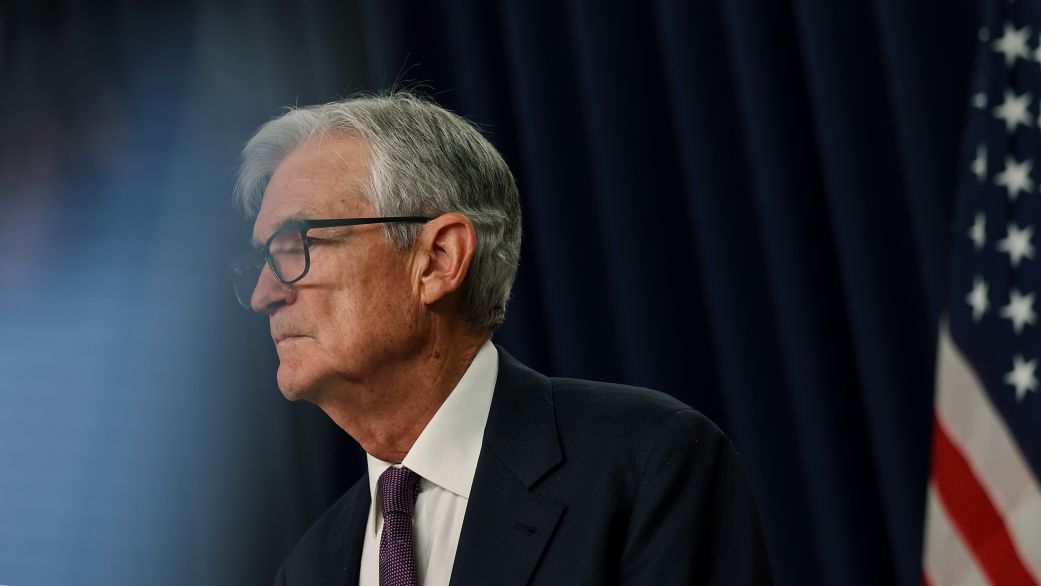
Powell’s response at his Wednesday press conference, where he announced the Fed was holding rates steady at 3.5 to 3.75 percent, was characteristically precise in its resolve: “I have no intention of leaving the board until the investigation is well and truly over, with transparency and finality.”
He also confirmed that if Warsh is not confirmed by the time Powell’s chairmanship formally ends in May, he will serve as chair pro-tempore until a successor is installed, citing the legal framework that governs such transitions and noting that it has been applied before.
On whether he might stay on as a governor even after the investigation concludes, since his board term runs until 2028, Powell was deliberately noncommittal, saying he would make that decision “based on what I think is best for the institution and for the people we serve.”
That formulation, careful and institution-first, is precisely the posture that has earned him the JFK Library Foundation’s Profile in Courage award, announced Thursday, for protecting Federal Reserve independence despite sustained pressure from the White House.
The award description noted that Powell “safeguarded one of the country’s most essential apolitical institutions,” which under the circumstances reads less like a retrospective honour and more like a real-time assessment of an ongoing conflict that is far from resolved.