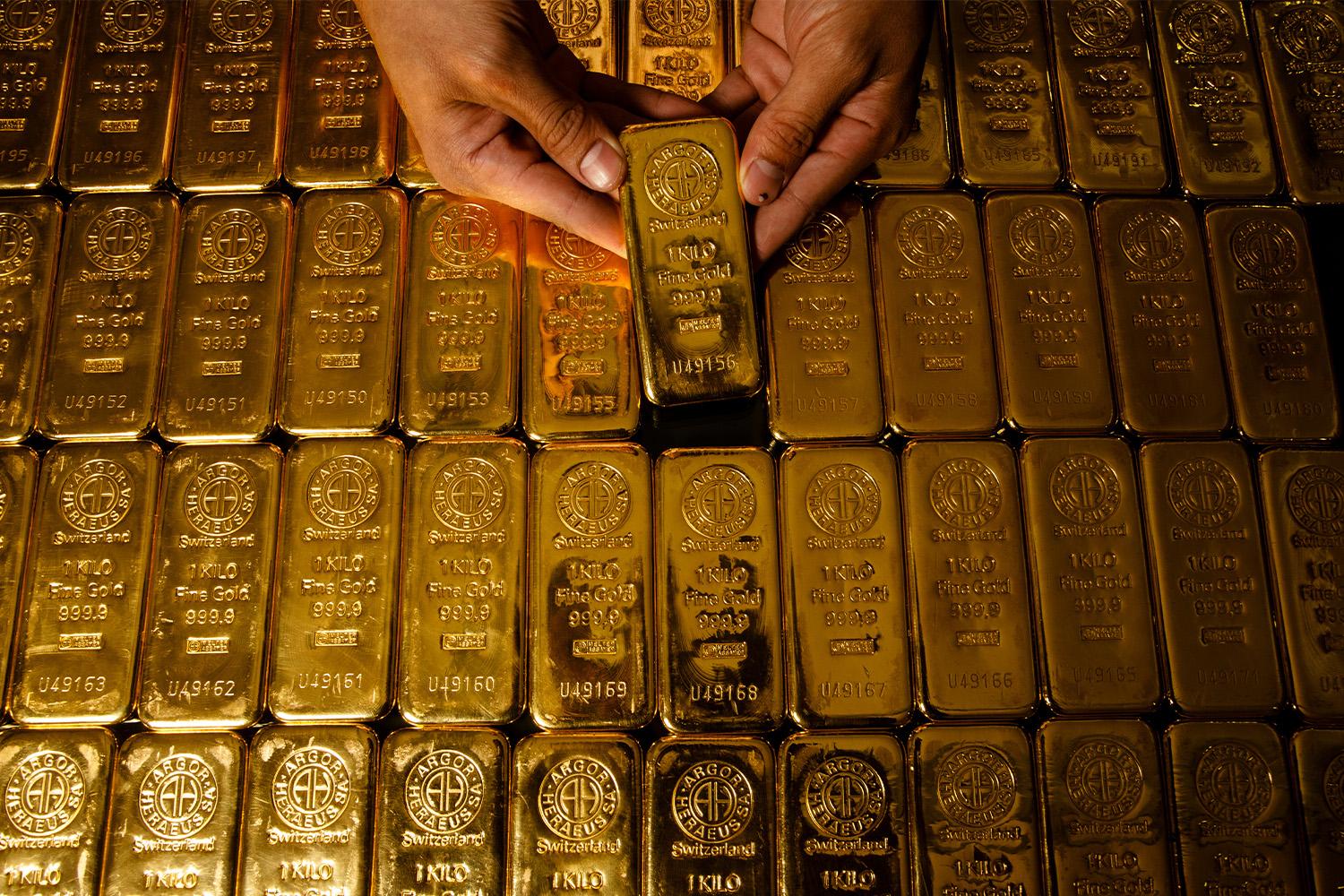
The arithmetic of this past week on financial markets is striking enough to sit alongside the most turbulent periods of the post-financial-crisis era, even before the symbolic element of gold recording its worst weekly performance since February 1983 is factored in.
Gold fell below $4,500 on Friday for the first time in weeks, down more than ten percent across five trading sessions and heading for a weekly decline that explicitly matches the scale of the commodity selloff that preceded the second OPEC oil crisis, a piece of historical data that has been cited more than once in research notes published across the week.
The conventional logic of buying gold as an inflation hedge when oil prices spike above $100 has been disrupted entirely by the mechanical reality of what happens when institutional investors face margin calls: leveraged positions across every asset class, including perceived safe havens, get liquidated to meet collateral requirements.
Silver fell more than ten percent on Friday alone, extending what has been an even sharper weekly decline than gold and confounding the analysis of commodity investors who had positioned it as a dual-purpose play on both inflation and industrial demand from the AI infrastructure buildout.
The 10-year Treasury yield rose to 4.326 percent across the week as bond markets processed the combination of the Fed’s hawkish hold, oil-driven inflation revision and growing concern that the Iran conflict could persist into the US summer driving season and beyond.
The University of Michigan consumer sentiment survey for March, released Friday at 55.5, provided an unusually precise data point for what geopolitical shock does to consumer confidence: interviews conducted before the Iran military action showed an improvement from February, while those conducted after it erased all of those gains entirely.
Survey director Joanne Hsu noted that “interviews completed prior to the military action in Iran showed an improvement in sentiment from last month, but lower readings seen during the nine days thereafter completely erased those initial gains,” a sentence that captures the shock’s speed as cleanly as any financial data could.
For equity investors navigating the current environment, the Atlanta Fed’s GDPNow model tracking first-quarter growth at 2.1 percent annualised, down from 3.0 percent just days earlier, signals that the economic softening underway was happening before the oil shock intensified it.
The dual pressure of rising costs and slowing growth, the textbook definition of stagflation, is now being discussed openly by strategists who spent most of 2025 arguing that the structural differences between the current economy and the 1970s made such an outcome implausible, and the speed with which that consensus has shifted is itself a measure of how quickly the macro picture has deteriorated.



